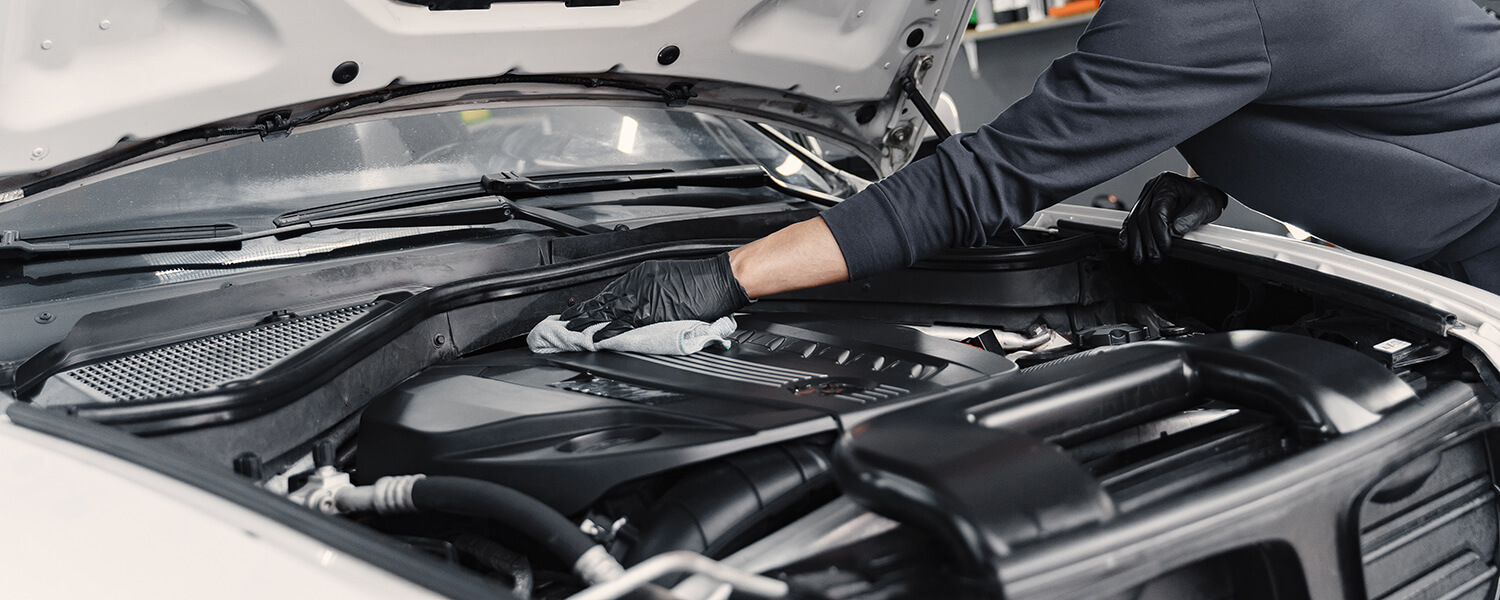
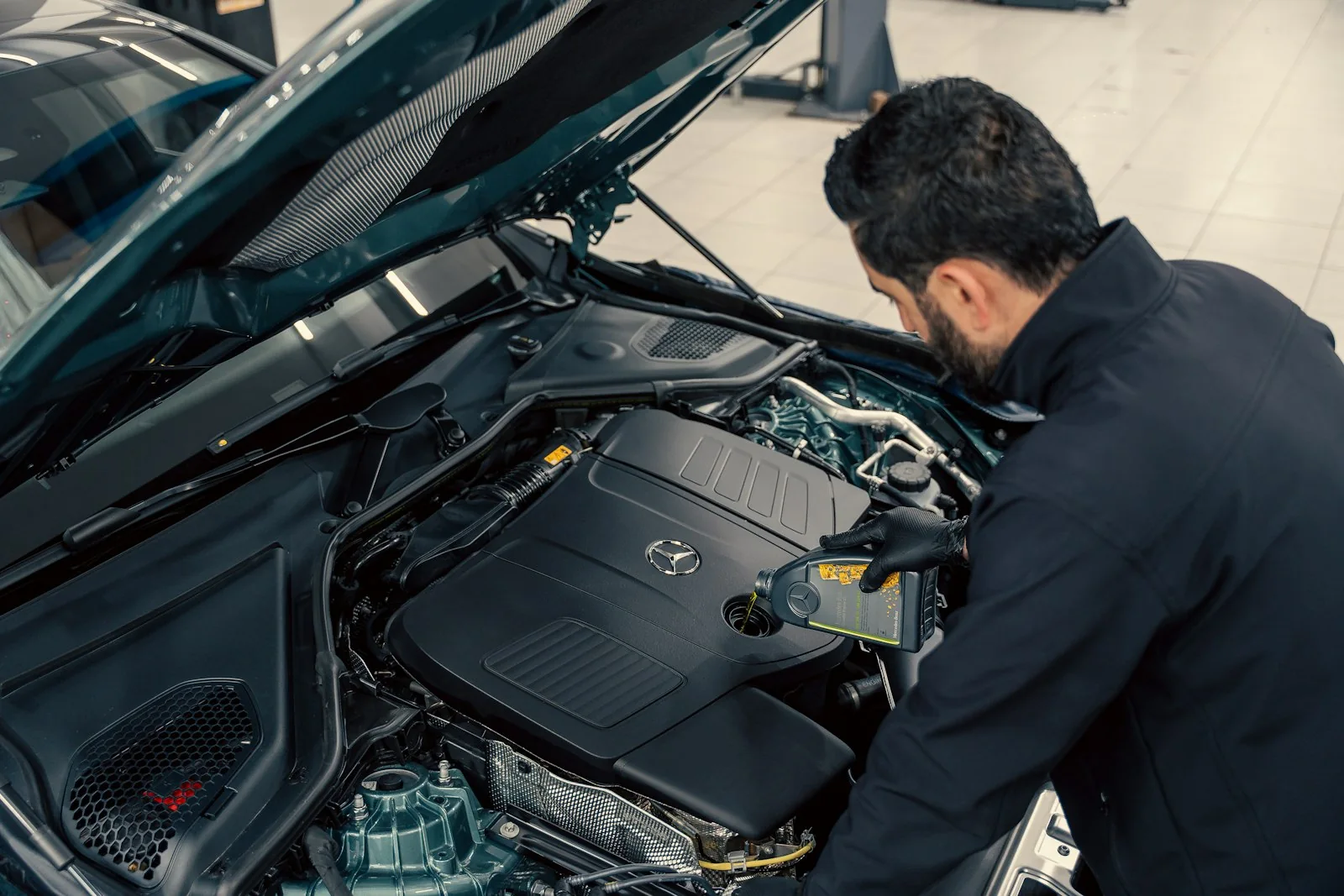
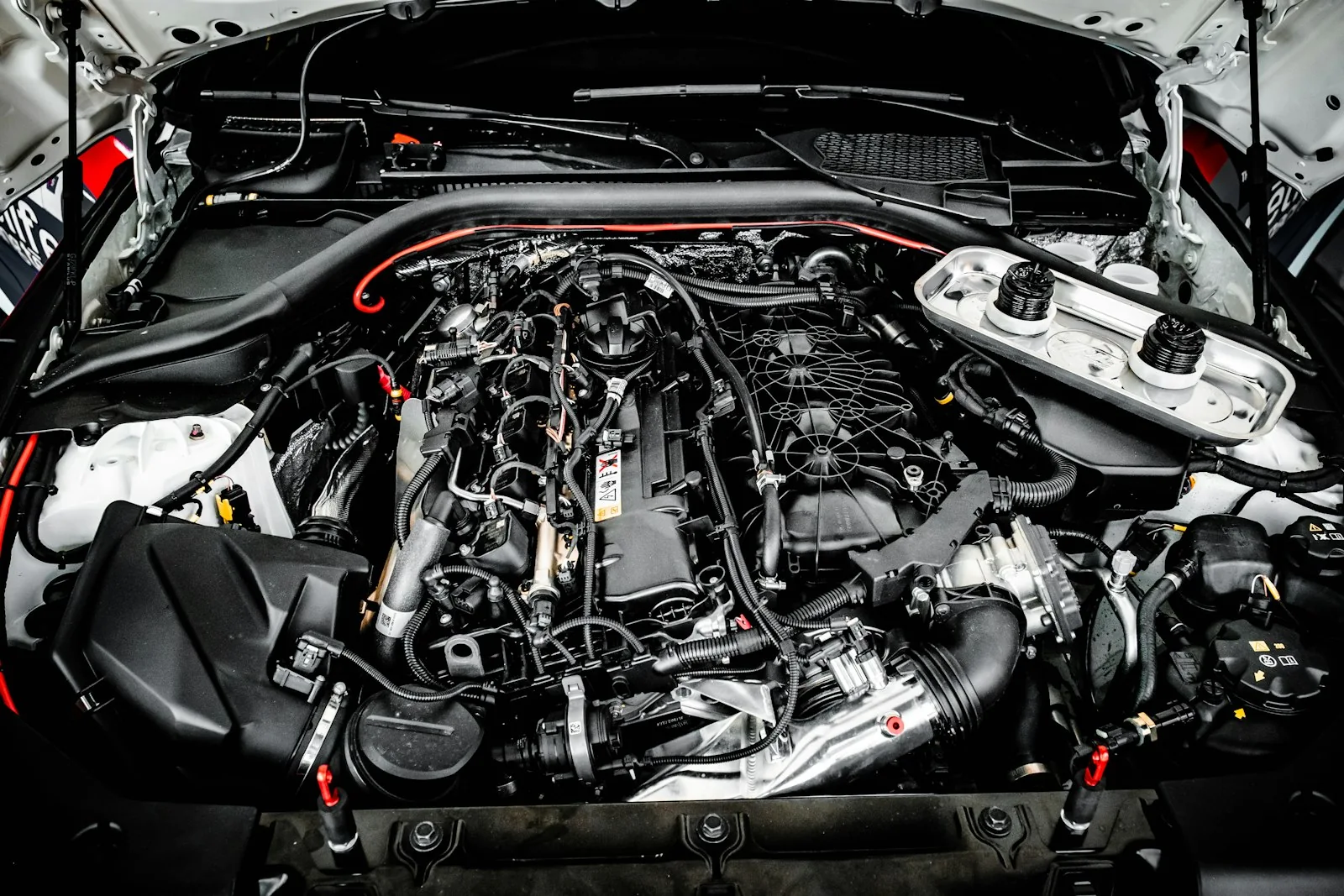
Dusty covers or oily residue under the hood? Get a cleaner engine compartment and a clearer view of accessible surfaces.
Cleaning improves presentation and can help inspection access. It is not a repair for oil leaks, overheating or poor performance. Previously published standard-cleaning estimates are AED 150–300 per vehicle.
Call with your model and the concern you want assessed. Photos are optional at first contact. Agree the work and written total before you book.
Choose the method after inspectionYour vehicle’s instructions, electrical condition and contamination determine what can be cleaned.
Cleanliness with a clear purpose
A cleaner engine bay for easier inspection
What the service is for
We can clean accessible covers, painted metal and compatible plastic after checking the vehicle. Loose dust may be removed by hand, while suitable deposits may call for a compatible cleaner. The result is a tidier, more inspectable top-side engine bay, with any inaccessible or unsafe areas identified before work begins.
Tell us about leaks before cleaning. Recording their location first can preserve clues for diagnosis. A fresh leak, damaged belt or contaminated electrical connection may mean cleaning must wait for a repair assessment.
Agree the areasEngine covers, accessible painted surfaces and compatible plastic trim. Confirm anything beneath covers or undertrays separately.
Select the methodMatch cleaners, moisture and any heat to the vehicle instructions and condition.
Finish the visitRemove protective coverings, dry treated areas and check for visible moisture or a new warning before handover.
Inspection helps identify access limits and concerns before a cleaning method is chosen.
Record the condition first
Tell us what is underneath the dirt
Fresh oil, coolant residue and damaged wiring need a different response from ordinary dust. Share recent repair history and photograph visible deposits before cleaning removes the clues.
Accessible cleaning can make a later visual check easier. Confirm whether leak tracing, diagnostic scanning or removal of covers is a separate job.
Heavy oil contamination on belts, damaged insulation or loose connectors should be assessed before cosmetic work proceeds.
A clean surface is easier to inspect. This service does not replace leak diagnosis, cooling-system repair, electrical testing, oil service or internal engine cleaning. It does not promise more power or better fuel economy.
Earlier published estimates
Engine bay cleaning prices
These earlier published figures can help you plan a budget. They are not current fixed packages, and their VAT treatment is unconfirmed. Ask for the exact surfaces, suitable method and final payable total for your vehicle.
01
For eligible accessible surfaces
Standard cleaning
Consider this for ordinary dust and compatible surface deposits after an under-hood check.
Confirm in the quoteSurfaces treated, cleaner and manual work, component protection, drying and handover checks.
Earlier estimateAED 150–300per vehicle
Confirm the treated areas and suitable method before booking.
02
Only after a suitability check
Selected steam treatment
Steam may suit selected surfaces when the vehicle instructions and component condition allow it.
Confirm in the quoteApproved areas, heat and moisture controls, protected components, drying and any extra access.
Earlier estimateAED 250–500per vehicle
It is not a default whole-bay steam wash.
The details behind the total
What can change the price
VehicleModel, year, powertrain and vulnerable components
ConditionHeavy deposits, active leaks or fragile wiring
AccessAgreed surfaces and any cover removal
For a useful quote, send one wide engine-bay photo and close-ups of any residue. Include your model, year, powertrain and any existing warning lights or leaks.
The car determines the method
Choose a cleaning method that fits your engine bay
Method
When it may be considered
Important limit
Controlled wiping and brushing
Accessible dust and compatible surface deposits
Check cleaner compatibility and fragile finishes. Avoid pushing liquid into electrical openings.
Limited moisture cleaning
Only where the vehicle instructions and component condition allow it
Protect vulnerable areas and manage runoff. An engine bay is not a waterproof compartment.
Steam
Selected surfaces after an eligibility check
Heat and moisture still reach components. Steam is not automatically safe for wiring, seals or electronics.
High-pressure washing
Outside the routine engine-bay package
Jets can force water into electrical parts, intakes and damaged seals. We do not propose this as a standard way to clean an engine bay.
Dry ice
Not a priced standard package
Equipment availability, model suitability, access and price require separate confirmation. Low water use does not make it risk-free.
For ordinary dust
Begin with controlled dry removal and compatible wiping of agreed accessible surfaces. There is no reason to choose steam just because it appears on a price guide.
For oily deposits
Photograph the deposit and identify any active leak first. Select a cleaner and moisture level that fit the surface; heavy oil may need a separate assessment and charge.
For a fault or warning
Pause cosmetic cleaning. Overheating, fuel smell, misfire, warning lights or exposed electrical parts call for diagnosis or repair before any cleaning plan.
Before any cleaner is applied
Protect electrical and cooling components
Prepare a cool vehicle
Switch off the engine and allow it to cool
Check the model-specific cleaning instructions
Inspect visible wiring, seals and aftermarket accessories
Identify air intakes, fuse boxes, ignition components and sensitive electronics
Pause for a different assessment
Fuel odor, smoke or an active fluid leak
Overheating, rough running or electrical warning lights
Exposed wiring, broken covers or damaged seals
Flood contamination or an uncertain high-voltage condition
Overheating or fuel smell needs attention first
Stop the vehicle safely and switch it off. Arrange assistance rather than driving in for a cosmetic clean. Never open a hot coolant cap or spray a hot or running engine.
For example, Ford’s engine-cleaning instructions warn about water entering sealed parts and identify ignition and electrical areas that need protection. Use the instructions for your exact vehicle.
Agree the accessible areas
Covers, wiring and modifications change the cleaning plan
Under the hood is not the whole engine
A top-side clean does not automatically include the engine underside, wheel arches, undertray, radiator fins or hidden areas beneath removed components. For road dirt or oil residue beneath the vehicle, discuss undercarriage cleaning as a separate scope. List additional access and disassembly separately. Cleaning can expose a leak for assessment; it does not repair its source.
Modified and older vehicles need attention
Exposed filters, aftermarket wiring, added electronics, aged insulation, missing covers and weakened connector seals can change which areas may be cleaned. Share these details before requesting steam or wet treatment. Hybrid and electric vehicles require their own model-specific eligibility check.
Do not assume every connector is watertight
Keep products away from air openings and sensitive electronics
Confirm compatibility with labels, finishes and rubber parts
Agree a natural finish rather than slippery dressing on working components
Exposed pipework and wiring change access and protection requirements.
What a good result looks like
Agreed accessible surfaces are visibly cleaner, treated areas are dry at handover, temporary protection is removed and any untouched areas are explained. Ask about finish expectations if staining, oxidation or baked-on residue is present.
What needs a separate visit
Persistent stains, fresh oil returning after cleaning, warning lights, overheating and faults are not solved by a cosmetic wash. Record them before the job and agree whether diagnosis, repair or additional access is needed.
Plan the visit
Cooling, cleaning and drying all take time
Send the details
Share your model, year, powertrain and under-hood photos. Mention warning lights, recent repairs, oil leaks or aftermarket wiring.
Agree the treatment
We review accessible areas, vehicle instructions, vulnerable components and contamination before agreeing a method. The quote should name protection and drying, any areas we must avoid and any extra work. Fragile parts or an unsuitable vehicle may limit or prevent cleaning.
Allow for handover
Cooling, protection, cleaning, drying and visible handover checks affect the collection time. The previous guide was around two to three hours, but it is not a guaranteed slot. Ask for your vehicle’s collection estimate when approving the quote.
After the clean
If fresh oil appears, arrange leak diagnosis. A new warning light, misfire or starting problem needs assessment before continued driving. Do not use dressing on belts, pulleys or electrical contacts to create a glossy finish.
Routine cosmetic cleaning does not establish a power, fuel-economy or cooling improvement. A diagnosed obstruction or mechanical fault needs its own corrective work. Cleaning accessible residue can improve visibility during an inspection.
Can cleaning stop an oil leak?
No. It may help reveal where fresh oil appears, but a seal, hose or other leaking component needs diagnosis and repair. Tell us about the leak before the area is cleaned.
Can every engine bay be steam cleaned?
No. Suitability depends on vehicle instructions, components, wiring and their condition. Heat and moisture may rule out steam even when a surface looks dirty.
Can I book this for a hybrid or electric car?
Identify the powertrain before booking. High-voltage equipment and under-hood components require model-specific procedures and an eligibility assessment. Do not assume the combustion-engine cleaning package applies.
Does the service include rust removal or internal engine cleaning?
No. Surface rust, structural corrosion, internal flushing and carbon removal are different jobs. They require a separate assessment and price.
Are the undertray and underside included?
Only if they are specifically listed. Removing an undertray, lifting the vehicle and cleaning the underside involve different access and additional work. Ask for these items separately in the quote.
Is a diagnostic scan included after cleaning?
Confirm this before booking. A visual handover check is not a diagnostic scan. Existing warning lights or a new running fault need a separate assessment.
How often does an engine bay need cleaning?
Use its condition and the vehicle maker’s care instructions. There is no universal interval for a cosmetic clean. Investigate recurring oil deposits rather than repeatedly washing them away.
Will cleaning remove every stain?
No. Oxidation, etched finishes and baked-on deposits may remain, and aggressive scrubbing may damage labels or coatings. Agree the expected finish after we see the condition.
Can I book immediately after a leak repair?
Tell us which component was repaired and whether the area has been checked for fresh fluid. The repaired system may need its own inspection before residual deposits are cleaned. A later recurrence should be diagnosed separately.
What should I confirm before booking?
Confirm the cleaning method, top-side areas, protection, drying, exclusions, VAT-inclusive total and collection time. Mention any warning lights, leaks, exposed wiring or recent electrical repairs.
Talk to our Al Quoz team
Arrange the right clean for your car
Tell our Al Quoz team your car model and what needs cleaning. We can arrange the assessment and confirm suitable treatment and a written price. Photos can help if available.