
Clean and reassess
Road film can dull an otherwise sound lens. If suitable cleaning restores clarity, sanding or polishing may be unnecessary.
Inspect the lens clean and dry. Water can temporarily disguise scratches and haze.
AMF Auto Services LLC · Al Quoz · Dubai
Clearer headlights start with the right treatment. Restore suitable outer-lens haze and yellowing while keeping a serviceable lamp assembly.
Our Al Quoz team checks both lenses, explains the finish you can expect and quotes the polishing and compatible UV protection together. Cracks, trapped water and lighting faults are assessed separately.
Choose the work your headlights need
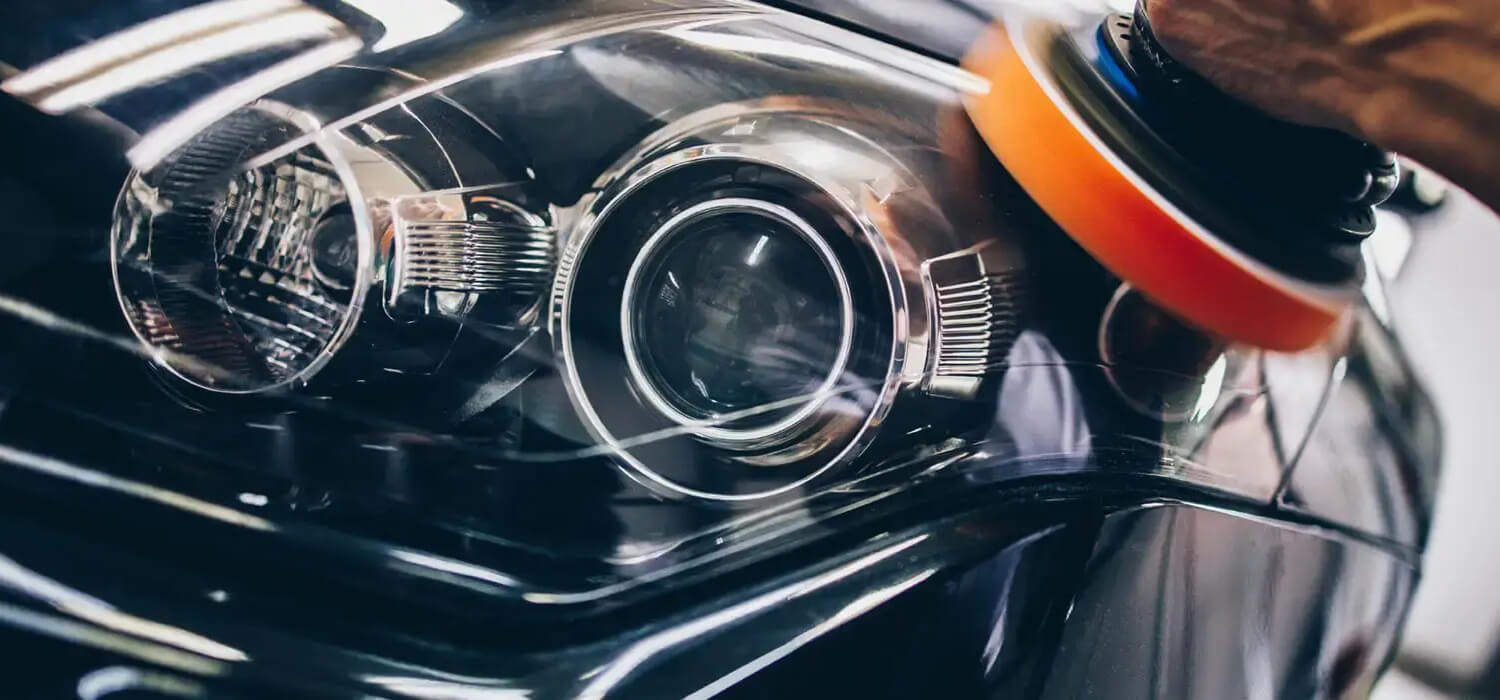
A cloudy headlight can have surface dirt, damaged outer plastic or a fault inside the assembly. We start with the location and depth of the problem.
Road film can dull an otherwise sound lens. If suitable cleaning restores clarity, sanding or polishing may be unnecessary.
Inspect the lens clean and dry. Water can temporarily disguise scratches and haze.
Yellowing, weathered surface coating and light external scuffs may respond to controlled restoration on a sound, compatible plastic lens.
Retaining a serviceable assembly can avoid an unnecessary replacement.
Cracks, persistent internal water, damaged mounts, flickering or a lamp that stays off need a different assessment.
Outer polishing cannot repair seals, electronics, reflectors or structural damage.
If you cannot see the road adequately, avoid driving in darkness until the lighting is checked. A clearer lens does not establish correct beam aim or repair a failing light source.
Compare the complete treatment
These rounded Dubai market estimates help you budget for both front lenses. They are not fixed Wrapping.ae packages. The source prices do not specify VAT inclusion.
Market guide for a suitable pair
Market guide for the complete pair treatment
This is the total guide for the pair, not an extra AED 250–400 added to the first package.
Lens size, damage depth and an old coating or film can change preparation. Existing-film removal, assembly removal, internal cleaning, electrical diagnosis, parts and beam adjustment are separately quoted.
The written quote should name both lenses, the protection product, included labor, extras and the final VAT-inclusive total. One-lamp work needs its own price because setup is shared across the job.
Request your headlight assessmentFrom assessment to a clear finish
The lens material and its condition determine the treatment. Coated plastic and older glass lenses need different assessment, and an aggressive sanding process is not suitable for every lamp.

Check the lens material, existing finish and previous treatments. Record defects and protect adjacent paint, trim and seals before using abrasives.
Where appropriate, remove deteriorated surface material with a controlled abrasive sequence, then refine and polish. The objective is usable clarity without excessive material removal or heat.
Use a finishing system intended for the lens and the prepared surface. Preparation and application must follow that product’s instructions.
Check clarity, remaining defects and lamp operation. Explain anything restoration has not corrected and provide the relevant drying and care instructions. Compare the lenses when clean and dry in similar lighting, including around the edges and raised contours. A glossy wet surface can make a defect less obvious without removing it.
A clear surface needs the right finish
Polishing improves a suitable damaged surface. A compatible UV protection system helps limit renewed deterioration. Choose the treatment and its care requirements together.
A dedicated headlight coating or sealant must suit the lens and the prepared surface. A generic paint wax or an unspecified ceramic coating does not establish the same protection.
Any warranty should state the provider, period, covered problem and remedy. Material coverage and fitting support can differ. A body-PPF warranty does not apply automatically to a polished lens.
Keep the invoice and protection details. If haze returns, arrange an inspection before adding another coating or sanding again.
Durability depends on the original condition, preparation, product, exposure and care. A coating name alone is not a promise of a permanent result.
Keep appearance and lamp function separate
Persistent droplets or standing water inside the lamp need inspection of the seals, ventilation and assembly. A light mist can behave differently, so the finding matters more than the word condensation.
Internal contamination, damaged reflectors or deterioration within the lens can remain after the outer surface is polished. Identify that limit before approving restoration.
The bulb, LED system, electrical supply or beam aim may need diagnosis. Restoration does not include an output upgrade, electrical repair or automatic beam adjustment.
Previous coatings, film and repeated correction affect what can be done next. Deep pits or cracks may remain if removing them would take away too much material.
When restoration is not enough
A replacement decision should identify the actual failed component. Do not compare a bare lens, a used assembly and a complete new headlamp as though they include the same work.
We match replacement parts using the vehicle details and, when needed, the VIN and lamp part number. Halogen, xenon, LED and adaptive systems can use different housings, modules and control functions. You do not need to identify the part before contacting us.
Ask whether bulbs, modules, seals and mounting components are supplied or transferred. Confirm condition and warranty for any used or aftermarket assembly.
If removal or replacement is needed, list labor and any specified coding, initialization or beam setting. Those costs are outside an ordinary outer-lens polish. On a vehicle with an adaptive system, a warning message should be investigated even if the lens looks clear. Styling, connector shape and model name alone do not establish that a replacement assembly is correct.
Headlight film is a different application. Discuss lens compatibility and the proposed product with our headlight protection service. Film is not a repair for a cracked or oxidized lens.
Separate working time from curing
For early planning, published Dubai services commonly allow about 60–90 minutes for straightforward restoration of a pair. This is a market timing guide, not a guaranteed collection time at our workshop.
Tell us your model and whether the lenses look yellow, hold moisture or give poor light at night. Daylight photos are helpful but optional. Mention old film, previous restoration and warning messages.
Lens damage, existing-coating removal and the chosen protection can extend the job. The actual appointment and collection time follow that assessment. Product curing may continue after the active work ends.
Compare them clean and dry in similar lighting, including their edges. Record remaining defects, the protective product and its water and first-wash restrictions.
Use the product-approved cleaning method. Avoid abrasive rubbing, household solvents and unapproved chemicals. A DIY kit does not diagnose trapped water, cracked lenses or a failed light source.
Questions before you approve the work
Get the restoration, price and aftercare details settled together.
Not necessarily. Improvement depends on where the damage is and how much suitable surface remains. Internal haze, deep cracks and reflector deterioration may remain.
No. External oxidation on a structurally sound, compatible lens may be restorable. Cracks, internal damage or other faults can change that recommendation.
No. Lens restoration treats the outer surface. Light-source replacement, electrical work and conversion questions are separate.
It needs assessment first. Removal can change the preparation, price and expected result. Identify the existing material and any previous treatment before a new finish is applied.
The market planning guide is AED 150–300 for restoration of a suitable pair with UV protection. Restoration with an additional lens-compatible coating has a guide of approximately AED 250–400 total for the pair, not an added coating fee. These are not fixed workshop offers. VAT inclusion is unspecified in the references, so request the final payable total for your car.
A straightforward pair is commonly advertised in the Dubai market at around 60–90 minutes. Our actual collection time depends on the assessment, preparation and protective product. Arrange a waiting appointment only after that is confirmed.
No. Inspection depends on the complete lighting system and the applicable requirements. Cosmetic clarity does not establish correct output, beam aim or lamp condition.
There is no single duration for every lens and finish. Condition, preparation, protection product, exposure and cleaning all affect the result. Ask for the product-specific care and any written warranty instead of treating a maximum manufacturer claim as a guaranteed service life.
Tell us your car model and whether the lenses look cloudy, show moisture or give poor light at night. Photos are optional. Our Al Quoz team can arrange an assessment and explain the repair choice and complete pair quote.