
Fleet production and installation

Commercial Vehicle Wrapping in Dubai

Your vehicles need to look consistent without leaving the whole fleet off the road.

Plan commercial wraps around the vehicles you operate. We help define panel coverage, repeated artwork, installation batches and replacement graphics, with an itemized quote for your fleet in Al Quoz.

Vehicle-by-vehicle pricingStaged installationReplacement graphics
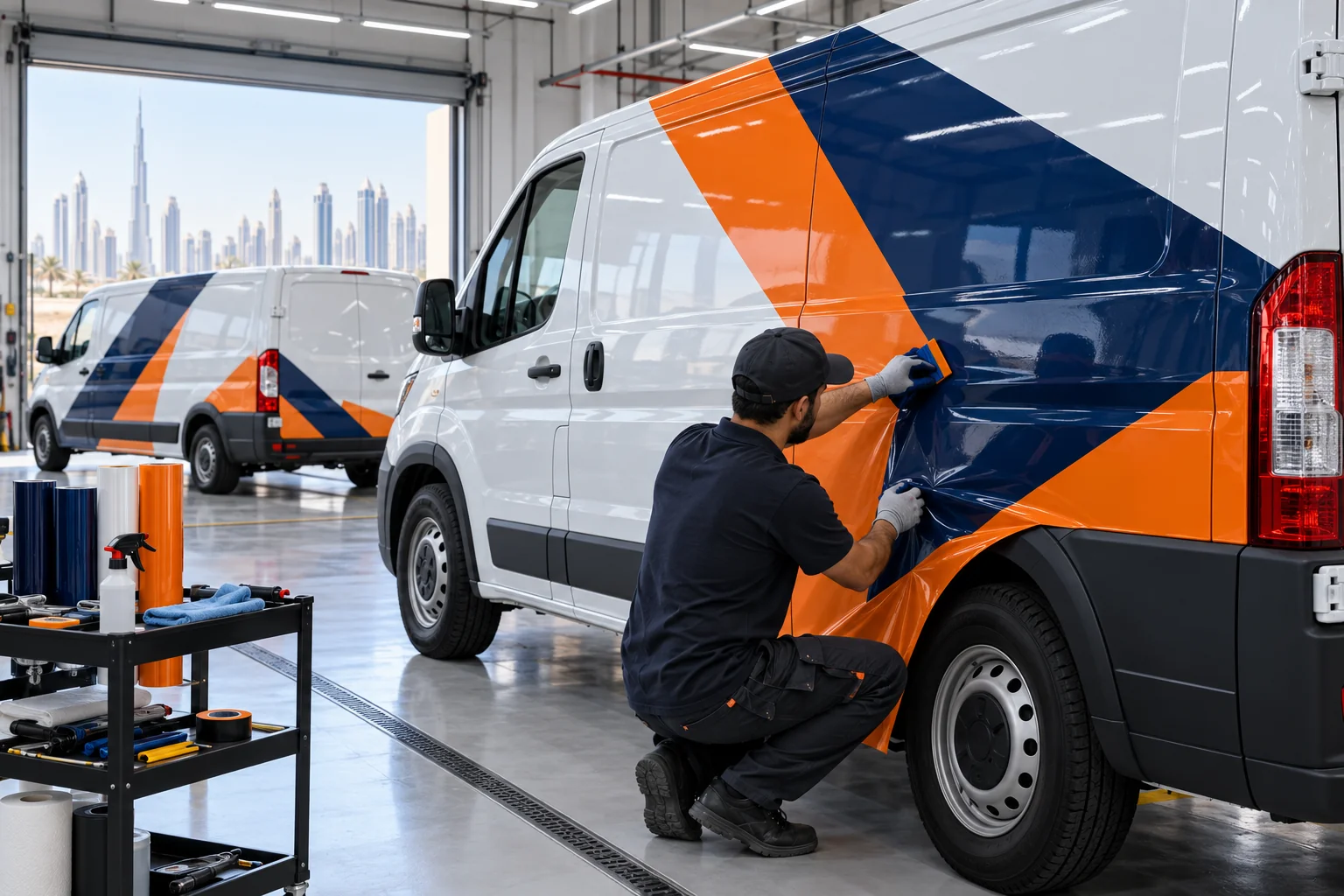
Installer applying printed vinyl to a white commercial van
Plan one repeatable finish across the vehicles in your fleet.

Start with the vehicles you actually run

One fleet can need several fitting plans

A fleet is rarely a row of identical blank vans. There may be different model years, wheelbases, roof heights, body colors and door arrangements. The first useful decision is how to group vehicles that can share a production layout and which ones need their own adaptation.

Start with the approximate vehicle count and types. A simple list or a few photos is enough to begin. The detailed measurements and installation plan follow during assessment, so you do not need to prepare a technical drawing before asking for help.

Group similar vehicles

Record the model, year, body length and roof height for each group. A short-wheelbase van and its high-roof relative may share a badge but need different graphic sizes. Side windows, sliding-door rails and rear door layouts change the usable area.
Check each surface

Identify old advertising, cracked vinyl, corrosion and repainting. An apparently identical second van may need removal or paint repair before it can receive the same new material. Keep those vehicle-specific extras visible in the quote.

Protect daily operations

Tell us which vehicles are essential each day and how many can be released together. Driver availability, unloading and collection all affect the practical schedule. Agree who approves artwork and who signs off each returned vehicle.

The benefit is a production plan that matches the fleet you own, rather than a single price multiplied by a vehicle count. It also makes future additions easier to discuss because the original vehicle groups and installed layouts are clearly identified.

Buy the coverage your message needs

Lettering or partial and full commercial wraps

01

Logos and lettering

Use separate cut-vinyl names, contact details and selected symbols on suitable panels. This can suit a fleet that needs clear identification while keeping most of the body color visible. Confirm letter sizes, languages and approved positions.

Check the placement

Small coverage does not make permissions irrelevant. It also does not guarantee the same price on every vehicle. Removal, intricate lettering and placement around recesses still affect the work.

02

Partial fleet graphics

Combine printed panels with exposed original paint. Agree where the design stops on the sides and rear so the overall appearance remains deliberate. A white vehicle can be part of the design rather than a surface that must all be covered.

Plan future changes

Partial coverage can simplify some later replacements. The benefit depends on how the artwork breaks across panels, not just the percentage of the van covered.

03

Full commercial wraps

Cover the agreed exterior panels with a coordinated printed design. List the cab, sides, rear doors and any roof coverage separately. Glass, textured bumpers, lights and equipment openings are not automatically included.

Define the covered panels

Commercial truck wrapping uses suitable graphic vinyl and, where specified, a compatible protective laminate. It is not the same service as applying transparent paint protection film.

A vehicle rate and a batch total

Commercial vehicle wrapping costs

Use these commercial wrapping ranges to plan an initial budget. Confirm current pricing before booking because the figures are guides, not fixed offers or a promise of a particular film series. The written quote confirms measured coverage, print and laminate, preparation, fitting and the final payable amount.

Car graphics

Business sedan

AED 2,500–6,500

Planning range per vehicle

Commercial graphics with extent of coverage defined. It is not automatically a complete color-change wrap.

Partial to fuller coverage

Cargo van

AED 4,500–9,000

Planning range per vehicle

Partial graphics through to fuller coverage on the measured van body. The higher price does not automatically include the roof, cab or every painted surface.

Full-wrap planning guide

Delivery van

AED 7,000–12,000

Planning range per vehicle

Full-wrap planning scope for delivery use. Cargo and delivery vans can be the same body type. Compare the panel coverage and dimensions, not the vehicle label alone.

Box dimensions matter

Box truck

AED 7,000–14,000

Planning range per vehicle

Box dimensions, cab coverage, rivets, door hardware and surface condition determine the installation. Curtain sides need a separate material assessment.

Cab and trailer scope

Semi-truck

AED 15,000–30,000

Planning range per vehicle

Specify tractor cab, trailer and the measured area. A cab-only design and an entire trailer are different purchases.

Know the final amount before booking

These planning guides do not specify VAT inclusion. Request a current VAT-inclusive total with approval fees, design work, removal, repairs and optional extras identified separately. A full-wrap description must name the covered surfaces before you compare it with another quotation.

Keep working vehicles available

A staged rollout with clear handovers

A fleet rebrand should be planned around operating capacity. Decide how many vehicles can be away at once, then agree the order of installation. Keep the first vehicle available for a design and fitting review before releasing a large repeat run.

Confirm the first vehicle

Inspect it, measure the relevant panels and check the artwork against doors, handles, recesses and mandatory markings. Approve a physical color sample where color accuracy matters. Final artwork and the required permissions should be settled before production.

Agree the batch slots

List which vehicles arrive in each group and who brings and collects them. The schedule needs time for cleaning, old-film removal, fitting, finishing and inspection. A vehicle awaiting paint repair may need to move to a later slot rather than delay every other vehicle.

Review and repeat

Check the first finished layout before the rest of the batch is produced or installed. Review readable lettering, panel joins and equipment clearances. Once approved, repeat the controlled layout for matching vehicles and adapt it deliberately for the others.

Release each vehicle

Record the vehicle ID, artwork revision, installed material, covered panels and collection date. Keep any outstanding item and its agreed resolution visible on the handover record. Check doors, lights, cameras, plates and access points, then give the driver the relevant care instructions before release.

For example, a six-van fleet allowing two vehicles off the road at a time leaves four in service during each batch. This is a scheduling example, not a promised installation duration. Release the next pair only when the previous pair is ready or an alternative vehicle is available. Old adhesive, paint repairs and complex hardware can change the collection window.

If a vehicle is needed urgently, say so before the booking. We can discuss sequencing and reduced coverage where appropriate. A rush request does not remove the need for approved artwork, suitable surfaces or the product’s installation conditions.

Consistency comes from a controlled specification

Repeat the artwork and the material

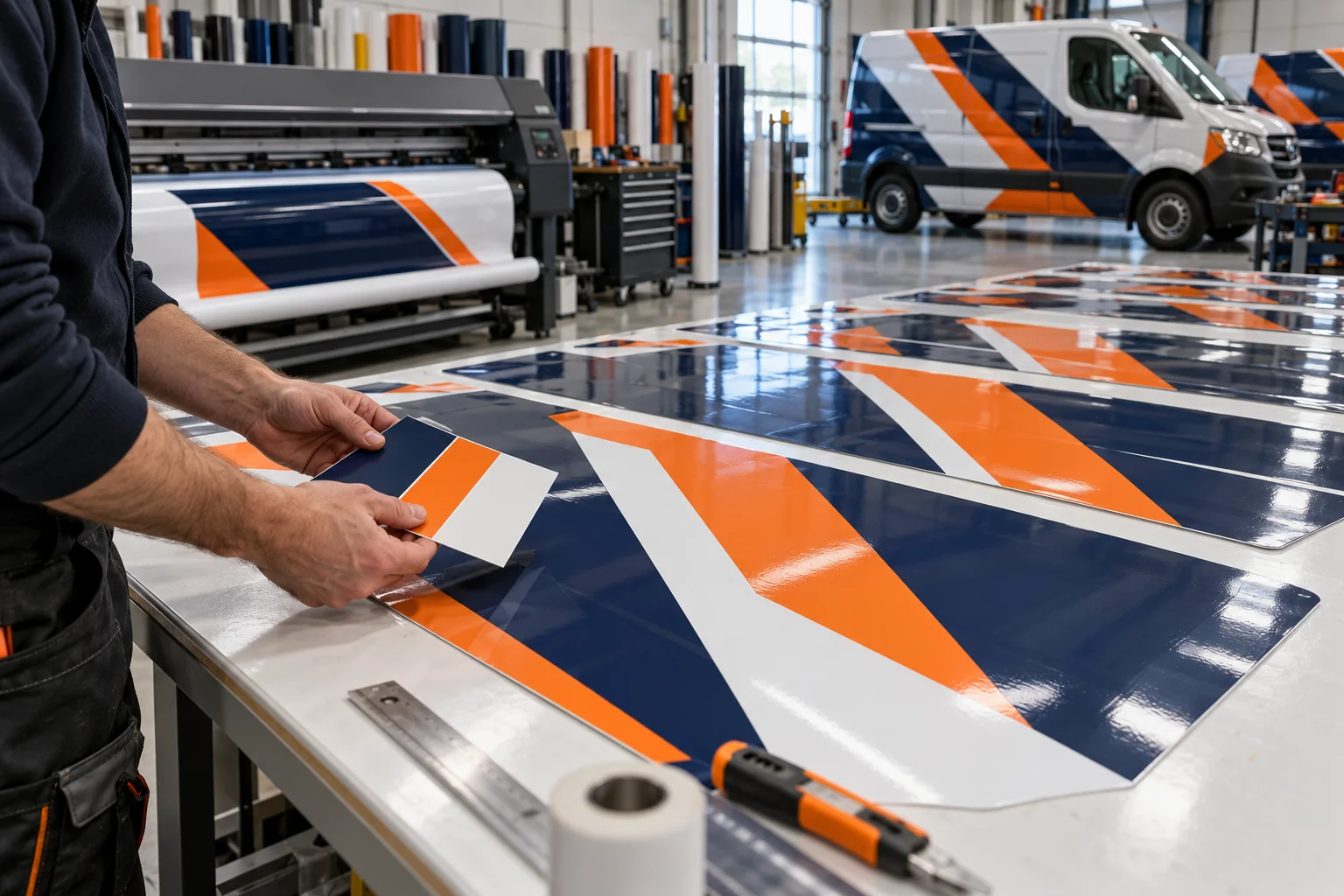
Repeated navy and orange fleet graphic panels checked at a production table
A physical reference supports consistency across repeat production.
One approved reference

Two vans can carry the same logo and still look different if the print settings, film finish or artwork scale changes. A repeatable fleet job needs a clear production specification, not just a picture of the first vehicle.

Manufacturer product guidance should match the intended substrate and shape. A conformable wrap film for curves is a different specification from a product intended mainly for flat signs. A familiar brand name alone does not prove suitability or establish the local warranty.

A clear specification makes the next vehicle easier to reproduce.
  • 01Artwork version Keep the approved file, layout and any vehicle-specific adaptations identifiable.
  • 02Material combination Name the printable film, ink system and compatible overlaminate where used.
  • 03Color reference Compare a physical sample when brand color matters. A phone screen is not a reliable print standard.
  • 04Panel plan Agree seams, overlaps and where designs stop around access points.

Approve a usable production proof

Check the phone number, website, spelling and vehicle-specific details against the final file. Test any QR code at the proposed printed size. Review the layout with doors open and closed so essential information is not split across moving panels or hidden by handles. Record the approved revision before printing repeated sets.

The body changes the installation

Vans and trucks need different surface decisions

01

Delivery van

Check before fitting

Roof height, sliding-door track, deep recesses and rear-door hardware

What this means for your wrap

Artwork must remain readable across openings. Roof and cab coverage need explicit agreement.

02

Box truck

Check before fitting

Box material, flat panels, rivets, seams and door latches

What this means for your wrap

Film selection and finishing must suit the substrate and repeated movement.

03

Tractor and trailer

Check before fitting

Separate units, different surface ages and high access areas

What this means for your wrap

Cab and trailer can require different materials, pricing and installation slots.

04

Refrigerated body

Check before fitting

Insulated construction, repaired skins, seals and equipment vents

What this means for your wrap

Do not treat specialist bodywork as ordinary painted steel or obstruct ventilation.

05

Company car

Check before fitting

Curved bumpers, sensors, mirrors and painted versus textured trim

What this means for your wrap

List eligible surfaces and exclusions instead of assuming every visible part can be wrapped.

Window graphics

Window graphics are a separate decision. A perforated product is not an automatic guarantee of safe visibility, particularly at night or in poor weather. Confirm permitted placement and the vehicle’s operating needs before adding glass to the design.

Curtain sides and composites

Likewise, ordinary vehicle-wrap film should not be assumed suitable for flexible curtain sides or every composite panel. Describe the body construction during the inquiry and allow the material choice to follow that assessment. Paint failure, texture and contamination can affect adhesion.

Leased and financed vehicles

For leased or financed vehicles, check the agreement and obtain any required consent before changing the exterior. Discuss removal and return-condition expectations early. A removable graphic does not guarantee damage-free removal from weak or previously repaired paint.

Translate a rate into a working budget

Two typical fleet job estimates

These are typical job estimates based on the published planning ranges above. They describe proposed work, not past customer projects. No fleet discount, current material availability or fixed collection time is assumed.

2022 Toyota Hiace cargo van

Typical job estimate

One partial commercial wrap on suitable painted side and rear areas. The layout keeps some original white paint visible and uses the agreed graphic system. Windows, roof coverage and major body repairs are excluded from this planning scope.

The starting budget assumes existing advertising does not require substantial removal. Confirm the actual body dimensions, printed area, laminate and installation details before treating the estimate as a job price.

From AED 4,500Published partial cargo-van starting guide before scope and VAT confirmation

The intended result is consistent business identification on the agreed panels while limiting the area to be produced and fitted.

Three 2021 Nissan NV350 delivery vans

Typical job estimate

Three matching vehicles using the published delivery-van full-wrap guide of AED 7,000–12,000 each. Plan installation in agreed slots and check the first vehicle before repeating the approved design.

All three are assumed to have suitable painted surfaces and comparable body dimensions. Different roof heights, old graphics, repairs and extra artwork adaptation change the budget.

AED 21,000–36,000Three-vehicle planning total before confirmed extras and VAT treatment

The intended result is a coordinated fleet finish with staged vehicle release. The final batch quote should show individual vehicle costs and any one-time production charges.

Think beyond the first installation

Repair a panel without restarting the fleet

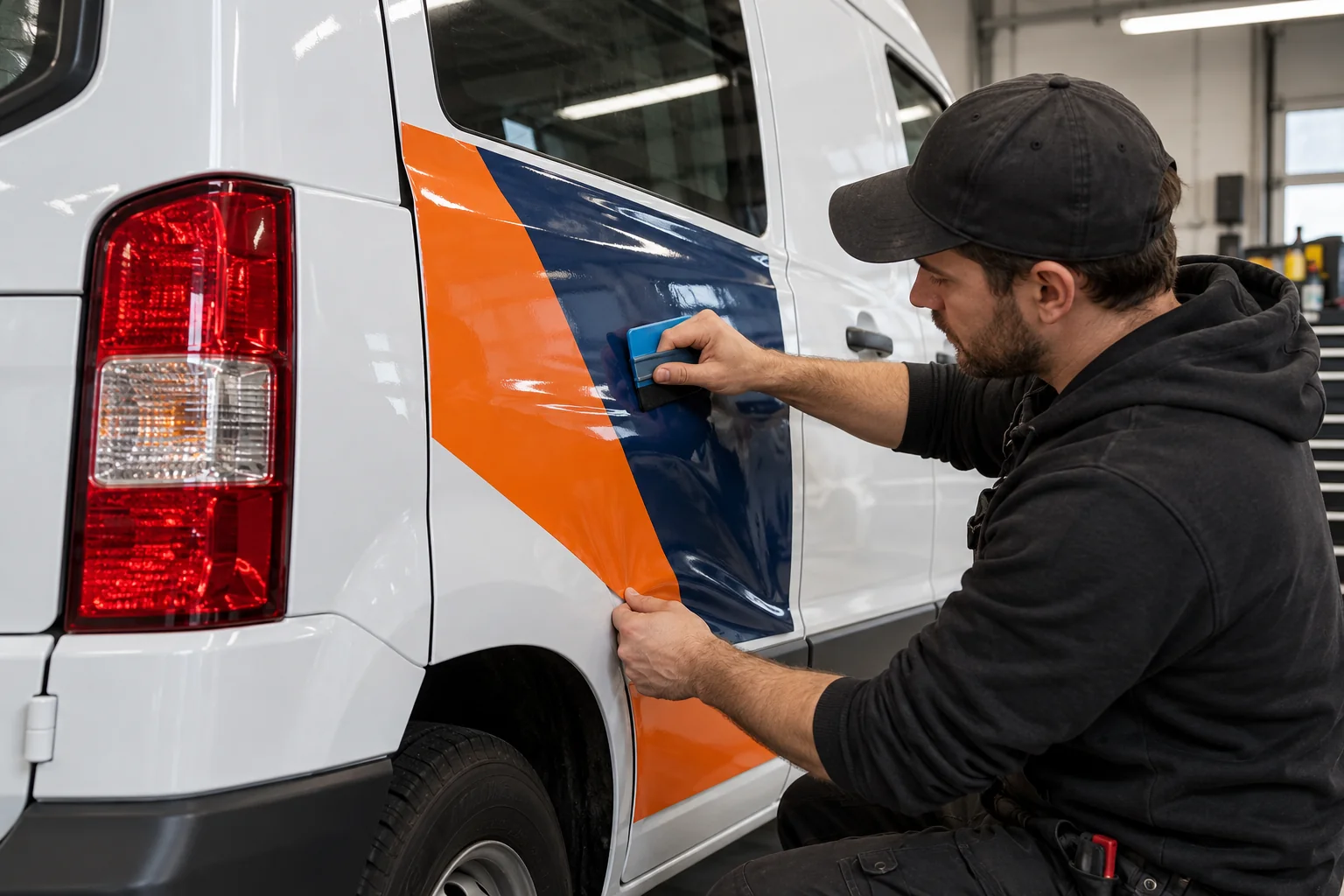
A replacement graphic panel being fitted to a delivery van
Panel boundaries can make future graphic replacement more manageable.
Start with the affected area

A scraped door does not always require a complete new wrap. Inspect the paint or body damage first, then assess whether the affected graphic can be replaced separately. A dented or newly repainted panel may need repair and curing before fresh film can be fitted.

Keep the artwork version, material identity and vehicle reference with the job record. Those details help establish which panel needs reproducing. Confirm file retention and reprint arrangements as part of the original order rather than assuming a design will be stored indefinitely.

  1. Send the vehicle identifier and a clear photo of the affected area
  2. Check whether the damage reaches the paint or substrate
  3. Compare the replacement with the surrounding aged graphic
  4. Agree reprint, removal and refitting costs before scheduling

A fresh print beside an older wrap

A new print can differ from weathered material. The original file and color reference help, but they cannot reverse fading on the rest of the vehicle. Sometimes a larger adjacent graphic area gives a more consistent result than a small patch.

Changing a number or campaign

When a phone number or campaign message changes, replacement depends on how it was produced. Separate lettering may be easier to renew than text integrated into a large printed image. Designing for later updates can reduce avoidable reprinting.

Care and permissions are part of the plan

Keep the fleet finish serviceable

Keep the depot wash routine consistent

Use the installed film’s cleaning instructions and waiting period after fitting. Remove contamination promptly with compatible products. Avoid abrasive brushes, unsuitable solvents and directing a pressure jet at edges. A depot wash routine should suit the graphic system across the fleet.

Act early when an edge lifts

If an edge lifts, photograph it and arrange a review. Do not trim, pull or glue it without advice. Material defects, fitting issues, impact damage and cleaning damage need different remedies, so the cause matters before a repair is promised.

Know which part of the wrap is covered

Warranty duration and regional conditions belong in the job documents. Ask whether the cover concerns the film, print, laminate or installation and which surfaces are included. No universal lifetime, impact protection or guaranteed resale-value increase applies to every commercial wrap.

Practical fleet questions

Commercial wrapping questions

How much should I budget for a commercial van wrap

The planning ranges on this page are AED 4,500–9,000 for partial to fuller cargo-van coverage and AED 7,000–12,000 for a delivery-van full-wrap scope. These categories can overlap. Body dimensions, covered panels and production specification decide which comparison is useful. Current prices and VAT inclusion need confirmation in the quote.

What happens if artwork changes after approval

Ask whether printing has started before approving a revision. A change can affect the proof, material already printed, installation slot and any required advertising approval. Agree the revised file, additional cost and collection plan before the new version enters production.

Can the vehicles be wrapped in smaller batches

Yes, discuss how many vehicles you can release at once and the desired rollout date. The actual schedule follows the material, vehicle condition and installation capacity. Agree individual arrival and collection slots rather than assuming the entire fleet must be delivered together.

Do you need finished artwork before I contact you

No. Start with the vehicle types, approximate count and what you want to change. Campaign creative and approval planning can be discussed through our car-branding service. Production begins after the layout, scope and required permissions are settled.

Is the truck wrap made from PPF

A commercial printed truck wrap normally uses graphic vinyl with the specified print and protection system. Transparent PPF serves a different paint-protection purpose. Your quotation identifies the actual product rather than treating the two services as interchangeable.

Will one price cover every van in the fleet

Only if the vehicles and included work genuinely match. Roof height, body length, old graphics, repairs and layout changes affect the amount of material and fitting time. Ask for vehicle groups and individual extras on the quotation.

Can a damaged logo or panel be replaced later

Often a selected piece can be reproduced and fitted after checking the surface. File availability, film identity and fading affect the match. Agree artwork retention and reprint arrangements with the original order.

Are permits and VAT included in the displayed ranges

The published planning ranges do not establish a complete current offer or a verified VAT basis. Your written quote should separate approval costs and extras and state the final VAT-inclusive amount before you approve the job.

Fleet wrapping inquiries are handled by Wrapping.ae, operated by AMF Auto Services LLC in Al Quoz, Dubai. Workshop scenes illustrate the service and are not evidence of completed customer fleets.

Your next step

Plan the next fleet batch

Start with the vehicle types, approximate count and how many can be released at once. We can discuss coverage, production details and an Al Quoz installation plan. Finished artwork is not required for the first conversation.

Scroll to Top