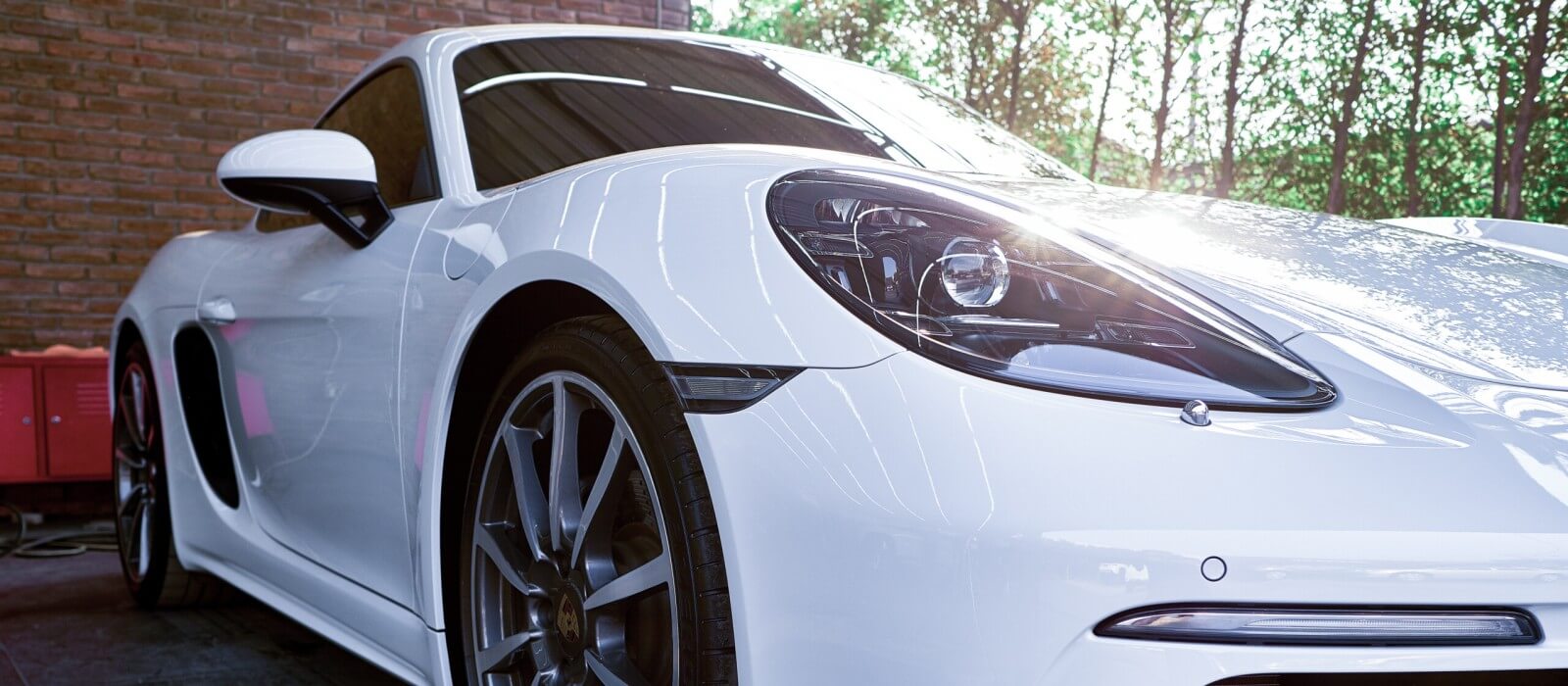
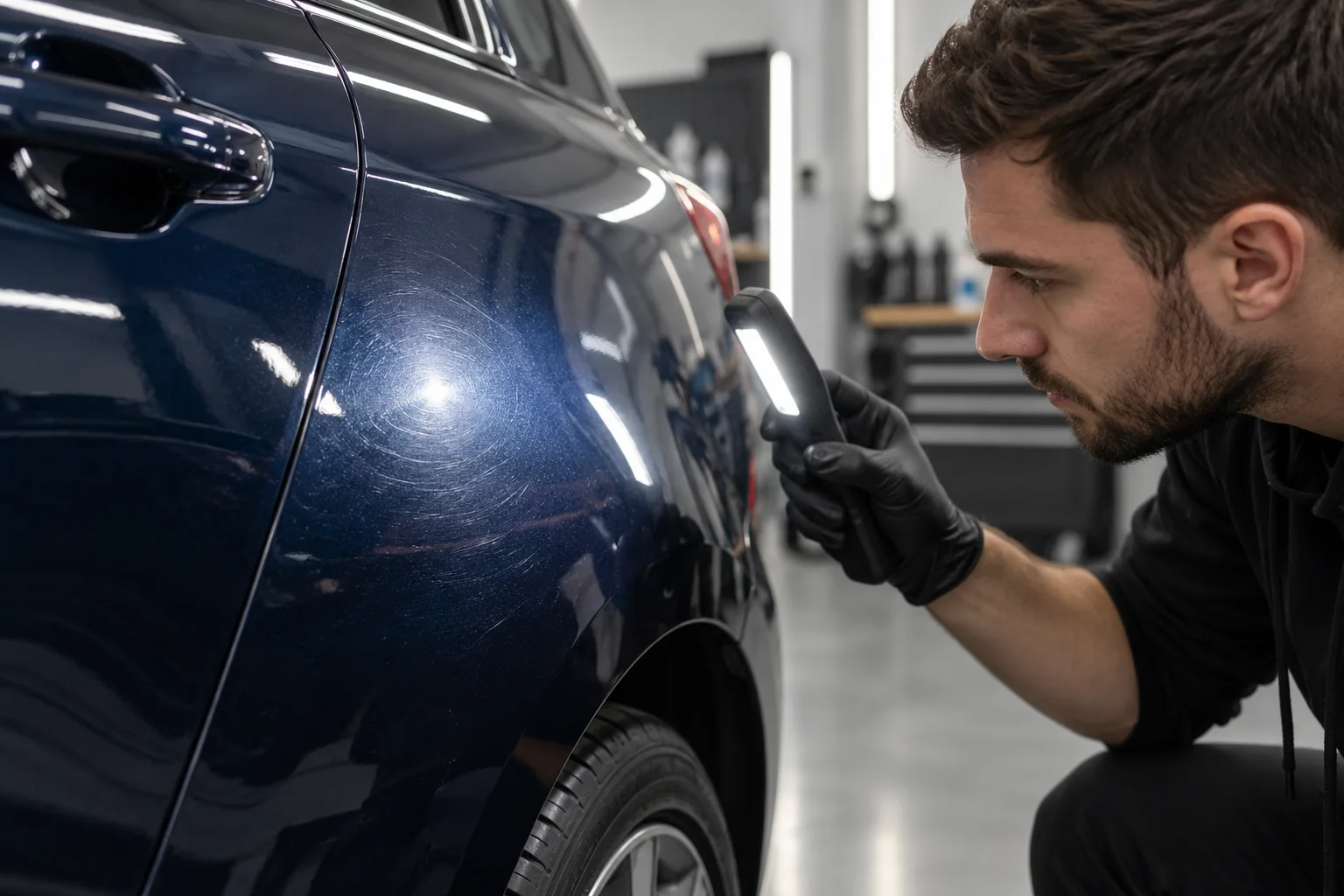
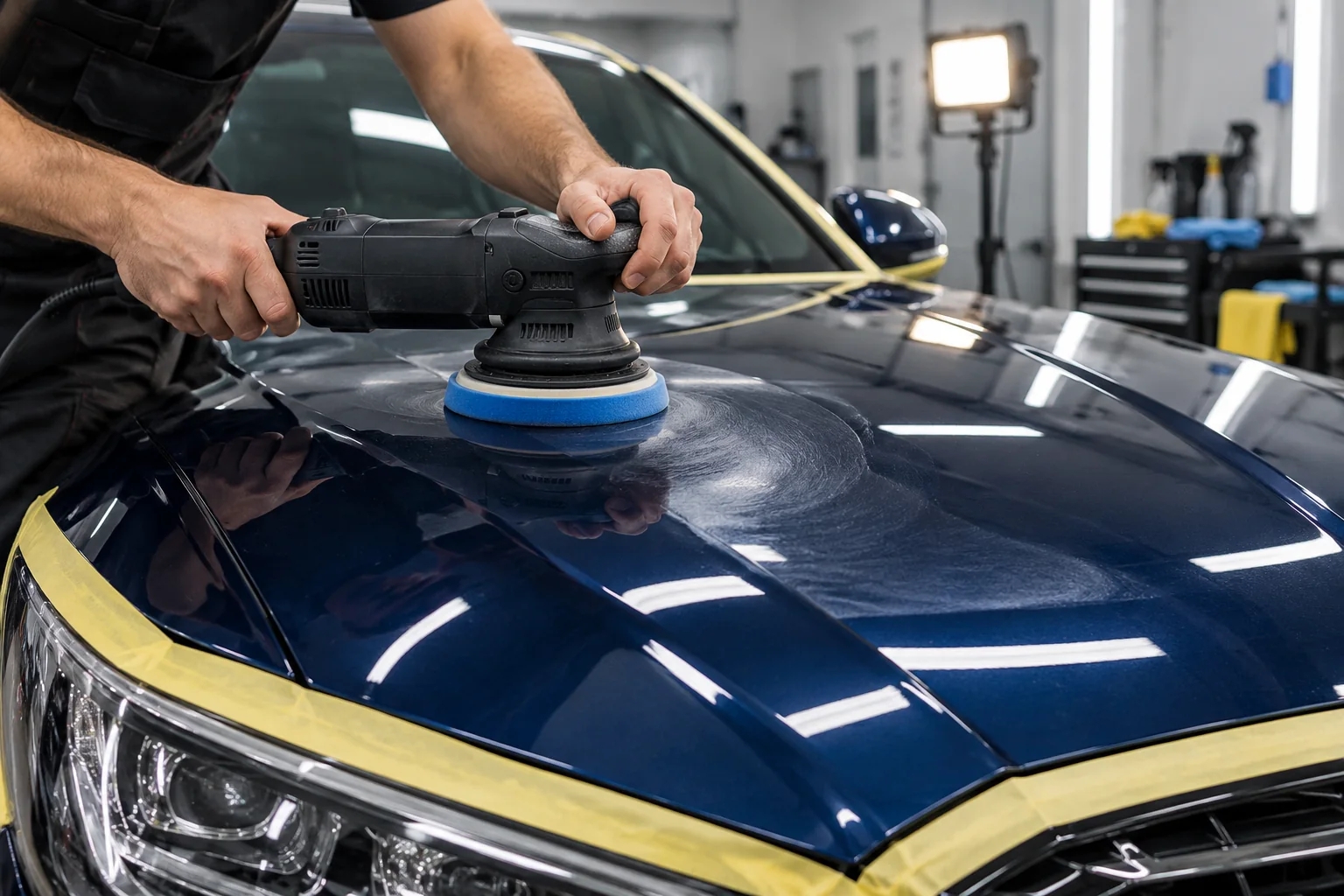
We would start with a wash and a visual review of the vehicle in more than one light. Road film, bonded fallout, water spots, polishing haze and actual scratches can look similar in a quick photograph. The finish must be clean before deciding how much abrasive work is justified.
Panel history matters. A recently repainted bumper, an older original hood and a previous repair may respond differently. Edges, sharp body lines and areas with thin or uncertain paint need extra caution. A paint thickness reading can help map differences, but it does not by itself tell the full condition of every layer.
IdentifySwirls, oxidation, etching, touch-up, repaint edges and clear-coat failure.
CheckCoating type, trim, film edges, prior polishing and any sensitive areas.
RecordPhotographs of the starting condition and defects that cannot be corrected safely.