
Daily highway use
The leading bumper, hood edge, mirror caps and front fenders see debris first. A front-end package can concentrate the budget there, but the exposed boundary on a partial hood may remain visible in some light.
Clear paint protection · Al Quoz, Dubai
Protect the panels that take road spray, stone chips and everyday contact. Choose the coverage and film before comparing totals.
PPF is a physical clear or specialty-finish film applied to suitable painted panels. We can inspect the vehicle and quote a defined partial, front-end or full-body plan. The exact film line, edge finish, preparation and written warranty should appear on the proposal.
Get the actual panel list, film series, payable price and written UAE warranty before approving the job.
Choose by exposure
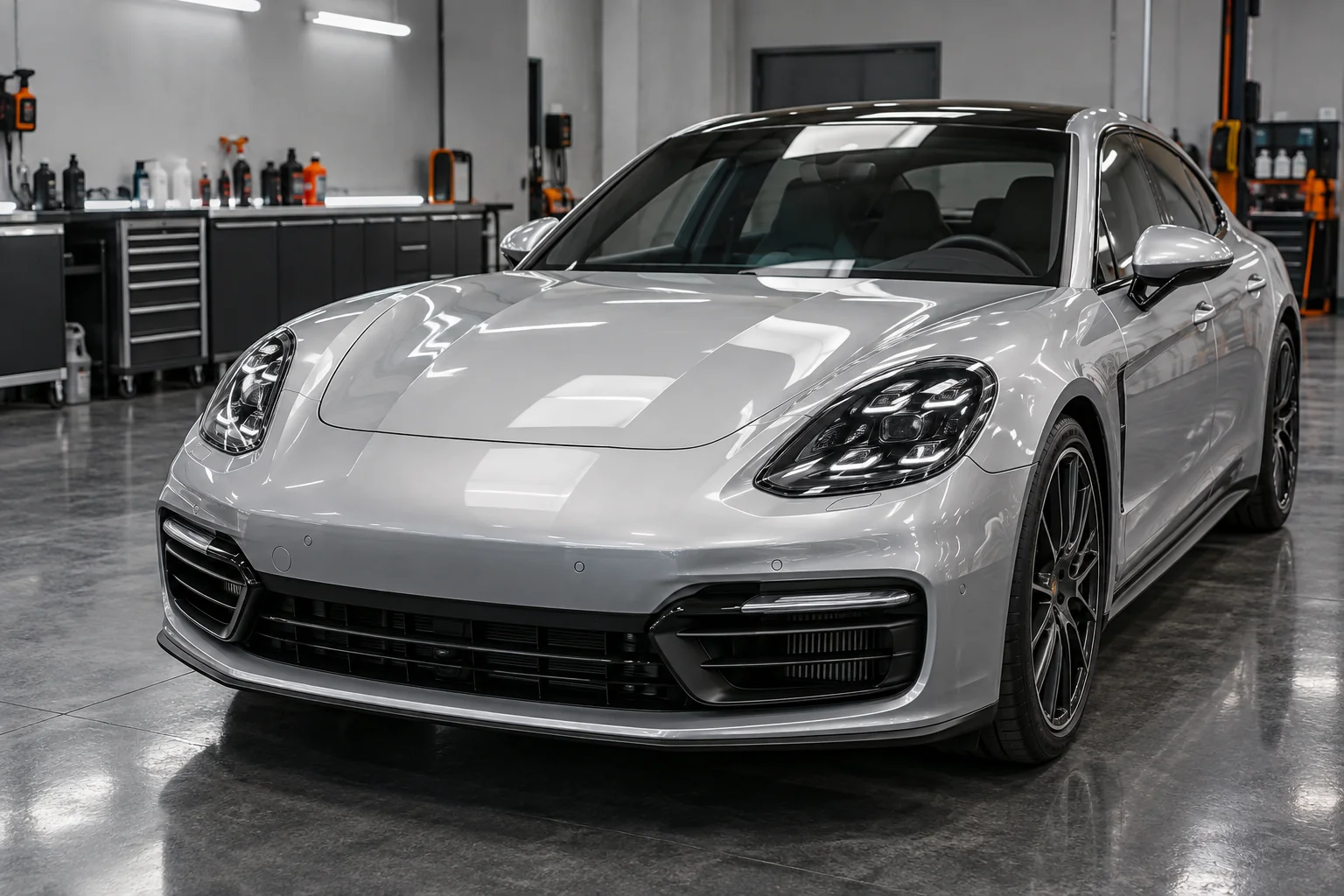
Paint protection film creates a sacrificial layer over the areas you choose. It can reduce damage from small road debris and light contact, but it cannot make paint indestructible. A harder impact may cut through the film or dent the panel. Existing chips and paint defects will still be visible unless separately repaired.
The leading bumper, hood edge, mirror caps and front fenders see debris first. A front-end package can concentrate the budget there, but the exposed boundary on a partial hood may remain visible in some light.
Door cups, door edges, sill entries and loading lips take hand, bag and shoe contact. Small pieces can protect these points without covering every painted panel. Agree whether trim and painted plastic are included.
Full-body coverage can give more consistent film appearance and easier surface maintenance, with a much higher material and labor requirement. It still needs washing and careful attention to edges and damage.
Gloss and matte or satin films change the visual brief. A matte PPF over gloss paint can alter appearance, but the selected product must support that use. View an actual sample against the car and approve any change to badges, gloss-black trim or colored panels.
For dust, heat and water-spot limitations, read our PPF weather-protection guide before choosing coverage.
Count panels, not package names
| Plan to discuss | Typical decision | Panels to specify on your quote | Visible boundary and trade-off |
|---|---|---|---|
| High-contact pieces | Concentrate on door cups, edges, mirrors, luggage lip or headlights where appropriate. | Name every piece, and whether the bumper or hood is excluded. | Individual shapes and cut lines can be visible. This is not a whole front-end package. |
| Partial front | Protect the most exposed part of selected front panels at a lower material area. | Give the bumper, hood length, fenders, mirrors, lights and edge finish separately. | A film seam across the hood or fender is expected unless full panels are specified. |
| Full front | Cover complete front panels for a more consistent leading-edge look. | Confirm full hood, bumper, full front fenders, mirror caps and any lights or A-pillars. | Complex bumper grilles and sensors may require relief cuts and distinct piece counts. |
| Full body | Cover the painted exterior with a defined finish and edge method. | List every panel and exclusions such as roof, spoilers, door jambs, trim and wheels. | More seams, disassembly decisions and time. “Full” is not a promise that every recess is covered. |
These are planning descriptions, not fixed Wrapping.ae packages. A front bumper plus partial hood should not be compared on price with a full hood, full fenders and mirrors. Ask for a marked panel diagram or written list before paying a deposit.
Panel scope and material
PPF prices depend on the film, finish, vehicle geometry and the panels actually covered. Use these rounded Dubai market estimates to set a budget, then compare an itemized quote for your car. A partial hood and bumper cannot be priced as though they were a complete front end.
A specified set such as door cups, edges or mirror caps. This does not include the bumper or hood.
One bumper only. Deep recesses, grille openings and sensors can change fitting time.
A defined partial scope, not complete front fenders. State hood extent, mirror coverage and visible stopping lines.
Full hood, front bumper, full front fenders and mirror caps. Lights and A-pillars are separate unless specifically included.
A listed exterior panel plan including the roof where agreed. Jambs, trim, lights and wheels are separate unless specified.
All figures are market planning estimates before applicable tax, not fixed Wrapping.ae offers or manufacturer prices. Your written quote must identify the tax amount and final payable total. Premium series, satin or matte finishes, large vehicles and complex parts may exceed these budgets.
Old-film removal and adhesive cleaning, correction, chipped paint repair, repainted panels, custom fitting and trim removal can change labor. A cheaper quote may exclude mirrors, the roof or tucked edges. Compare the complete panel list, exact film series and finish, edge plan, preparation, refitting and inspection on the same basis.
No fixed entry package or generic warranty duration is advertised here. An available offer should name the eligible vehicle and panels, actual film, written regional warranty conditions, dates and payable total. Approve substitutions or additional work before film is cut.
A scope you can compare
These typical job estimates illustrate a defined scope on a named vehicle. They are planning examples, not completed installations or fixed offers. Inspection, the selected product and the final panel list set your actual quote.
Assumed work Gloss polyurethane PPF on the complete hood, front bumper, full front fenders and mirror caps, with routine panel cleaning and the agreed edge method.
Priced separately Headlights, A-pillars, paint repair, correction and old-film removal. Existing chips remain visible unless repaired before fitting.
Assumed work Gloss polyurethane PPF on a listed painted exterior: hood, roof, doors, fenders, rear quarters, tailgate and painted bumpers. Repainted areas require assessment.
Priced separately Door jambs, unpainted trim, glass, lights, wheels, old-film removal and paint repair. Record the film series and any safely removable trim on the final estimate.
Share your model and the result you want. Photos are optional; an inspection can settle any paint condition or coverage question before you approve the work.
Set the edge plan
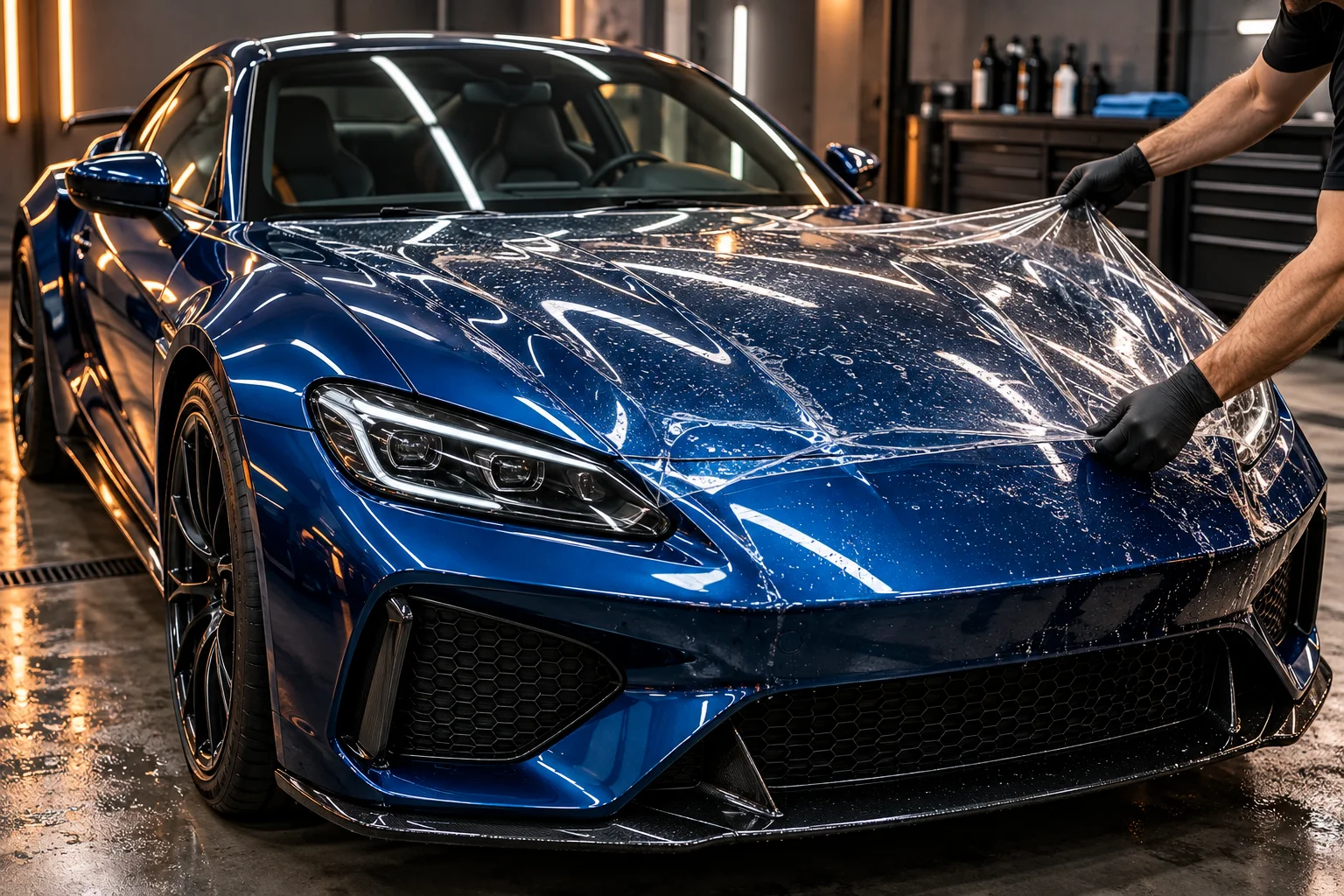
A package name will not tell you where the film ends. The edge decision controls what you see along a hood, fender, bumper and door.
Mark the covered panels and expected seam positions. Say which badges or trim pieces are removed, which stay fitted, and how the edges will be inspected at handover. Add the roof, spoilers, skirts and door jambs individually if the quote says “full body.”
Product before promise
A familiar manufacturer name is a starting point, not a complete specification. Put the exact product line and identifier on the estimate and invoice so its optical finish, care and warranty can be checked later.
Many modern PPFs use a polyurethane film with a topcoat, but specifications vary by product. Compare the actual technical sheet for thickness, finish, optical appearance and approved substrates. A nominal thickness figure is not a complete measure of impact protection.
Some topcoats can recover certain light surface marks with warmth under specified conditions. Deep cuts, embedded grit, gouges and damaged paint are not cured by sunlight. Ask what the selected film maker actually claims and what routine care it requires.
If offered XPEL, 3M or another maker, compare the specific series and current regional document, not a brand-wide number. Request proof of eligibility or registration required for the quoted installation.
Film supply can change. A substitute must be named, shown with its own specification and warranty, and approved at a revised price before fitting. A generic “premium PPF” line cannot support a product-specific claim later.
These are published manufacturer references to help you compare a proposed film. They do not confirm workshop stock or authorized-installer status. The quote must name the actual supplied series, product designation and applicable regional terms.
| Named film reference | Finish and purpose | Manufacturer warranty reference |
|---|---|---|
| XPEL ULTIMATE PLUS | Clear gloss PPF for retaining a gloss appearance. Check the exact variant and specification quoted. | XPEL publishes a limited ten-year material-defect term for this line, subject to its conditions and eligible installation. |
| XPEL STEALTH | Satin finish PPF; the appearance brief differs from clear gloss. Approve a physical sample for your paint. | XPEL lists a limited ten-year material-defect term for STEALTH, with its own coverage, exclusions and claim evidence. |
| 3M Scotchgard PPF Pro Series 200 | A specific series with gloss and matte options. State the selected finish and designation, not only “3M film.” | 3M’s product record advertises a ten-year consumer warranty subject to its terms. Confirm the regional card and installation eligibility for the quoted job. |
| Avery Dennison PPF | Xtreme, Xtreme Plus and Ultima Plus families offer different finishes and fitting characteristics. | Compare the exact product and Africa and Middle East terms. A warranty shown for another region does not establish UAE eligibility. |
| Carbins PPF | Compare an identified S-series gloss or M-series matte model rather than the brand alone. | Record the model code, local warranty issuer and claim remedy. A catalog term does not confirm the installation terms. |
| KDX PPF | Check the regional name and matching LUMI product designation on the quote. | Match the supplied roll and regional warranty registration to the covered panels. |
Published manufacturer terms are product references, not a Wrapping.ae ten-year promise. Material eligibility and the workshop’s workmanship coverage must be documented separately.
For model and body-revision decisions, use our Tesla PPF coverage service. Film choice belongs alongside a model-specific panel and equipment check.
Check the substrate
Clear film can reveal chips, swirls and old repairs. Start with a daylight condition record, then choose preparation that suits the panel rather than assuming film will hide a mark.
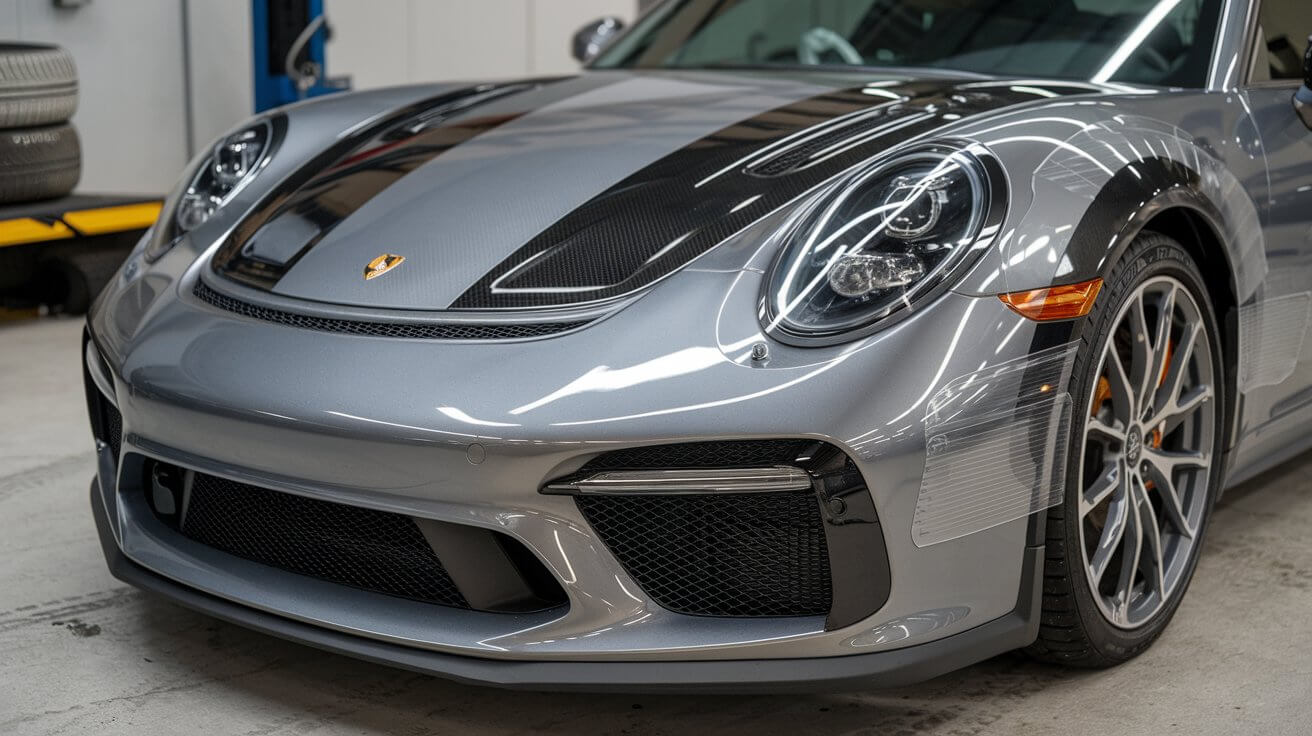
On a sound finish, wash and decontaminate the covered panels, clean edges and remove residues that affect adhesion. Record existing chips and tell the customer which small imperfections remain visible. Existing wax or coating may need removal from the fitting area.
Light wash marks may justify a separately quoted paint correction stage. Check clear-coat condition and a test spot first. Abrasive correction is not a routine prerequisite on every new car, and it cannot restore missing clear coat.
Peeling clear coat, poorly bonded repairs or a newly painted panel need a different decision. Follow the paint shop’s curing guidance and the film maker’s substrate rules. If an old film must come off, quote removal and adhesive cleaning separately and discuss the risk to repaired paint.
Photograph the condition, identify any panel that cannot be filmed yet, and approve added repair or correction before it starts. If hidden damage appears beneath existing PPF, pause for a revised scope rather than sealing it under a new piece.
Installation sequence
Agree the film SKU, finish, pattern, edge style, removal or disassembly and total. Mark included and excluded panels. Record current paint condition and any existing film.
Wash, decontaminate and clean around edges. Resolve paint correction or repairs separately. Dust, old polish and trapped water in seams can affect the fitting.
Position and shape pieces in a controlled environment, working around curves, relief cuts and sensors. Avoid shortcuts that leave unsupported stretch or unapproved cuts against paint.
Inspect edges, seams and visible contamination together. Some moisture appearance can change during settling. Get the product-specific washing and return-check instructions at handover.
Installation time depends on panel count, geometry, paint preparation and whether parts are removed. It is better to agree a collection window and a final inspection than to promise one universal same-day turnaround. Ask when the first wash or pressure rinse is permitted for the actual film and edges.
Keep two promises distinct
A warranty duration makes sense only beside the film series, covered panels and written regional terms. Material and fitting concerns can follow different claim routes.
Ask for the exact manufacturer, line and code on the invoice, plus the document applicable in the UAE. Read which defects are covered for that series, such as yellowing, cracking, bubbling, peeling, staining or loss of clarity where listed. Ask whether registration or authorized installation is required and what a successful claim provides.
Stone impact, accident cuts, neglected contamination, chemical misuse and damaged paint are not automatically material defects. A warranty for the film does not insure the paint underneath it.
Edge adhesion, fit, cuts and trapped contamination may be workmanship questions. The installer should name its own coverage period, how you report an issue, the inspection process and whether removal, replacement film and refitting labor are included in a valid claim.
If a panel is repainted, a badge moved or an old piece replaced, ask how that affects the original coverage. Keep the product term and workshop term as separate entries rather than one unexplained “five-year” number.
Maker, series, finish and identifier
Registration, date and covered panels
UAE documents, registration and exclusions
Contact, inspection and remedy
Review the XPEL warranty information for covered manufacturing defects, exclusions and proof required to claim. Keep the receipt, film identity and coverage record. Its published term does not establish the film or installer eligibility for your booking.
Living with the film
Film reduces some paint damage by taking the contact itself. It still needs cleaning, and a damaged piece may need replacement. The installed product’s instructions should govern the initial settling period and routine wash.
Follow the provided wait before washing or using high-pressure water. Avoid picking at edges or trying to push out moisture yourself. Report persistent bubbles, lifting, trapped debris or functional issues for assessment.
Pre-rinse grit, use clean wash media and appropriate shampoo, and dry with a soft towel. Keep pressure-washer nozzles and strong chemicals away from edges according to the product instructions. Remove bird droppings and insect residue promptly.
A cut or stained film piece may be replaceable without replacing every panel, subject to matching stock and paint condition. Inspect the paint under it before authorizing removal. Repairing the film does not repair a dent or exposed paint chip.
Film can be removed, but “fully reversible without damage” is too absolute for old repairs, failing clear coat or repainted panels. Removal method, age, adhesive and substrate condition matter. Ask for an inspection and a separate quote when replacing or taking off an old installation.
Choose the layers by purpose
The two products solve different ownership problems. Film is the physical layer on the painted areas you choose for road contact. A compatible coating can make suitable film or remaining paint easier to wash, but it does not turn uncovered panels into impact-protected panels.
For a highway car, consider the bumper, hood, fenders and mirrors first. The quote should mark exactly where film goes and where it stops. A ceramic treatment is not a substitute for that material on chip-prone areas.
Ceramic coating on the remaining sound paint can be a separate choice. Coating over PPF needs the film and coating makers’ compatibility instructions. Name the film, coating, treated surfaces and first-wash rules independently.
The film’s product and edge workmanship terms remain distinct from any coating warranty. A coating does not repair a damaged film piece, and a film on the nose does not protect unfilmed doors or roof. Matte paint and wraps also need substrate-specific product checks.
XPEL’s published warranty exclusions include non-XPEL branded ceramic coatings. Confirm the exact film and coating pairing, care products and regional warranty eligibility before application. A coating recommendation should identify both products, not just say “safe for PPF.”
A simple first message
Tell us which areas you want protected or how you use the car. Make, model, year and your main goal are enough to start. Photos and a budget help, but are optional.
Give the model and year. Mention gloss, satin or matte paint and any known repaint or existing film.
Say which marks or panels concern you. A short message is enough; daylight photos can help narrow the inspection.
Share your preferred date. Availability and collection time depend on the agreed preparation and product.
A panel list or diagram, named film and finish, edge method, preparation, removal and refitting scope, tax and payable total, collection window, washing instructions and separate product and workmanship terms. If inspection changes the job, review the revised work and amount before it begins.
Straight answers
Market planning estimates before applicable tax are about AED 4,500–8,500 for a defined full-front scope and AED 13,000–22,000+ for a listed painted exterior. A single bumper or partial front costs differently. Film series, finish, vehicle size, preparation and removal must be specified in the current quote.
Define the complete hood, front bumper, full front fenders and mirror caps. Confirm whether lights or A-pillars are extra, where edges finish, which trim is removed and whether correction or old-film removal is separate.
No. Partial coverage may have a visible line across a hood or fender. Full-front should list complete front panels and every included mirror, light and pillar explicitly.
The exact series and eligible installation determine the material term. For example, XPEL publishes limited ten-year terms for ULTIMATE PLUS and STEALTH, while 3M advertises a ten-year consumer term for Pro Series 200, each subject to conditions. These are product references, not a confirmed warranty for your booking. Request UAE terms and separate workmanship coverage.
No. It can take many small impacts, but a hard or sharp strike may damage film and paint. Coverage only protects the panels actually filmed.
Some product topcoats can recover certain fine surface marks under specified warmth. Cuts, gouges and damaged paint do not self-heal. Check the chosen film’s sheet.
No. Transparent film can reveal scratches, chips and contamination. Paint assessment and optional correction or repair should happen first.
Removal is usually possible on sound, suitable paint, but damage risk rises with weak clear coat, repairs and aging adhesive. Inspect and quote removal separately.
Only select a coating approved for the exact film and check warranty conditions as well as adhesion. Keep the film, coating, treated surfaces, care and warranties as separate named entries. The combination section explains a manufacturer-specific exclusion to check.
Follow the actual installed film’s settling and washing instructions. Check edges at collection and report persistent lifting, bubbles or trapped debris.
Start with the panels
Send your model, year and main goal. We can help choose the panels and film, then confirm the edge plan, preparation, payable total and written terms. Photos are optional.