
Automotive fabric
Woven or knitted cloth can suit a daily driver when texture, abrasion performance and cleaning needs fit the use. Match the original weave where possible. Stains, fading and visible pile direction can make an exact match difficult.
Al Quoz · Dubai
Repair a worn seat, replace damaged panels, or refresh the cabin with a material that suits your car.
A torn bolster does not always need a complete re-cover. Start with an inspection of the cover, foam and built-in seat functions. We can discuss seat upholstery, headliners, door inserts and carpets, then define the work and total before you approve it.
Tell us your car model and what you want to improve. Photos are welcome but optional.
Make a useful choice
Choose the smallest repair that leaves the surrounding material and seat structure sound. Cleaning can improve dirt and some surface marks, but it cannot restore torn cloth, missing foam or a split leather panel.
| Seat condition | Possible route | What decides the scope |
|---|---|---|
| Surface dirt or mild discoloration | Cleaning or a compatible surface treatment | Check whether the finish is intact. A cosmetic treatment cannot replace missing material. |
| One open seam or small damaged area | Localized seam repair or panel replacement | The surrounding cover must be strong enough, with access that avoids the airbag seam and equipment. |
| Worn entry bolster or collapsed cushion edge | Bolster panel and possible foam repair | Check the cover and support together. A new skin over damaged foam may remain loose or uncomfortable. |
| Several brittle or cracked panels | Complete seat re-cover | Compare the total with several individual repairs. Preserve the pattern, controls and safety features. |
| Mismatched or extensively worn cabin | Coordinated seats and selected trim | List each included surface. Door inserts, roof lining and carpet are separate items unless specified. |
A panel repair can leave a visible difference because older upholstery changes color, texture and sheen. A full re-cover improves consistency on that seat, but it may still differ from untouched rear seats. View the sample beside the original material in daylight before choosing the boundary of the work.
Understand the total
These Dubai market budget estimates help compare the size of a job. They are not fixed Wrapping.ae prices or a current promotional offer. The final written quote defines material, parts, labor, removal and refitting, and the total including applicable tax.
| Work | Market budget | Price unit and scope |
|---|---|---|
| Small seat surface or bolster repair | AED 300–800 | One affected area. Panel replacement, foam rebuilding or airbag-related work may change the total. |
| Fabric seat re-cover | From AED 400 | Per seat in basic published market examples. Specify cushion, backrest, headrest and foam coverage; complex work needs its own quote. |
| Synthetic upholstery seat re-cover | AED 600–1,800 | Per seat. PU or PVC composition, design and vehicle access affect the quote. |
| Genuine leather seat re-cover | AED 1,500–4,500 | Per seat. Grade, hide coverage, perforation, matching and complex seats affect the total. |
| Headliner replacement | AED 800–2,500 | Per vehicle. Vehicle size, roof board condition, sunroof and trim removal matter. |
| Carpet replacement | AED 700–2,200 | Per vehicle. Identify carpet coverage, underlay and any moisture or substrate work. |
| Coordinated interior renewal | AED 7,000–30,000 | Per vehicle. Seats and agreed cabin trim only. A named surface list is essential. |
Two estimates are comparable only when the same pieces and materials are included. “Leather seats” may mean leather on the contact faces with synthetic material on the sides or backs. A five-seat package may leave out headrests, door inserts, seat foam or carpet. Luxury mechanisms and difficult access can increase labor even when the visible repair is small.
Price alone does not identify material quality. A useful quote names the actual material and coverage, shows any removal or refitting charge, identifies optional work, and gives one payable total. Additional damage uncovered during dismantling needs an agreed revised scope before extra work.
Know what will be fitted
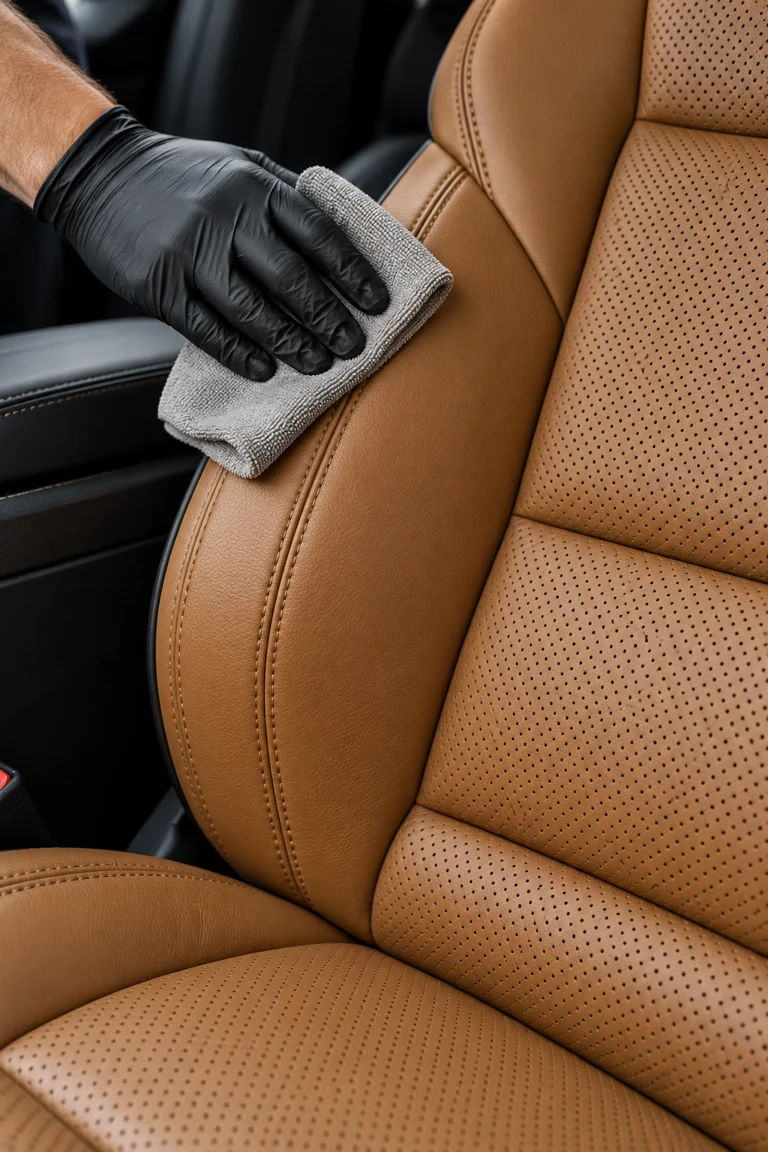
Fabric, synthetic upholstery and genuine leather have different construction and care requirements. “Premium leather” is too broad to make a useful comparison. The sample and supplier description should identify what will actually be fitted.
Match color, grain, sheen and stretch as well as the label. A perforated finish may be needed for a ventilated seat, while backing thickness and flexibility affect how the cover follows the cushion. Specify the contact areas, side panels, rear panels and headrest separately when mixed materials are used.
Nappa and other marketing descriptions do not establish one universal grade. A genuine-leather quote should describe the leather type and finish and the panels made from hide. A suede-like synthetic fabric should not be called Alcantara unless it is the branded product and can be identified.
Woven or knitted cloth can suit a daily driver when texture, abrasion performance and cleaning needs fit the use. Match the original weave where possible. Stains, fading and visible pile direction can make an exact match difficult.
PU and PVC based coverings are alternatives to hide, not grades of genuine leather. Ask for the actual composition and automotive suitability. Surface finish, backing and how the material responds to heat and repeated flexing matter more than a “leather look” label.
Coated or pigmented automotive leather differs from more absorbent finishes. The supplier specification and sample should guide selection and care. Confirm where genuine leather will be used, rather than assuming that every hidden seat panel is the same material.
Model specific suitability
Modern upholstery sits around safety and comfort equipment. Compatibility is a condition of the job, not an automatic promise for every seat. The exact model, year and seat specification determine what can be repaired or replaced.
A seat-mounted airbag may deploy through a designed seam. Ordinary thread, added layers, patches or altered stitching can change that path. The deployment area needs vehicle-specific instructions and a suitable cover construction. If compatibility cannot be established, that alteration should not proceed.
A heater element must be protected during cover removal. Ventilated seats need appropriate perforation, backing and unobstructed airflow paths. A thicker or solid replacement can change comfort performance even when it looks similar. Identify these features before selecting the material.
Occupant sensors, wiring, belt buckles, lumbar support and powered adjustments must be considered during access and refitting. Record existing warnings and operation so pre-existing faults are not confused with the upholstery work. Seat restraint faults need suitable diagnosis.
Before collection, the agreed checks should cover adjustment, recline, heating and ventilation where fitted, accessible controls, connectors and warning indicators. A trim job does not certify the restraint system. As one manufacturer example, Honda advises against replacing or covering a seat back without consulting its dealer because an unsuitable cover can obstruct a side airbag. See the 2026 Civic owner guidance; the instructions for your vehicle take precedence.
Define each cabin surface
A hanging roof lining may involve failed backing foam or adhesive, not just loose cloth. Inspect the roof board and surrounding trim. Sunroofs, roof lights and handles influence removal. A leak needs diagnosis before fitting new material so the same moisture does not damage it again.
A fabric or synthetic insert can be quoted separately from the whole door panel. The substrate, handles, switches and mounting clips must remain usable. Peeling material and a damaged armrest support are different repairs, so the estimate should identify both when present.
Define whether the work covers the footwells, center tunnel, rear area or luggage compartment. Wet underlay and odor can continue beneath a new top layer. Drying, leak repair or sound insulation are separate tasks unless included in the scope.
For stains on intact seats, seat cleaning may be the better first step. A broader cabin clean belongs with interior detailing. For decorative hard trim, car interior wrapping is a different process from re-covering seats. Dashboard restoration needs a separate assessment, especially around airbag doors and controls. Do not turn a seat quote into an undefined whole-interior package.
A defined workshop visit
The booking time and material lead time are separate. Dubai workshop listings commonly indicate about one to two working days for some seat jobs and three to five for a larger interior, but these are planning examples, not our confirmed turnaround. Material ordering, pattern work, foam damage and vehicle access can extend the schedule. Your booking needs an agreed start date and collection estimate.
Removing a seat can involve electrical connectors, restraint components and mounting hardware. The access method and refitting requirements follow the vehicle information. Broken clips, damaged fasteners or newly exposed foam problems should be explained before the job expands. The estimate should make it clear whether these parts are included or charged separately.
Assess the visible damage, surrounding cover, foam and fitted equipment. Compare a local repair with a full re-cover when both are sensible. View the material sample, agree the repair boundary and identify any likely mismatch. A photo estimate remains provisional until the seat is inspected.
The written estimate should list each seat or trim piece, material and finish, foam work, stitching pattern and access required. Confirm whether the seat stays in the car, comes out as an assembly, or needs wider trim dismantling. Material supply and any outsourcing affect timing.
Refit the agreed trim and confirm its attachment, finish and access to controls. Review the included function checks and any exceptions identified beforehand. At collection, inspect panel fit, seam alignment, headrest movement and the repaired area, and receive care and warranty information.
After the repair
The warranty duration is confirmed in the written job quote. Read the duration and terms for the selected work before approving it. Workmanship cover and a material supplier warranty are different: stitching, attachment and fit are installation issues, while defects in the supplied covering depend on its product terms.
Before approval, the document should state the duration, covered work, exclusions and how a claim is inspected. Normal wear, cuts, burns, chemical damage, pre-existing faults and moisture from an unrepaired leak should be addressed clearly. Keep the invoice and material description so a concern can be traced to the job.
Use the care instructions for the selected finish. Test any cleaner on an inconspicuous area and avoid aggressive solvents or soaking the seat. Remove grit from seams, attend to spills promptly and keep heater controls and ventilation openings clear. A treatment intended for coated leather may be unsuitable for cloth or an absorbent finish.
Examples for decision making
Often a localized panel is an option when the neighboring material and foam are sound. Several brittle panels or a failed cushion may justify a larger repair. Inspection decides the route.
Basic published fabric seat examples start from AED 400. Market budgeting ranges here are AED 600–1,800 per synthetic seat and AED 1,500–4,500 per genuine leather seat. They are estimates, not fixed workshop offers. The quoted material and included pieces determine the total.
A sample can help match color, grain and sheen, but aged material may differ visibly. A wider re-cover can improve consistency. Agree any likely mismatch before the work.
Only with a suitable material and access plan for the exact seat. Perforation, backing and heater components need consideration. Confirm the included function checks before fitting.
The deployment seam cannot be treated as ordinary decorative stitching. The vehicle instructions and cover construction must support the proposed work. If suitability cannot be established, that alteration should not proceed.
Some seat jobs in Dubai are listed at one to two working days and larger interiors at three to five, but these are planning examples. Your collection estimate depends on material supply, removal, pattern and foam work and is confirmed with the booking.
Only the cleaning work listed in the estimate is included. A full interior detail, odor treatment or moisture diagnosis is a separate scope unless agreed.
The job quote confirms the duration and terms for workmanship and any material cover. Keep the invoice and approved material description. No fixed warranty duration is promised on this page.
Ready when you are
Tell us the car model and the area that needs attention. We will discuss the next inspection step and the suitable repair scope. You can send photos if convenient, then approve a written total before work begins.