Glass care in Al Quoz

Car Windshield Polishing In Dubai

Water marks and fine wiper trails can leave the windscreen looking dirty after the rest of the car is clean. At Wrapping.ae in Al Quoz 4, we remove stubborn glass deposits and treat light surface marks, with the driver's view guiding the work.

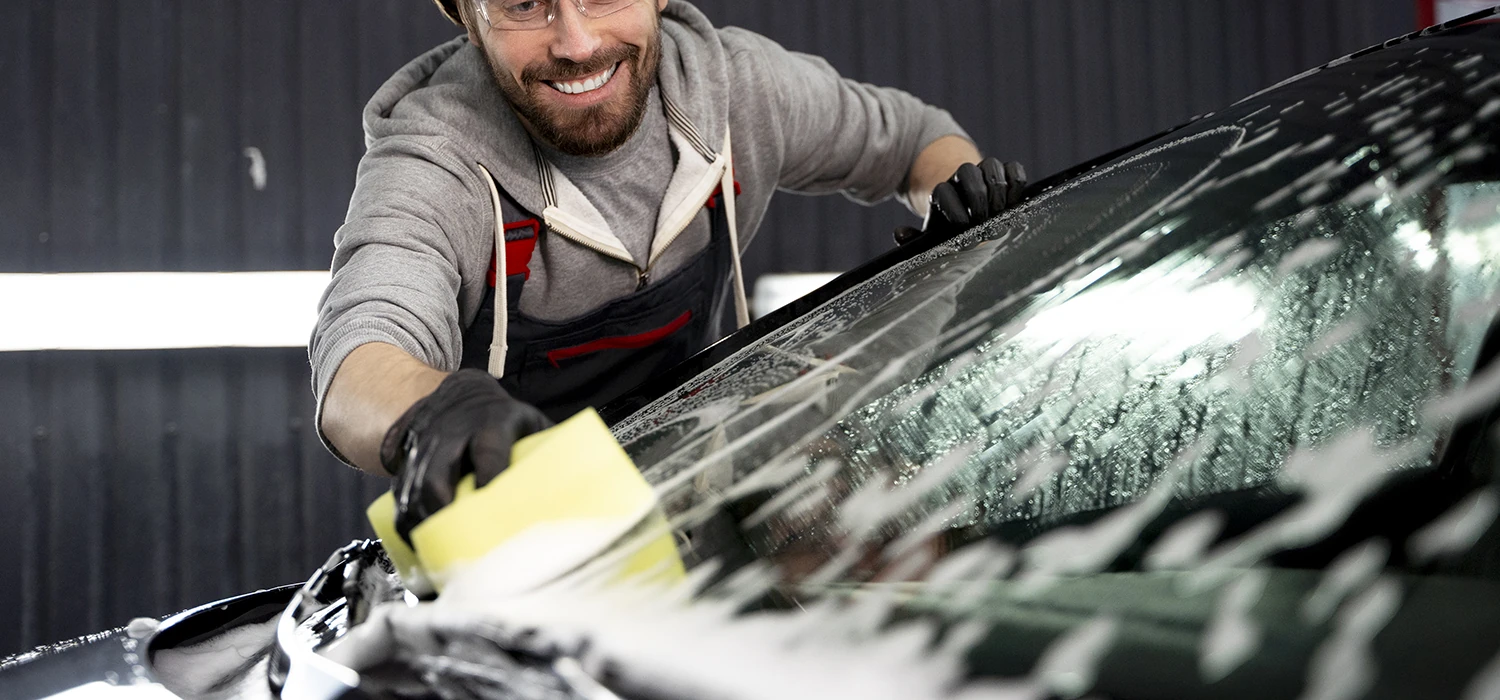
Cleaning solution being applied to a car windscreen before further glass treatment
Glass cleaning and preparation reference.

Tell us whether the problem is visible in daylight, under streetlights or after using the wipers.

Windscreen treatments

Tell us what you want to clear from the glass

Persistent water spots, fine wiper trails and a hazy view can look similar from a distance. We inspect the surface and recommend the treatment that addresses the marks on your car.

Hard-water spot removal

For mineral deposits that ordinary washing leaves behind. Cleaning removes the contamination first, allowing us to see whether the glass underneath is clear or has light etching that needs further work.

This is a useful starting point when pale rings or dried spots remain after a wash. It is different from grinding out a scratch.

Light wiper-mark polishing

For suitable fine abrasion on the exterior glass. Controlled polishing may reduce light trails where the depth and position allow a worthwhile improvement without affecting the view through the windscreen.

We also consider the wiping surface. Worn blades or grit need attention to avoid dragging the same problem across the treated area.

Haze and residue assessment

For a screen that smears or stays cloudy despite cleaning. The first question is whether the problem sits outside, inside or in an existing coating.

A cleaning treatment may be all that is needed. If the haze comes from damaged glass or film, we explain why polishing the exterior would not solve it.

Windscreen polishing cost

How much does glass treatment cost in Dubai?

Deposit removal and abrasive glass polishing are different jobs. These advertised Dubai market examples show the distinction. They are budget references, not Wrapping.ae rates or a single price range for the same service.

All-glass hard-water removal

An advertised AED 249 service for removing hard-water marks from all glass. It covers mineral-deposit treatment rather than polishing scratches out of a windscreen. VAT is not stated in the advertised price.

Advertised market example

AED 249

Windscreen or rear-glass polishing

An advertised polishing category starting from AED 2,000. The listing groups windscreen and rear glass together without establishing whether that price covers one surface or both. Confirm the exact glass area before comparing quotations. VAT is not stated.

Advertised market example

From AED 2,000

Your quote follows the treatment and affected area

A few removable water spots do not involve the same work as fine abrasion across a wiper sweep. We quote after considering the type of mark, the glass area, any existing coating and the improvement that can reasonably be achieved.

The quotation should identify whether the work is cleaning, light polishing or both, which glass is included and the final AED total with VAT treatment. Any additional coating is a separate choice. Send photos for an initial discussion, then allow an inspection where depth or clarity cannot be judged from an image.

Machine polishing pad working on the exterior of a car windscreen
Windscreen polishing reference.

Why treat the glass

A clearer view starts with the right surface treatment

When contamination or suitable light marks are the problem, treating the existing glass can improve the view without replacing an otherwise serviceable windscreen. You keep the fitted glass while addressing the surface issue that brought you to the workshop.

Remove stubborn deposits

Water spots can remain visible even when the rest of the car looks clean. Removing the deposits makes the glass easier to assess and can improve its appearance. Where mineral marks have etched into the surface, a further polishing assessment may be needed.

Reduce suitable fine marks

Light abrasion may scatter reflected light and make the screen look tired. A measured correction can improve suitable marks, but the target is a clearer view, not removing every trace at any cost. Deep grooves, dense pitting and cracks need a different decision.

Choose the work before committing

We discuss the likely improvement and any remaining marks before starting. If polishing cannot deliver a useful result while preserving clarity, we explain that at the assessment rather than treating the glass as a routine polishing job.

Wiper trails and smearing

Treat the cause as well as the mark

If the problem returns every time the wipers move, the wiping surface needs attention too. Worn rubber, trapped grit and uneven contact can leave streaks or carry contamination back over clean glass.

Polishing does not restore a damaged blade. Tell us if the smearing started after new wipers, a glass treatment or a windscreen replacement, so the assessment can take that change into account.

What helps us identify the problem

  • A streak that changes after each pass can point to residue or uneven wiping.
  • A fixed arc that remains after cleaning needs a surface assessment.
  • A patch the blade consistently misses may need the blade fit and contact checked.
  • Chatter or skipping can involve the blade, the glass or an applied treatment.

Avoid repeatedly using dry wipers on a dusty screen. Keep the glass and blades free of grit and follow the vehicle's washer-fluid and cleaning guidance.

Optical clarity

Clarity matters more than a smooth surface

A windscreen is part of the driver's view of the road. Concentrated removal around a deep scratch can create optical distortion, so the glass needs assessment from the driving position as well as from outside the car.

The location of a mark matters. A defect directly in the line of sight, an existing chip or a visibly distorted area needs particular attention before any polishing is considered. A cosmetic improvement should not come at the expense of a clear view.

Coatings and fitted equipment affect the decision

Tell us about a head-up display, rain sensors, cameras, tint film or a previous water-repellent coating. Their presence does not mean every treatment is suitable. The glass specification and the affected surface determine what can be worked on.

Some glass-polishing products remove existing coatings. That can leave uneven water behaviour if only part of a coated surface is treated. Any coating removal or subsequent protection needs to be part of the agreed work, rather than an assumed finishing step.

Interior tint film is a different surface from the exterior glass. Abrasive glass-polishing products should not be treated as a repair for scratched, lifting or damaged film.

Choosing the right work

Choose the work that matches the damage

Cleaning, polishing, chip repair and replacement have different purposes. Choosing the right one avoids paying for a cosmetic treatment when the actual problem is damaged glazing.

Work being consideredWhat it addressesWhere its role ends
Glass cleaningResidue or deposits on a suitable surface, using a method appropriate to the glass and any treatment already fitted.It does not restore missing glass, close cracks or remove every mark that has etched into the surface.
Light surface polishingSelected fine abrasion or remaining surface marks where controlled correction can preserve optical clarity.Deep damage should not be chased simply to make a scratch less visible from outside.
Chip repair assessmentA local impact defect that needs a glass specialist to assess its condition and suitability for a repair.This is separate work from polishing. Polishing does not restore the strength of chipped or cracked glass.
Replacement assessmentGlazing that cannot be suitably corrected by surface work or another appropriate repair.Replacement involves glass specification and fitted equipment. Its requirements and price are separate from this polishing service.

Dense pitting, a crack or a defect between the glass layers belongs in the damage assessment. The appropriate treatment depends on the defect and the view through the glass.

If a camera-equipped windscreen needs replacement, the applicable inspection and calibration requirements are a separate vehicle-specific matter. That does not mean routine exterior cleaning or suitable polishing automatically requires camera calibration.

Workshop treatment

From inspection to a clean final view

  1. Clean and identify the marks

    Removing dirt and residue reveals the affected surface. The remaining marks can be distinguished from contamination and any existing coating.

  2. Polish light surface marks

    Controlled polishing keeps heat and unnecessary material removal in check. The condition of the glass determines how far the treatment can go.

  3. Remove residue and review the view

    The finish is cleaned and checked for remaining marks and clarity. Any additional coating has its own application and care requirements, which affect handover instructions. Ask about the workmanship cover for your quoted treatment and any separate coating terms.

Help prevent the same marks returning. Keep the glass and wiper blades free of grit, and deal with damaged blades rather than continuing to sweep them over the surface. Use suitable glass-cleaning products and clean cloths. Avoid running the wipers over a dry, dirty screen.

If the rest of the exterior also needs attention, car detailing can be discussed separately. Paint polishing and glass polishing use different methods and should not be treated as interchangeable.

Hand-held applicator being used on a car windscreen surface
Glass surface preparation reference.

After your visit

Keep the view clear between treatments

Good aftercare follows the cause of the marks. Cleaning and wiper care matter more than booking an abrasive polish at a fixed interval.

  • Use clean glass cloths

    Keep wax, tyre dressing and paint-polishing residue away from the windscreen. A cloth used elsewhere on the car can leave a new smear. Clean the inside as well as the outside when haze returns, using products appropriate to any fitted film.

  • Keep grit away from the blades

    Remove loose contamination before using the wipers and replace damaged rubber with correctly fitting blades. Use the washer product recommended for the vehicle rather than household cleaners or an unrelated chemical.

  • Follow any coating instructions

    If a separate coating is applied, follow its drying time and first-wash guidance. Keep a record of the treatment so future cleaning or polishing can account for what is already on the glass.

  • Check a new defect separately

    A new chip, distorted view or camera warning calls for an appropriate assessment. It is not a reason to repeat cosmetic polishing. Avoid stronger abrasives or more pressure when a mark resists ordinary cleaning.

Before your visit

Questions before windscreen polishing

A clear description of when the marks appear helps us understand what needs attention.

Will polishing remove glare from headlights?

It may improve the view where suitable surface contamination or light marks contribute to glare. It cannot promise to eliminate glare caused by deep pitting, damage, distortion or a problem elsewhere. Describe when the glare appears so the affected area can be assessed.

Can you polish a windscreen with a stone chip?

A chipped windscreen needs a damage assessment before cosmetic work. Polishing is not stone-chip repair, and some glass-polishing products specifically exclude chipped glass. The chip's location and condition determine the appropriate next step.

Does every windscreen need regular polishing?

No. Polishing is for an identified surface problem that can be treated appropriately. Routine cleaning and caring for the wipers help maintain the glass between visits. An annual abrasive polish is not necessary for every windscreen.

Can I drive immediately after the work?

Collection depends on the treatment and any additional coating. We explain the estimated time before work begins. If a coating is applied, its drying time and care instructions can affect when the car is ready and when you can next wash the glass.

Should I try a scratch-removal kit first?

A deep scratch or a mark in the driver's line of sight deserves assessment before abrasive work. The wrong compound, localised pressure or excess heat can damage the surface or affect clarity. Avoid experimenting with paint polish, household abrasives or a drill-mounted pad on the windscreen.

Speak to the team

Show us what is affecting the view

Send your car model, a close photograph of the marks and a wider view of the windscreen. Mention any chip, existing coating or head-up display, and tell us when the problem is most noticeable.

Wrapping.ae at AMF Auto Services LLC, Al Quoz 4, Dubai. Find the workshop and contact details.

Call the workshopWhatsApp us
Scroll to Top