
Weather protection and everyday care
PPF Protection Limits in Dubai Weather
PPF adds a replaceable barrier against chips, light abrasion and contamination. Its protection depends on the film, covered panels and care. It does not make a car sandstorm-proof or keep the cabin cool.
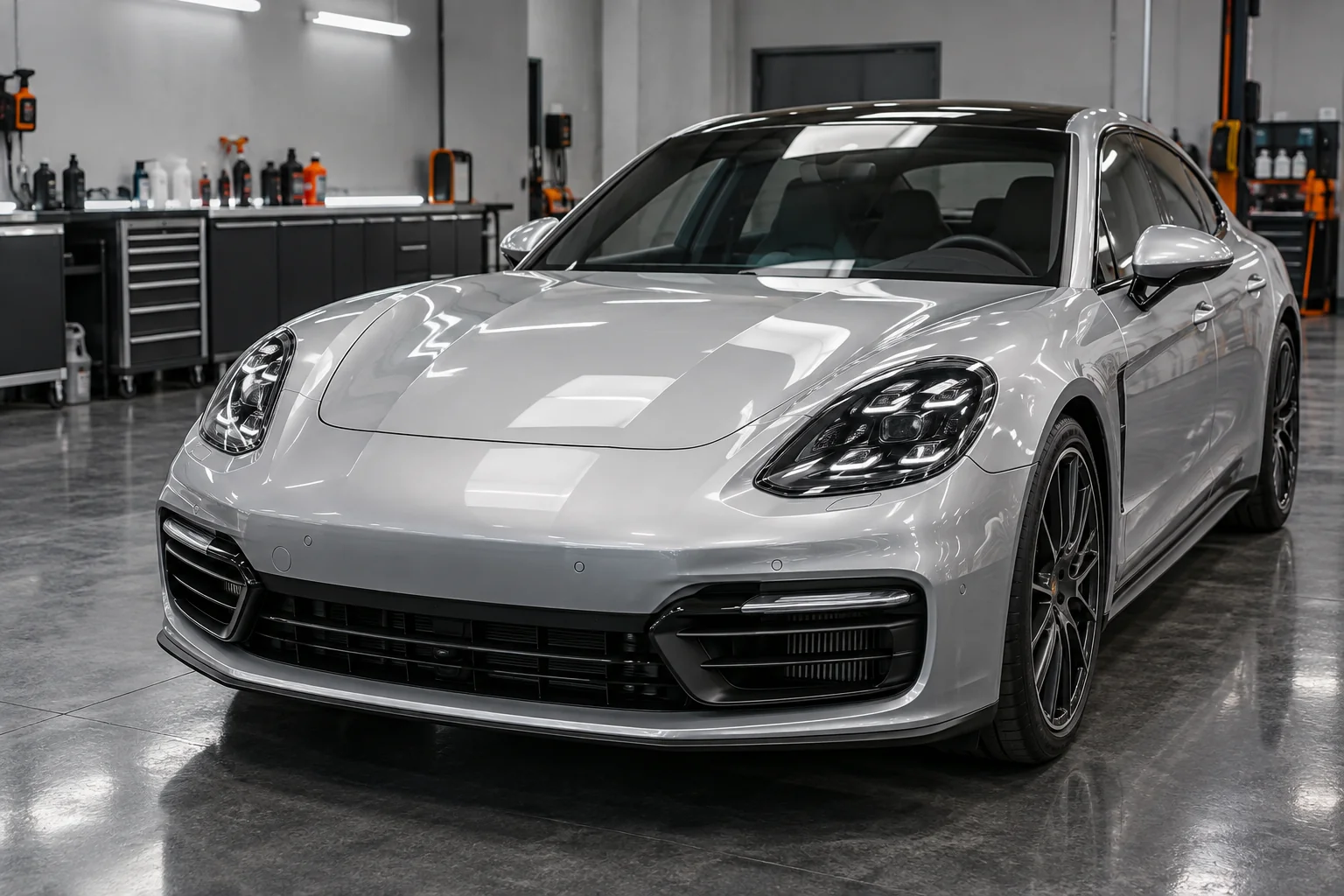
A replaceable barrier between weather and paint
Paint protection film takes some of the wear that would otherwise reach the paint. Its most useful role is physical protection against stone chips, light abrasion and surface contamination on the panels it covers.
That makes PPF relevant to a car used on dusty roads or parked outdoors in Dubai. It also changes the surface you wash, inspect and maintain. The original paint remains underneath the installed film.
Protection has limits. A hard impact can penetrate the film, grit can mark its surface, and contaminants can stain it. An uncovered panel still faces the same exposure as before installation.
Think about the damage you want to reduce before choosing coverage. Highway debris, dusty washing and outdoor parking call for different priorities. Buying a large package without discussing those priorities can leave the most important area uncovered.
The film is a serviceable outer layer. If damage is confined to it, replacing that section may avoid repainting the panel. Paint damage underneath requires a separate assessment.
How the film and its topcoat work
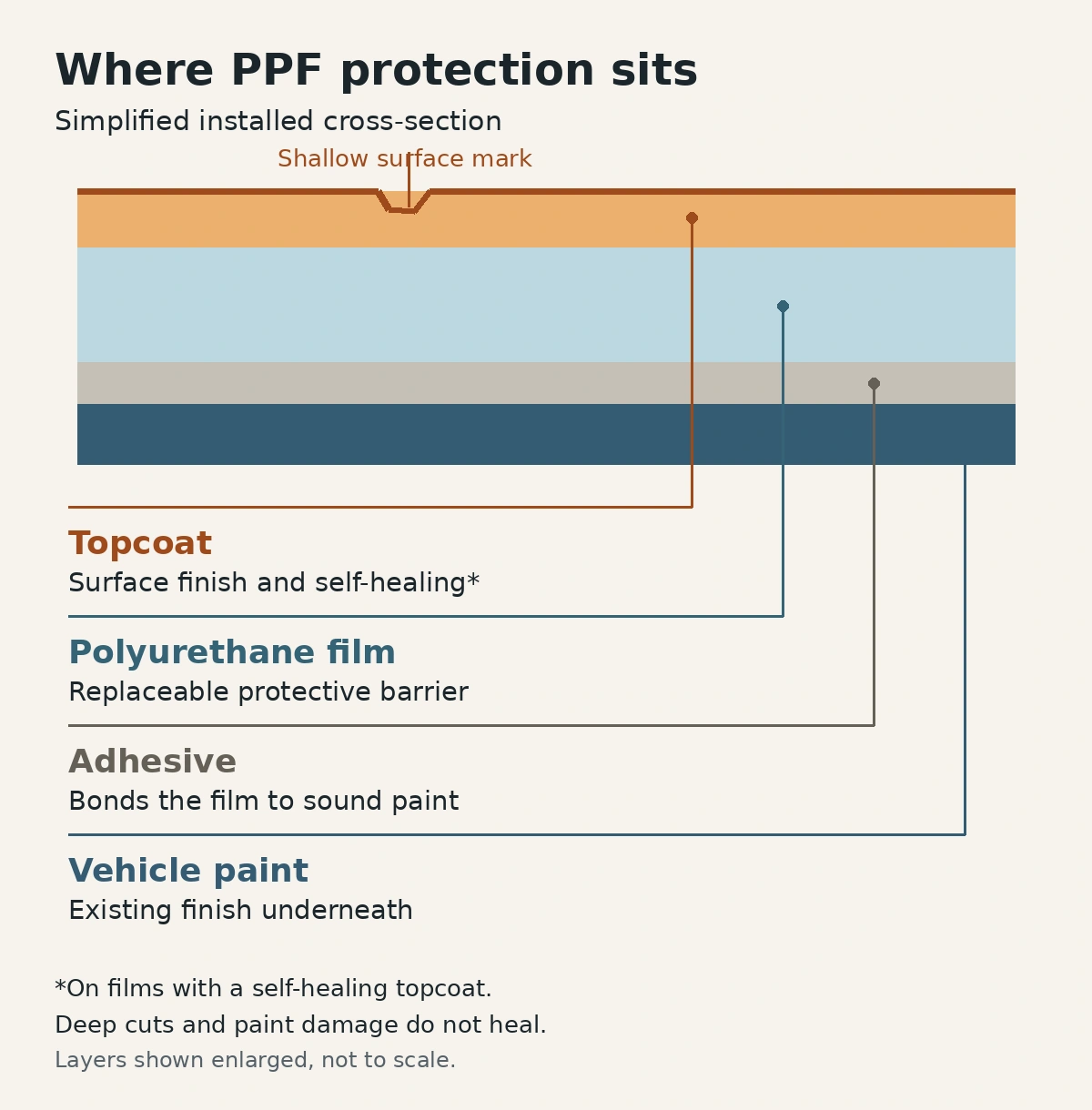
A polyurethane PPF system combines a protective film, an adhesive and a surface coating. The release liner used during handling is removed for installation. It is not an extra protective layer left on the car.
The film provides the physical barrier. Its topcoat affects the finish and how the surface responds to fine marks and contamination. The adhesive holds the installed material against suitable paint.
The construction shown here is simplified. Exact materials and surface features depend on the named product. Compare a specific series rather than assuming every clear film has identical properties.
For example, 3M’s Pro Series 200 describes heat-assisted healing of minor surface marks, water repellency and resistance to outdoor weathering. Those product features do not promise immunity from all damage.
Installation quality also affects the result. Contamination trapped beneath the film, poorly finished edges or unsuitable paint cannot be corrected simply by choosing a more expensive product.
Dust and sand create different kinds of wear
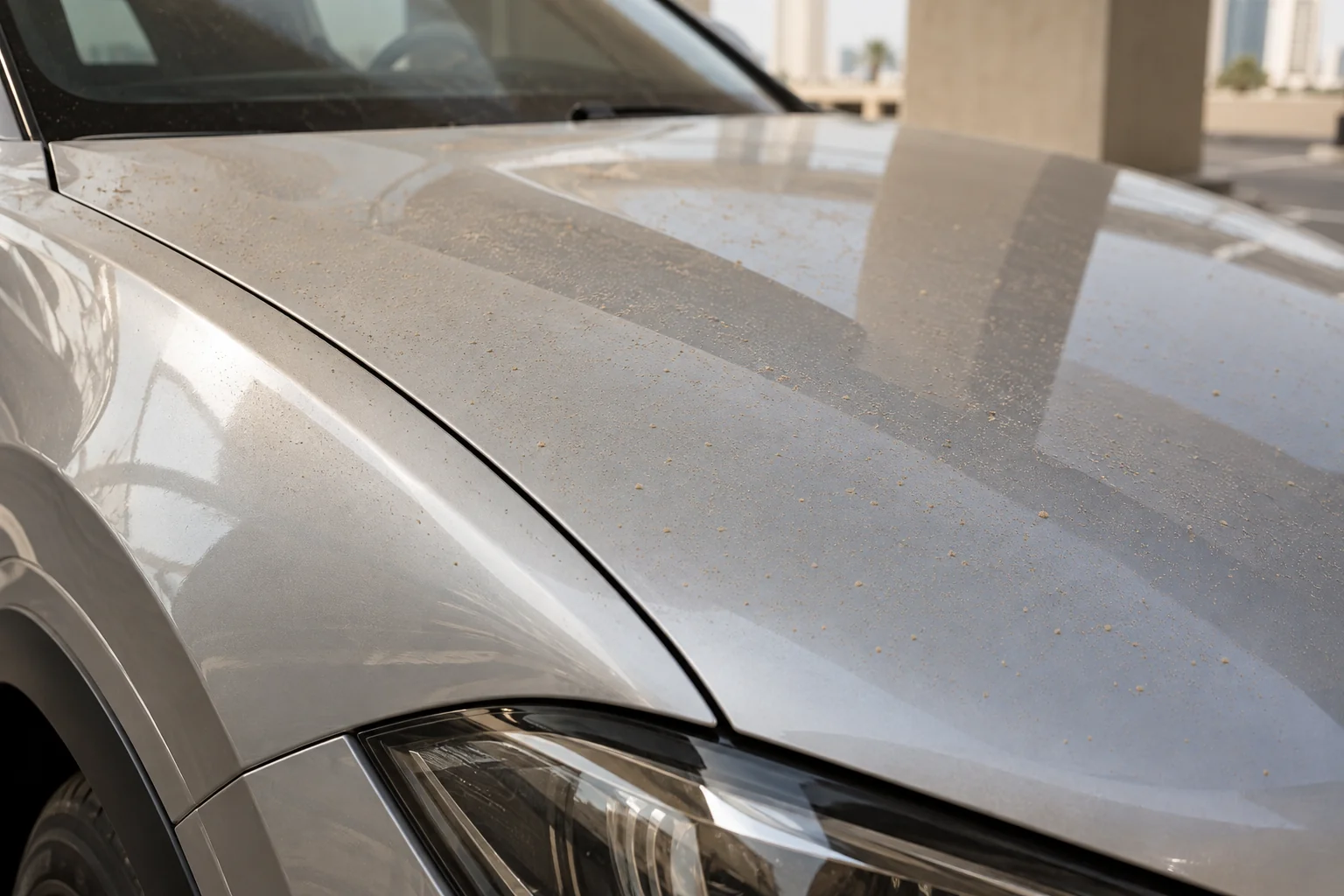
Dust settling on a parked car and grit striking a moving car are different problems. A dusty surface can become abrasive when a dry cloth, brush or car cover drags particles across it.
PPF gives that contact a protective layer to reach first. It does not make wiping a dusty hood safe. The sensible next step is to rinse away loose contamination before touching the surface.
Road debris introduces impact as well as abrasion. A small stone can leave a mark in the film while the paint remains intact. A sharper or stronger impact can cut through both layers.
There is no useful universal promise that a film is sandstorm-proof. Conditions, particle size, impact angle and vehicle speed vary. Inspect after significant exposure rather than judging protection by a dramatic marketing demonstration.
If you use a cover, put it on a clean car and follow the cover maker’s instructions. A dirty cover can move against the surface as it is fitted, removed or disturbed by wind.
After a dusty journey, pay attention to the front bumper, hood and lower sides. Dirt collecting at an edge should be cleaned carefully. Avoid picking underneath the film with a fingernail or sharp tool.
Read UV and heat claims carefully
UV resistance of the film and UV transmission through the film are different claims. Resistance describes how a material tolerates exposure. Transmission describes how much radiation passes through a tested product.
Do not assume that all body PPF blocks 99 percent of UV because a window or windshield film advertises that figure. Ask for the data relating to the exact body film being quoted.
Clear film can support preservation of the original finish by reducing wear on the covered paint. A statement about complete prevention of paint fading needs evidence for that product and application.
Dubai’s outdoor heat is another reason to choose a suitable film and follow its care instructions. Weather resistance does not establish that the film reflects enough heat to keep the paint or cabin cool.
Body PPF is not a replacement for window tint, air conditioning or shaded parking. It is not a thermal shield that guarantees paint cannot crack or peel. Existing clearcoat failure needs assessment before installation.
Covered parking remains useful after fitting. When choosing a space, also consider sprinkler spray, leaking pipes, birds and dirty surfaces. Moving the car away from repeated contamination may be more effective than repeatedly treating the same marks.
Self-healing stops at the surface
Self-healing is relevant to shallow marks within the topcoat of films designed for that feature. It does not rebuild missing material, close a deep cut or repair the vehicle’s paint underneath.
A fine washing mark and a puncture should therefore lead to different decisions. A suitable topcoat may improve the first. The second needs inspection to establish whether the film alone is damaged.
Follow the manufacturer’s method and allow the surface to be assessed if the mark remains. Do not experiment with a heat gun or very hot water to force an uncertain defect to disappear.
Avoid repeatedly rubbing a mark to test whether it will heal. Clean the area gently, photograph it in even light and show the installer. A stain, trapped particle or installation line may resemble a scratch.
A healed surface mark does not mean every collision with grit was harmless. Check for tears and damaged edges as well as changes in gloss. Those observations are more useful than the general label self-healing.
Water repellency still needs cleaning
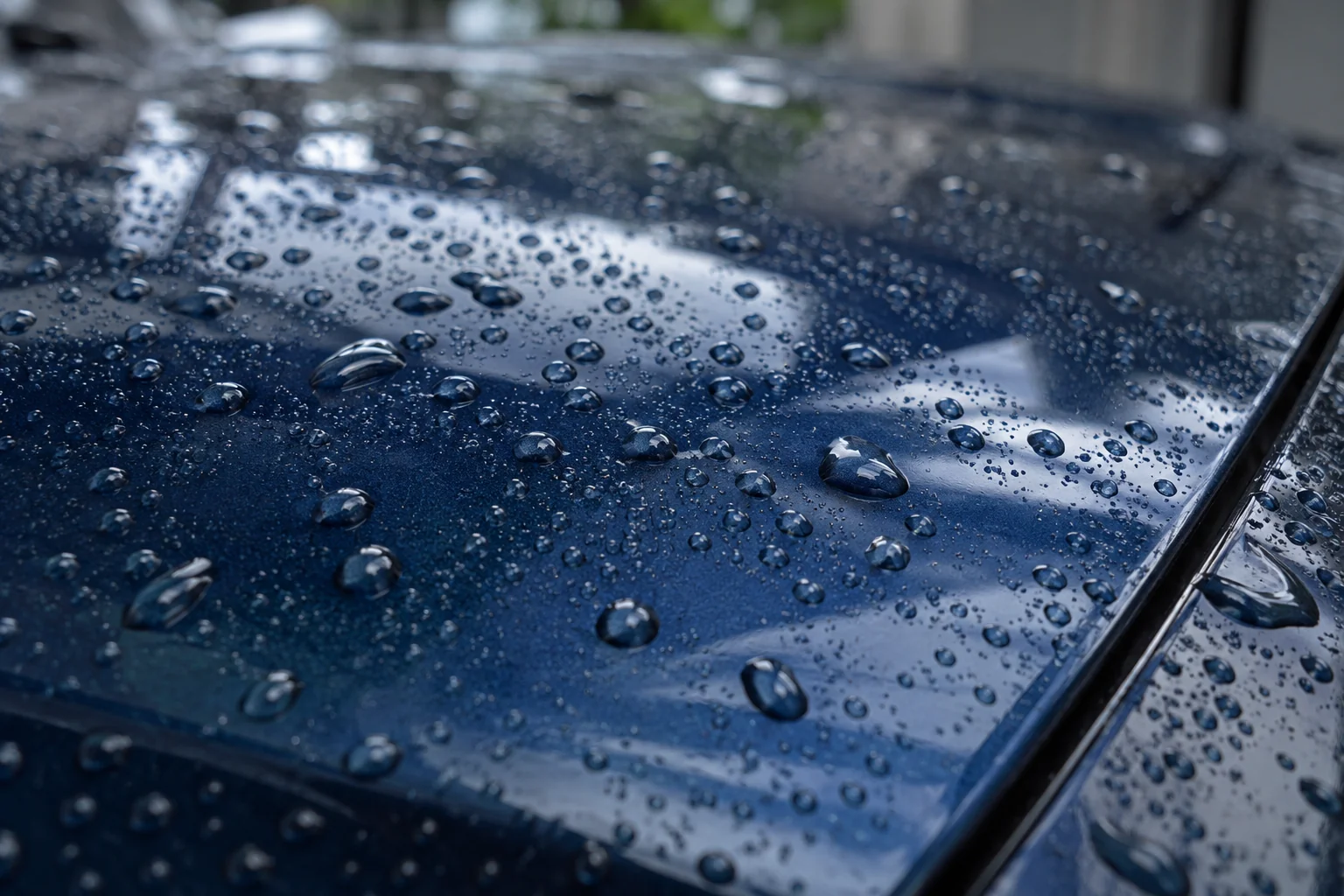
A hydrophobic surface can help water bead and make routine washing easier. Water droplets can still carry minerals and contamination. If they dry on the film, spots may remain.
Rain, sprinkler water and rinse water should not be treated as identical. The important practical question is what was left behind when the water evaporated. Beading alone does not prove the surface is clean.
Dry the car after a suitable wash, especially when water would otherwise sit on horizontal panels. Work in shade on a cool surface so you can clean and dry without rushing against evaporation.
Bird droppings, insects and sap need prompt attention using the approved method. Soften the deposit before gentle removal. Scraping a hardened spot can cause another problem while attempting to solve the first.
If residue remains, ask which cleaner is approved for the film and finish. Household stain removers, abrasive pads and improvised solvent mixtures are poor substitutes for product-specific instructions.
Persistent spots should be assessed before polishing. A mark on top of the film, damage within the coating and a problem beneath the film require different treatment. Aggressive correction can remove or alter a surface feature.
Map the exposure before discussing coverage
| Exposure | What PPF can help with | What still needs attention |
|---|---|---|
| Highway grit | A physical layer on covered leading panels | Sharp impacts can penetrate film or dent the panel |
| Parked dust | A replaceable surface above covered paint | Dry wiping can scratch the film |
| Rain or sprinkler residue | Product-specific surface repellency and easier cleaning | Minerals can leave spots after water evaporates |
| Direct sun | Documented weather resistance of the named film | No automatic UV-blocking or cabin-cooling guarantee |
Record where the car is parked and where damage appears. Only covered panels receive the physical barrier. Our PPF installation and pricing page covers panel plans, preparation and fitted quotes.
Check the exact weather claim for the installed film
Identify the manufacturer, series and finish before applying a care instruction or protection claim. Weather resistance, UV transmission, self-healing and stain resistance describe different properties. Film thickness alone does not establish all four.
A glossy product example does not automatically describe its matte counterpart. Use the applicable regional technical and care documents, including any exclusions for exposure or cleaning products.
Record existing chips, repairs and peeling clearcoat. Film cannot restore damaged paint, and a weather-resistance claim does not make an unstable substrate suitable for installation.
A practical wash after dust or rain
Start with the installer’s written waiting period after fitting. It varies by product. XPEL’s guidance for ULTIMATE PLUS specifies 48 hours before washing, while SunTek’s EMEA FAQ specifies three days.
For later washes, let hot panels cool and work in shade. Rinse loose dirt before using a clean wash mitt and a shampoo approved for the installed film. Replace contaminated wash tools before they reach the car.
Clean in manageable sections without scrubbing dried deposits. Rinse away the cleaner and dry gently with a suitable clean towel. Inspect the surface as you work rather than using extra pressure on an unexplained mark.
Keep pressure-washer jets away from film edges and follow the product’s pressure and distance guidance. XPEL’s care instructions warn that pressure washing close to edges can lift the film.
Give anyone washing the vehicle the film name and relevant instructions. Ask about brushes, cleaners and drying methods before using an unfamiliar service. A routine intended for bare paint may not suit the installed finish.
The SunTek care FAQ is another useful product-specific reference. Use the instructions for your own film rather than combining the strongest cleaners allowed by several unrelated brands.
Base cleaning frequency on visible contamination and use. A car returning from a dusty journey needs a different response from one kept clean indoors. Do not leave a known deposit until an arbitrary weekly appointment.
Decide whether to clean, inspect or replace
An appearance change does not automatically mean the entire installation has failed. Identify the affected panel and the kind of change before agreeing to a remedy. Start with gentle cleaning where appropriate.
A persistent ring-shaped spot suggests residue or staining needs assessment. A lifted edge calls for installation inspection. A split or puncture requires a check of the film and the paint beneath it.
Yellowing, cracking or separation also deserves a review of the product and warranty. Photograph the condition before attempted correction. Retaining evidence helps distinguish a manufacturing issue from contamination or external damage.
If one panel is damaged, ask whether replacement can be limited to that panel. Check the finish match against the surrounding film. Age, contamination and a change of product can affect how the replacement looks.
Removal should be planned around the existing paint condition. Disclose repairs and weak clearcoat before work begins. Do not pull at a loose section yourself to see whether the underlying paint is intact.
A follow-up inspection should confirm the outcome as well as the original concern. If an edge was corrected, check the same location afterward. If a section was replaced, review its boundaries and matching finish.
Warranty length is not a damage guarantee
A long warranty does not mean the film cannot be damaged during that period. Product-defect coverage and accidental damage are different matters. Read the terms for the exact series and market.
For example, XPEL’s PPF warranty lists manufacturing-defect coverage for ULTIMATE PLUS and STEALTH, with exclusions including water spots and damage caused by rocks or road debris.
Keep the original receipt, coverage details and warranty record. Ask who handles a claim locally and what evidence is needed. A replacement under warranty does not necessarily start a new warranty period.
Photograph a weather-related concern before trying to correct it. The installer can assess whether it is removable contamination, external damage or a possible product defect. Keep the film identity and installation record with the photographs.
Common questions about PPF in Dubai
Is PPF worthwhile if my car is parked outdoors?
It can be useful when you want a replaceable barrier on exposed painted panels. Decide which surfaces need coverage and how you will maintain them. Outdoor parking still calls for attention to contamination and appropriate cleaning.
Does clear PPF stop all paint fading?
Do not assume that it does. Ask for the named film’s UV data and the scope of any paint-protection claim. Film weather resistance alone does not establish complete UV blocking or permanent color preservation.
Will Dubai heat heal every scratch?
No. Self-healing applies to suitable shallow topcoat marks on films with that feature. Deep cuts, missing material and damaged paint need inspection. Deliberately overheating the film is not a substitute for diagnosis.
Can a sandstorm damage protected paint?
It can. PPF may take abrasion or an impact first, but severe contact can damage the film and paint. After exposure, avoid dry wiping and inspect for cuts, lifted edges or damage extending below the film.
Is ceramic coating a substitute for PPF?
It serves a different purpose. A suitable coating can assist surface care, while film provides a physical layer against chips and abrasion. Discuss ceramic coating compatibility before applying it over an existing film.
Does PPF protect panels that are not covered?
No. A front package leaves other painted panels exposed. Request a written coverage list, including any partial hood section, roof exclusion or lower-body option. Match that list to the areas you want protected.
Should I polish a water spot off the film?
Start with the film maker’s approved cleaning method. If the spot remains, have it assessed before abrasive correction. Gloss and matte surfaces can require different treatment, and polishing may change the intended surface finish.
Can only a damaged hood section be replaced?
Often the affected film section or panel can be assessed for replacement without removing every panel’s film. The installer should first check the paint and discuss any visible finish difference between new and older material.
Plan the right coverage
Discuss your car’s exposure and paint condition
Send the vehicle model, parking conditions and panels you want protected. Our Al Quoz team can discuss film options, coverage and the installation quotation.