
Gentle cleaning for vinyl and graphics
How to Wash a Wrapped Car
Wash a wrapped car in shade on cool panels. Rinse loose grit first, use compatible shampoo and clean soft tools, then rinse and dry gently. Protect seams and follow the care instructions for the installed film.

Check the film before the first wash
Prefer careful hand washing because you can choose the cleaner, control contact and work around edges. Automatic programmes and a powerful rinse give you less control over those details.
These instructions concern decorative vinyl and vehicle graphics. Clear PPF and protective colour films can have different care requirements. If the car combines materials, identify what covers each panel before choosing products.
For a newly wrapped car, follow the waiting period supplied with the installed film. Washing too soon can disturb edges before the installation is ready for normal cleaning.
3M’s 2080 maintenance guide specifies at least 72 hours before washing. Avery Dennison’s European bulletin specifies 48 hours. These are product-document examples, not a universal waiting period for every wrap.
If dirt lands on fresh film during that period, contact the installer for spot-cleaning instructions. Do not assume a waiting period means bird droppings or fuel should simply remain on the surface.
Look at seams, corners and exposed edges before a later wash too. If material is already lifting, torn or cracked, avoid directing water or rubbing tools at that area until it has been assessed.
Prepare clean tools and compatible shampoo
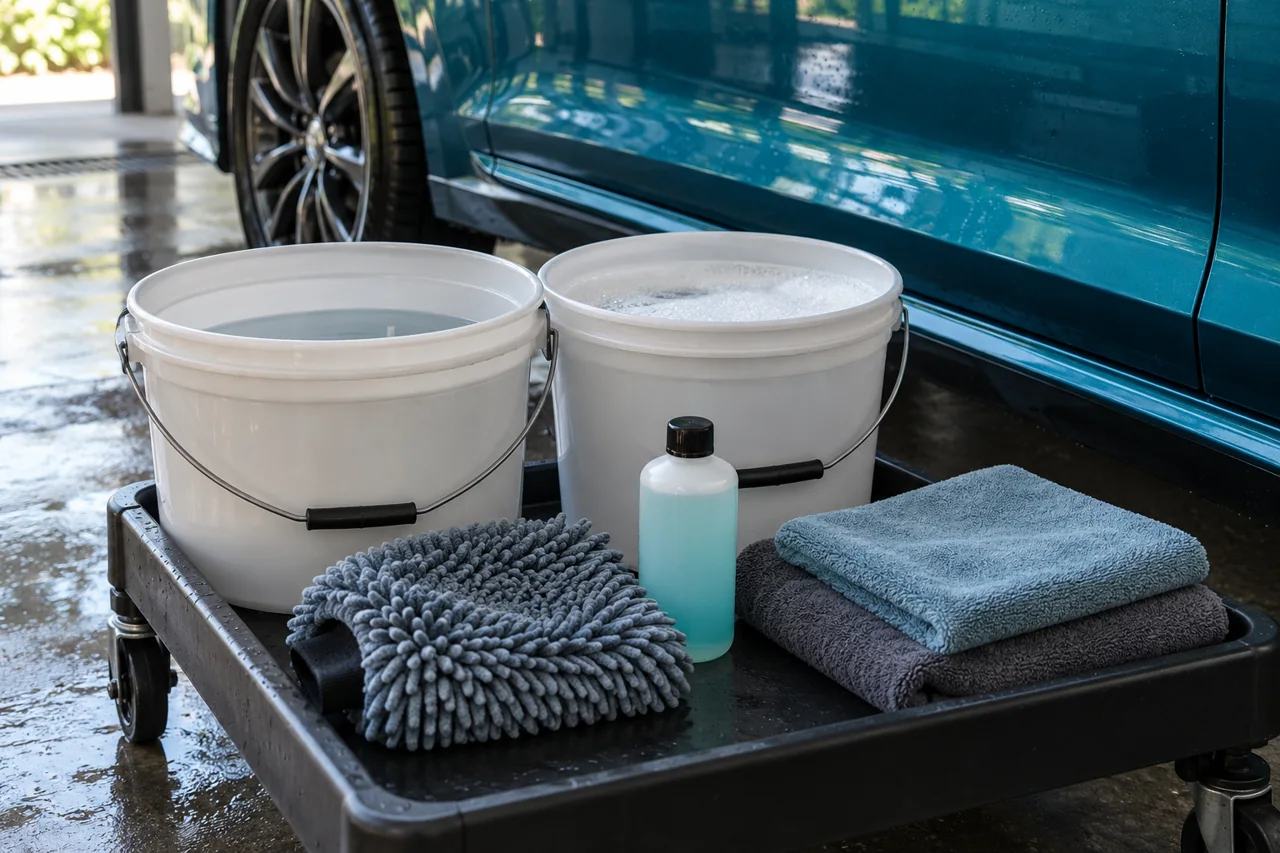
Use a soft wash mitt or non-abrasive sponge, clean rinse water, a compatible automotive shampoo and soft microfiber drying towels. Keep the kit clean enough that it does not return grit to the surface.
A pH-neutral shampoo approved for the film and finish is a sensible starting choice. Read its dilution and contact-time instructions. More concentrate does not necessarily clean better and can make rinsing harder.
A two-bucket arrangement can separate shampoo solution from mitt-rinsing water. It helps organise the job, but dirty water and a contaminated mitt still need changing. The bucket count does not guarantee a scratch-free wash.
Keep wheel-cleaning brushes and towels separate from bodywork tools. Check a dropped towel before using it again. Visible grit or an uncertain cleaning history is a reason to replace the tool during the wash.
Avoid choosing by the word car alone on a bottle. Abrasive cleaners, strong solvents, household degreasers and shine-enhancing additives may not suit the wrap. Matte, chrome and printed finishes need particular attention.
Test an unfamiliar approved product in a small inconspicuous area as instructed. Let the area dry before judging its colour and finish. A test on wet film can hide a change that appears later.
Follow a controlled hand-wash sequence

Keep the job gentle and systematic. The aim is to remove contamination while preserving the installed surface and its edges. Work around damage rather than using the wash to test whether it will stay attached.
1. Cool the panels and inspect
Park in shade and allow the bodywork to cool. Choose a place where you can rinse and dry without detergent drying on the surface. Early shade is more useful than rushing across hot panels.
Check the condition of the film and locate vulnerable seams. On a partial wrap, remember that bare paint and vinyl share the wash area. A cleaner intended for one surface must not be allowed to run onto an incompatible one.
2. Rinse away loose contamination
Use a gentle flow of clean water to flush off loose dirt before making contact. Work from the upper panels down. Do not wipe a dusty bonnet with a dry cloth while preparing the wash.
Rinsing is preparation for contact washing, not proof that every particle has gone. If gritty deposits remain, continue gentle soaking and rinsing rather than pressing them into the film with the mitt.
3. Wash gently in small sections
Wash with the diluted compatible shampoo and a clean soft mitt. Start with the roof and cleaner upper areas, then work towards lower panels. Rinse the mitt frequently and change dirty water.
Use light pressure and controlled movements. Pay attention to where the tool could catch an exposed edge. Repeated hard rubbing or a particular stroke pattern does not compensate for grit trapped in the tool.
Treat a stubborn deposit separately instead of repeatedly scrubbing the entire panel. Keeping the wash section small gives you time to rinse before the shampoo dries.
4. Rinse the shampoo thoroughly
Rinse each completed section and remove residue from seams and trim without forcing a jet underneath the film. A second gentle pass is preferable to increasing pressure at an unexplained dirty edge.
Do not leave foam to dry while cleaning the wheels or interior. Shampoo contact time comes from the product instructions. A long dwell period is not automatically a better cleaning treatment.
5. Dry with clean soft material
Use a clean microfiber towel gently on the rinsed surface. Blot or use light controlled contact rather than dragging a heavily loaded towel across the car. Switch towels when one becomes saturated or dirty.
If you use a suitable vehicle-drying blower, keep its nozzle from touching the film and avoid forcing air at a loose edge. Dry the water that emerges from mirrors and trim after the first pass.
6. Inspect the dry finish
Check the surface in even light once it is dry. Remaining streaks may be cleaner residue, while mineral spots or a change in gloss need a different response. Do not immediately reach for polish.
Review the edges you noticed before washing. Photograph a persistent mark or lifted section and show the installer. A clean dry surface makes the problem easier to assess than a wet panel covered with reflections.
Preserve the finish you chose
Cleaning should leave a matte wrap matte and a glossy wrap glossy. A change in shine is not an acceptable trade-off for removing a stain. Match the product and technique to the finish.
Arlon’s wrap aftercare guide distinguishes matte or satin care from gloss protection. A wax or polish suited to glossy film should not be transferred to a low-sheen finish.
For printed graphics, the exposed laminate matters as well as the printed vinyl beneath it. Ask which laminate is fitted if the installer’s care instructions do not identify it.
| Finish | What changes the wash |
|---|---|
| Gloss | Keep grit out of the mitt and towel. Use finishing products only when approved for that film. |
| Matte or satin | Avoid ordinary gloss-enhancing wax and abrasive polish. Check new cleaners for streaking or shine changes. |
| Chrome or mirror finish | Avoid scrubbing and brushes. Use very gentle contact with clean soft material. |
| Textured or printed film | Do not scrub texture or assume a cleaner is suitable for every laminate. Follow the surface-specific instructions. |
Drying matters after the final rinse

Allowing water to evaporate can leave minerals or cleaner residue behind. Water beading does not mean the droplets contain nothing that can mark the surface. Drying helps you see whether the wash is complete.
The bonnet and roof deserve attention because water can remain on their broad surfaces. Also check drips from mirror housings and trim after moving the car a short distance or opening a door.
If a spot remains after normal washing, use the film maker’s approved cleaning approach. An acid-based water-spot remover intended for another surface may be unsuitable. Avoid abrasive pads and repeated rubbing to test the mark.
Do not assume a drying towel is clean because it feels soft. Store it away from floor dirt and wash it according to its own instructions. Retire a towel from bodywork use if embedded particles cannot be removed.
Treat deposits without scraping the film
Bird droppings, insects, sap and fuel need prompt attention. Soften a dried deposit with the approved gentle cleaning method before attempting removal. Avoid scraping it with a fingernail, card or abrasive pad.
Warm soapy water may help loosen suitable deposits, but check the film’s instructions. Do not use boiling water or a strong solvent mixture because ordinary washing has not removed the mark.
For fuel splashes, follow the manufacturer’s immediate cleaning directions and then wash and dry the affected area. Inspect around the filler flap too. Do not leave a known spill until the next full wash.
If a cleaner is allowed for spot treatment, use it only at the specified dilution and dwell time. Rinse away residue as directed. Permission to use a solvent on one film does not make it a routine shampoo.
A stain that remains after appropriate cleaning needs assessment. More chemicals may make the appearance worse. Share the film name, cleaner used and a photograph so the next treatment can be chosen sensibly.
Pressure-washer limits are film-specific
A gentle hose rinse avoids many pressure-washer complications. Where a manufacturer permits pressure washing, pressure, temperature, nozzle distance and spray direction all matter. One safe-looking setting cannot compensate for the others.
3M’s UK cleaning guidance gives conditional limits. Avery Dennison’s European care bulletin uses a different distance and pressure. Read the instructions applicable to the installed product.
The figures below are published limits, not suggested operating targets. Use cool water for the normal wash and avoid aiming at edges. A broad fan pattern differs from the direction in which the nozzle points.
| Manufacturer document | Conditions to distinguish |
|---|---|
| 3M UK cleaning FAQ | Below 2,000 psi and 80°C. A 40-degree fan nozzle, at least 300 mm away, directed perpendicular to the graphic. |
| Avery Dennison Europe TB 1.6 | Maximum 80 bar, approximately 1,200 psi. Maximum 70°C water and at least 75 cm distance. Prefer a perpendicular jet. |
| ORAFOL care terms | These terms advise against high-pressure cleaning. Do not apply another brand’s permission to this film. |
Never chase dirt along a seam with a concentrated jet. If the film is lifting, stop spraying that area. Increasing distance or lowering pressure does not repair a damaged edge.
The applicable limits can also differ between regional documents or film families from the same manufacturer. Give a wash operator the relevant care sheet rather than a generic pressure figure remembered from another car.
Choose the wash method before booking
Brush washes can scratch the surface or catch an edge. A brushless or touchless system removes that contact, but you still need to consider its chemicals, pressure and finishing programme.
Check whether the installed film permits the proposed automatic wash. Skip incompatible hot-wax or shine treatments. The word touchless does not establish that every cleaner and setting is suitable.
Waterless washing is a separate choice. Avery Dennison’s maintenance instructions allow suitable products when the vehicle is not too dirty. A heavily dusty car needs a different approach from light fingerprints on a clean panel.
Do not use a waterless spray as permission to drag dry grit across vinyl. Confirm product compatibility and use clean material according to its instructions. If contamination is heavy, return to a controlled rinse and wash.
Steam cleaning is not covered by a general hose-washing recommendation. Concentrated heat, nozzle distance and dwell time need explicit compatibility guidance. Choose the supported method when those details are unknown.
Wash according to contamination and use
Wash when the car appears dirty and spot-clean harmful deposits promptly. A fixed weekly or fortnightly routine may help organise care, but visible contamination matters more than the appointment date.
A car used on dusty roads, parked beneath birds or exposed to sprinkler spray may need attention sooner. A clean car kept indoors may not need the same schedule. Do not repeatedly wipe settled dust between washes.
If you drive a branded vehicle, include inspection of letter edges and separate graphic pieces. Their extra boundaries can catch dirty towels or brushes. Give each driver the same written care instructions.
Keep wash records when a persistent problem develops. The date, products and photographs are useful for diagnosis. They do not prove that every defect was caused by washing or that every stain will qualify for warranty replacement.
Explain the wrap when arranging professional care
Tell the wash operator that the vehicle has vinyl film and identify the finish. Mention partial coverage, printed graphics, existing lifting and the date of a recent installation before the wash begins.
Confirm the cleaner, contact tools, drying method and optional treatments. Ask for an exterior wash that suits the film rather than automatically accepting a paint-polishing or all-surface package.
When arranging car detailing, keep routine cleaning separate from stain treatment, polishing and coating. Those are different jobs with different suitability questions. A whole-car detailing offer may include work you do not need.
The quotation should identify the vehicle size, wash scope and any separately assessed stain or repair work. No blanket washing price establishes that the service will use the correct method for your film.
If you are selecting a new colour-change wrap, discuss the finish’s care needs before choosing the sample. A low-sheen or mirror finish should fit your maintenance routine as well as your preferred appearance.
Common questions about washing a wrap
Can I wash a wrapped car with ordinary car shampoo?
Use it only when the product is compatible with the film and finish, at the instructed dilution. A mild automotive shampoo is preferable to an improvised household cleaner. Check for incompatible wax, abrasive or shine-enhancing additives.
Does snow foam make the wash contact-free?
Foam may help loosen contamination when compatible, but it does not prove the car is clean. Follow the product’s contact time, rinse properly and use gentle contact where needed. Never let foam dry on the wrap.
Can I remove a stain with isopropyl alcohol?
Some film instructions permit a specific mixture or brief spot treatment. Others have material-specific precautions. Do not treat IPA as universally safe. Check the exact film, dilution, test method and rinsing instructions first.
Will washing repair a lifted edge?
No. Keep pressure and rubbing away from the lifted area and have it assessed. Cleaning may reveal contamination or damage, but it does not restore stretched, torn or poorly bonded material.
Should I polish a matte wrap after washing?
Ordinary abrasive polishing can change the appearance and leave shiny patches. Preserve the intended finish with its approved cleaning method. Have persistent gloss changes or scratches assessed rather than trying to buff them away.
Can I wash only the dusty bonnet?
You can clean an affected area using the approved method, provided loose grit is rinsed away first and the surrounding surface is protected from incompatible runoff. Do not spot-clean dusty film by dry wiping.
What should I do if the wrap looks different after drying?
Check for remaining cleaner residue first using the approved wash method. Stop experimenting if the colour or gloss change persists. Photograph the dry surface and identify the products used when contacting the installer.
Can the same cleaner be used on PPF and vinyl?
Only if it is approved for both installed products. Decorative vinyl, PPF, printed laminates and coatings can have different instructions. Identify each surface before treating a car with mixed coverage.
Choose care that suits the film
Discuss a stain, finish or lifted edge
Send the film name if known, your vehicle model and clear photographs of the affected area. Our Al Quoz team can discuss suitable care or whether the wrap needs inspection.