
Collection and early ownership
Your First Week With PPF and Collection Checklist
PPF aftercare starts at collection. Check the agreed panels, film edges and affected equipment with the installer. Photograph unresolved concerns and get written driving, washing and review instructions for the exact film. Some moisture-related appearance may settle, but significant pockets, trapped debris, lifting or obstructed equipment need prompt reporting. Do not puncture bubbles, reheat film or glue edges yourself.

Walk around the car with the approved panel list
The moment to clear up a missing mirror cap or an unexpected hood seam is while you and the installer are beside the car. Bring the approved quote and any before-installation photos. Ask to inspect clean, dry panels in useful light, with enough time to discuss anything you cannot identify.
A collection check records what was fitted and what needs another look. It does not require you to diagnose adhesive or judge microscopic imperfections. Start with the whole vehicle, then move closer to the areas listed below.
- Match each covered panel. Confirm the hood, bumpers, fenders, mirrors, doors, roof and small pieces against your own scope. Check partial-panel stopping lines and exclusions. A glass roof, unpainted trim or door jamb is not included just because the invoice says full body.
- Check the agreed finish. View gloss, satin or colored material from more than one angle. Compare adjoining pieces. Record an unexplained change in texture, clarity or sheen instead of assuming it will settle.
- Review edges and seams. Ask the installer to show where the film ends, where it wraps around an edge and where separate pieces meet. Note a loose corner, pronounced pocket or debris under an edge.
- Compare the paint record. Identify existing chips, repaired panels and marks that were accepted before fitting. If a mark appears new, photograph its location and have it assessed together before anyone attempts correction.
- List open items. Give each concern a panel name, photo reference, agreed action and review date. Keep a copy of any acceptance form and the agreed exceptions.
If the completed coverage differs from the quote, resolve the difference explicitly. Extra coating, omitted trim or a substituted film should have its own record. The PPF coverage and installation page explains the commercial scope. This checklist checks the work you actually collect.
A visible film line and a lifting edge need different responses
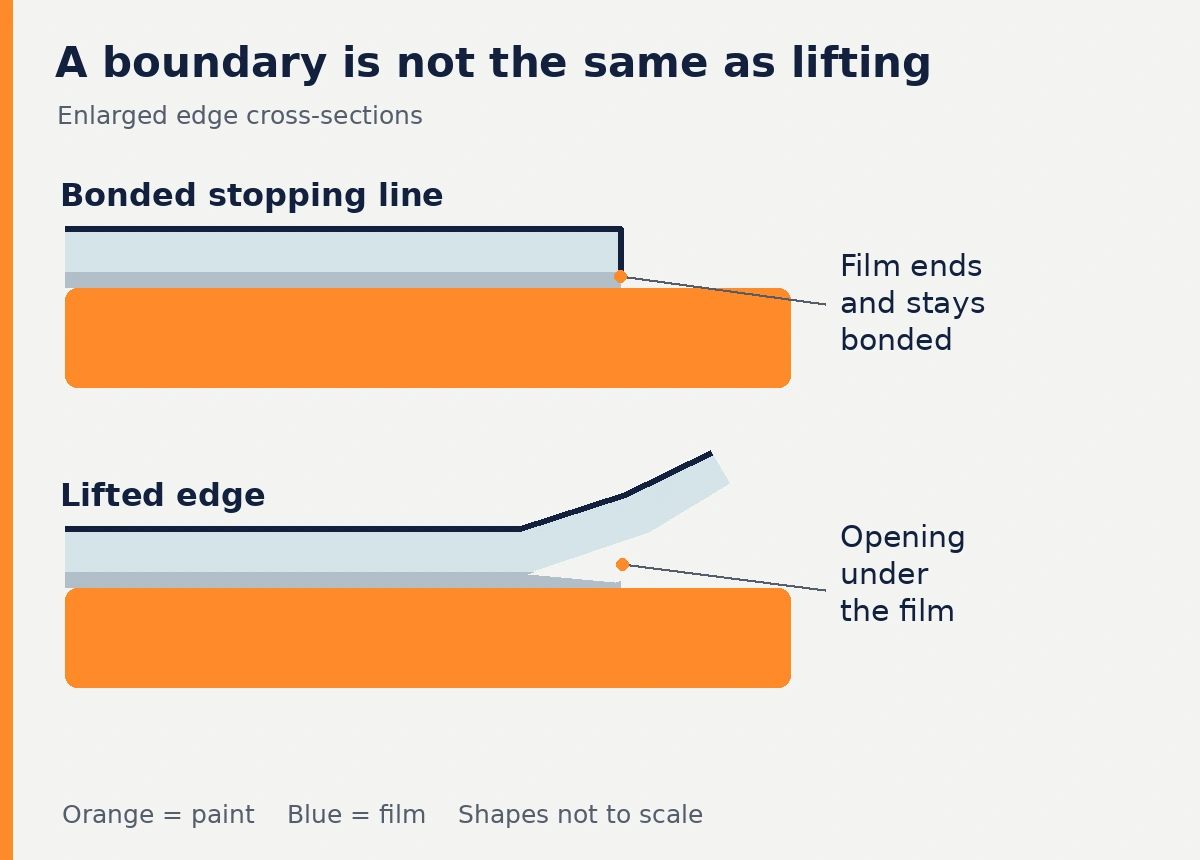
A partial hood installation leaves a boundary across the panel. A pre-cut piece can also end just short of a panel edge. Those lines are not automatically defects if they match the approved coverage and finish.
Lifting means the film is separating from its support. A curled corner, open channel or edge collecting material underneath deserves installer assessment. Do not pull it back to inspect, press it down repeatedly or add glue.
There is no universal acceptable seam width for every vehicle and pattern. Ask why the boundary is there and compare it with what was agreed. A planned relief cut around a complex shape is different from an unexplained tear.
Report a sharp crease, conspicuous trapped particle or concern about a cut in the paint as an observation. Photograph it without touching. A phone image may not show which layer contains the mark, so leave the conclusion to an inspection.
Check moving parts and equipment before leaving
Appearance is only part of the handover. With the installer present, use the normal vehicle controls to check any parts affected by the work. Do not force a panel that catches or remove trim to see behind it.
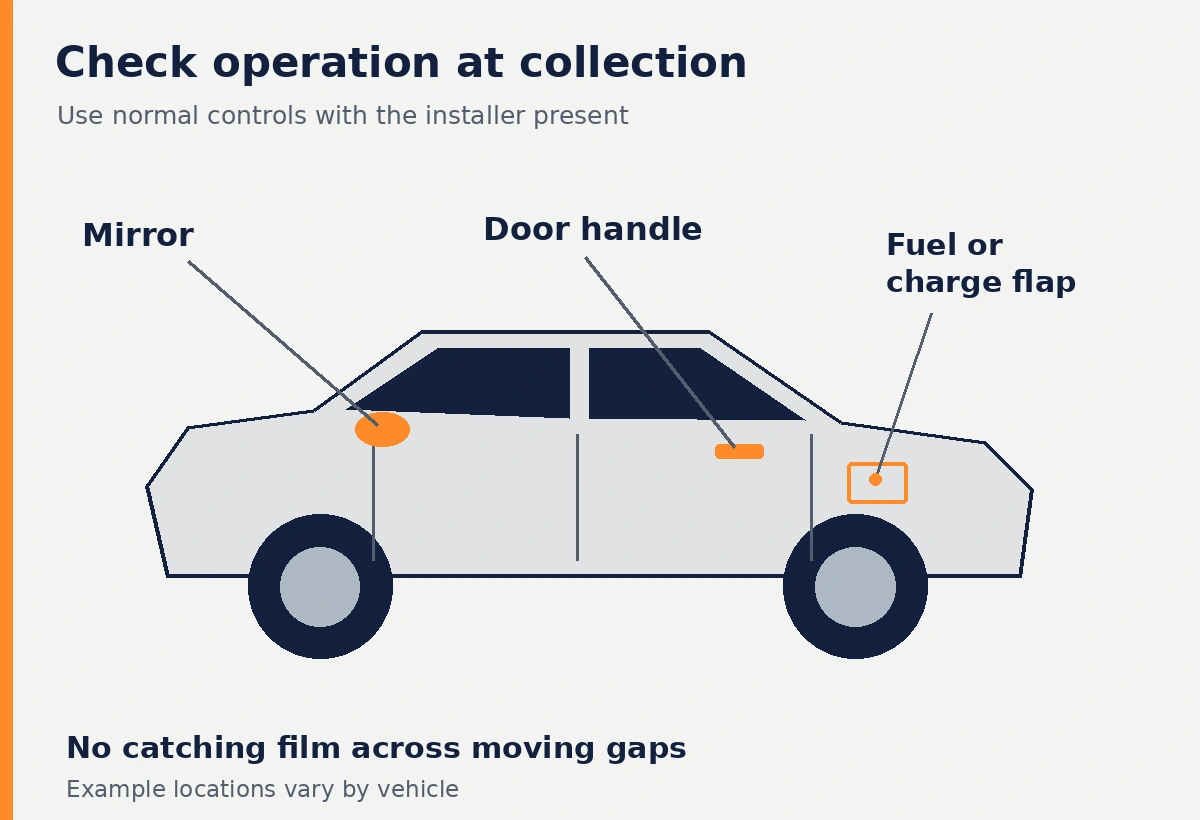
- Doors, handles and the fuel or charging flap should operate without film catching across a moving gap.
- Review mirrors, badges, seals and trim that were removed or disturbed. Ask about an unfamiliar gap or loose part.
- Check camera views, parking warnings and washer operation where relevant to the fitted areas. Report a new warning or obstruction before departure.
A normal-looking camera display does not establish that every driver-assistance system has been calibrated correctly. If equipment was removed or its mounting changed, ask what manufacturer-required checks apply and obtain the record where needed.
Resolve restricted movement or a new safety-related warning before driving away. Do not accept “the film needs to cure” as an explanation for a door that will not latch or equipment that is obstructed.
Confirm driving, washing and appearance review separately
Being ready for collection, being ready for washing and reaching a stable appearance are different milestones. “Leave it for a few days” does not tell you what to do if rain arrives, a bird deposit lands on the hood or a corner starts lifting.
| Permission | Ask the installer |
|---|---|
| Collection and driving | Is this installation ready for release, and are there any route, weather or use restrictions for my car? |
| First wash and added products | What is the earliest permitted wash date and method? Does a coating have a separate restriction? |
| Appearance review | Which recorded areas may change during settling, what improvement is expected and when should they be reassessed? |
Published examples show why the exact film matters. XPEL’s care instructions list 48 hours before washing ULTIMATE PLUS and 72 hours for COLOR PPF. The 3M PPF FAQ for Pro Series 200, Series 150 and Series 100 specifies 72 hours. SunTek’s EMEA FAQ says three days. These are washing instructions, not promises that every visible concern disappears by that time.
Use the document for your installed series and ask the installer to resolve conflicting instructions in writing. Do not pick the shortest interval from another brand. If a coating was added, record both products and follow their compatible combined aftercare requirements.
Know what can be monitored and what needs reporting
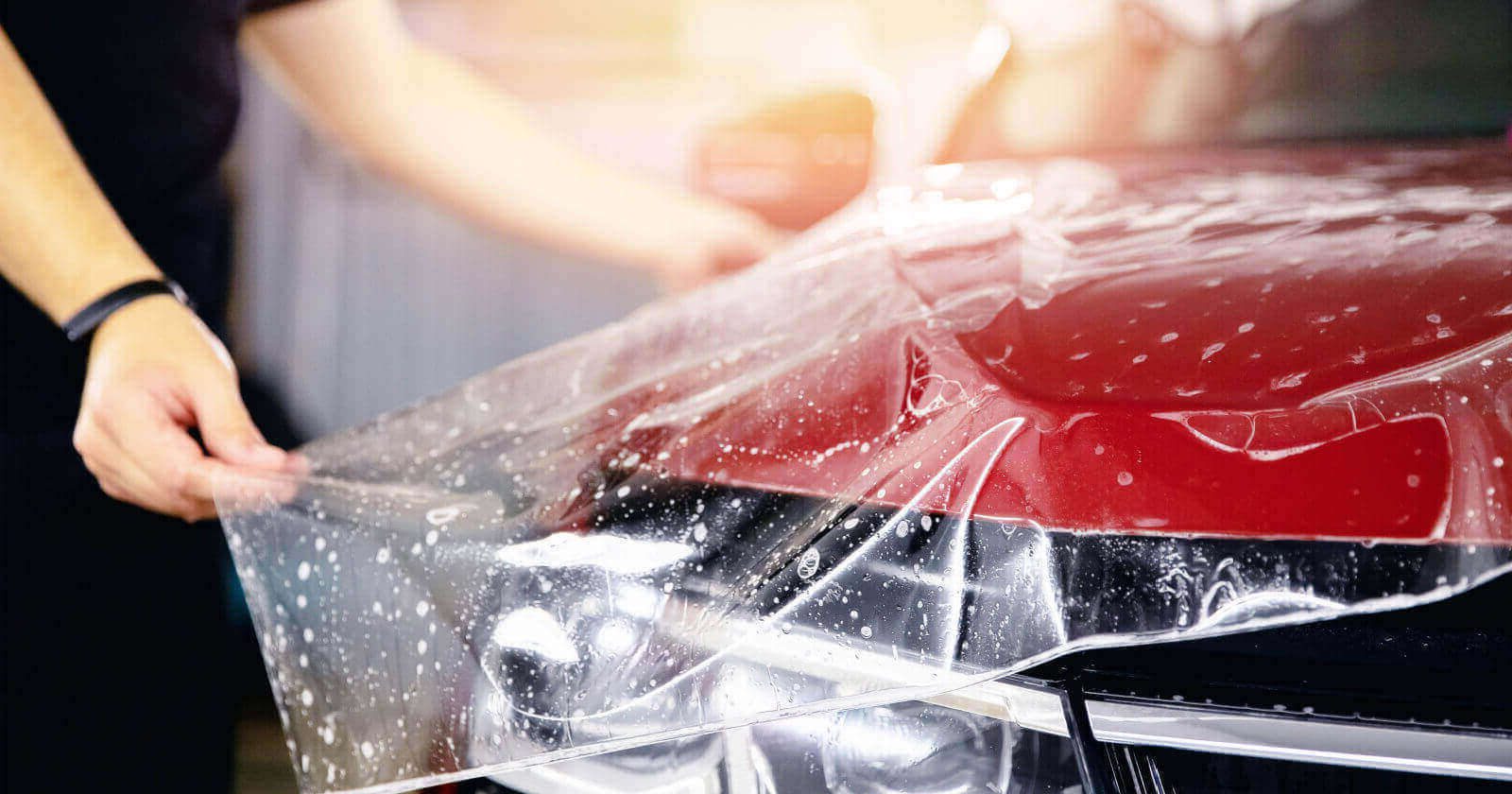
Wet-applied PPF is positioned with installation fluid. Some moisture-related appearance can change after collection. XPEL’s FAQ acknowledges that application bubbles can take days to weeks to settle, but that broad description cannot identify the cause of a particular raised spot.
Ask the installer to identify any area they expect to improve and record it at handover. A photograph alone cannot reliably distinguish moisture, air, adhesive marking or trapped debris. Avoid both extremes of demanding replacement for every temporary change and waiting indefinitely on a worsening problem.
| What you notice | Sensible next step |
|---|---|
| Small haze or moisture appearance already assessed at collection | Keep the baseline photo and follow the product-specific review plan. Report persistence beyond the agreed date or an unexpected change. |
| A substantial pocket, increasing raised area or several new pockets | Send photos promptly and ask whether inspection should be brought forward. Do not press or puncture the area. |
| A fixed speck, fiber or pronounced line | Request assessment. A solid particle does not evaporate as installation moisture dries. |
| A loose edge, tear or opening collecting dirt | Contact the installer promptly and keep cleaners and pressure jets away. Do not wait for a scheduled check if the opening grows. |
| Obstructed equipment or a moving part catching | Resolve the functional concern before using the affected feature or driving if safety is involved. |
There is no reliable owner test based only on a bubble’s diameter. Shape, location, film construction and the condition underneath matter. Vinyl air-release pens and installation squeegee instructions are not aftercare instructions for a newly fitted wet-applied PPF system.
Use the first week to protect the work and keep a record
At collection
Complete the joint walkaround, save the aftercare document and agree how to report a change. Record the actual earliest wash date.
Until washing is allowed
Avoid planned washing and extra products. Check visually without picking, rubbing or lifting edges. Keep the car-wash team informed.
At the agreed review
Compare the same locations with your baseline record. Report what improved, remained or worsened. The review may fall outside the first week.
Dubai dust can make you want to wipe a new installation immediately. Resist dry wiping a gritty surface. Tell a building wash attendant or valet that the car has fresh PPF and that washing needs your authorization after the stated date.
Choose suitable covered parking where available and avoid recurring sprinkler spray or dripping pipes. Do not deliberately bake the car in the sun to force a bubble to disappear. Exposure is not a substitute for the installer’s assessment.
If bird droppings or another staining deposit lands during the no-wash period, contact the installer promptly for the approved local cleaning method. Ask this question at collection so the answer is ready. Leaving a contaminant indefinitely and scrubbing it off are both poor default choices.
After the specified wait, use the approved gentle wash on a cool surface. Keep pressure away from edges and follow the named product’s restrictions. Do not assume touchless washing, a coating spray or a solvent is acceptable for every film.
Take photos that make a follow-up useful
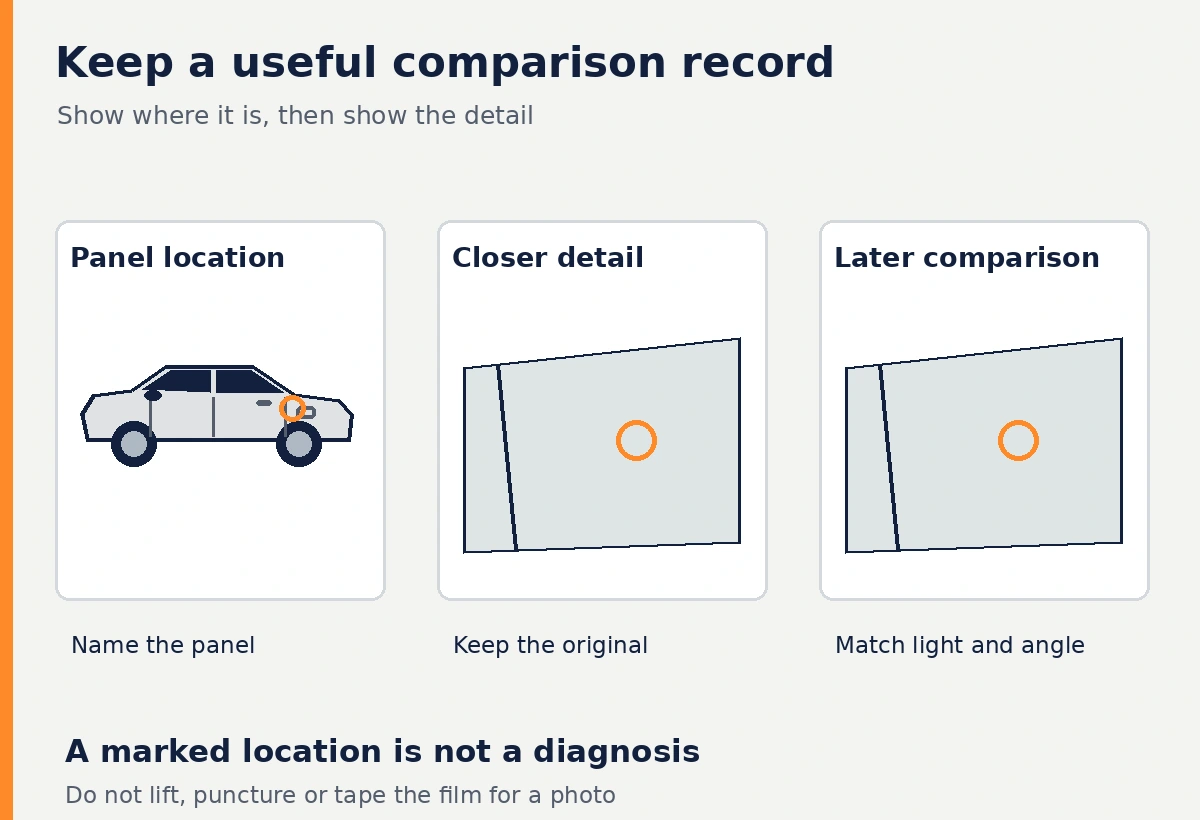
Start with a picture that identifies the panel. Follow with a closer view and, if reflections hide the concern, a second angle. Keep the original files rather than only a heavily compressed screenshot.
Record the date, panel and approximate position in a phone note. For example, “passenger-side mirror, lower outer corner” is more useful than “the right side” when people are facing different directions. A nearby body feature can show scale without putting a ruler or tape onto fresh film.
Use similar lighting and distance for a later comparison. A darker reflection or different camera exposure can make a spot look larger or more yellow. Avoid beauty filters and dramatic contrast adjustments. If the problem involves movement, a short stationary video may help, provided you do not force the part.
Agree who will review an open concern and when

A useful follow-up has a named contact, a date or clear trigger, and a list of locations to inspect. Ask whether the appointment is included, whether any proposed correction needs separate approval and how long the vehicle may need to remain at the workshop.
A practical first message
I collected my vehicle on [date]. I noticed [visible change] on [panel and location]. It has [improved, stayed the same or worsened] since collection. These photos show the panel and the detail. Please confirm whether I should bring the car in before our agreed review and what care instructions apply meanwhile.
Include any recent wash, impact or added product honestly. The aim is to help assessment, not to assign blame from a photo. If a planned settling change is still present at the review, ask for an updated explanation and next step rather than an open-ended instruction to wait.
When work is corrected, revisit the original photo locations and record what was done. A replaced piece needs its own installation date, panel reference and aftercare advice. Keep any warranty decision separate from the decision about how to restore the finish.
Keep the handover documents together
Save the final invoice, installed film series and finish, panel list, paint-condition record, written care instructions and the contact handling concerns. Retain the applicable product warranty and any separate workmanship terms.
If registration confirmation is still pending, record who will send it and when. A submission screenshot and accepted registration may represent different stages. Do not assume an inspection or replacement will be free unless the applicable agreement says so.
Copy this collection record into your phone
Complete it with the installer. Keep open concerns separate from items you have checked and accepted.
- Vehicle and job reference
- [Model, collection date and invoice reference]
- Installed products
- [Film maker, series, finish and any coating]
- Coverage checked
- [Panel list, stopping lines, seams and exclusions]
- Release and care
- [Driving permission, earliest wash date, wash method and urgent contaminant advice]
- Open concern
- [Panel, exact location, photo file and installer’s assessment]
- Next action
- [Named contact, review date, earlier return trigger and any agreed charge]
For a branded installation, the XPEL PPF service information is a starting point for product and finish questions. Your own invoice and applicable regional documents remain the records for your vehicle.
Manufacturer guidance behind this checklist
- XPEL product-specific care instructions and PPF questions about settling and film boundaries.
- 3M PPF FAQ for Pro Series 200, Series 150 and Series 100.
- SunTek EMEA care and installation FAQ.
Checked October 9, 2026. Match the instructions to the exact installed product and regional terms.
Questions after collecting a newly protected car
When can I wash my car after PPF installation?
Use the waiting period and method for your exact film and any coating. Published instructions differ by product. Ask the installer to write the earliest permitted wash date on your collection record and resolve conflicting advice before washing.
Does driving home mean the film has finished settling?
No. Collection readiness, washing permission and appearance review are separate decisions. Confirm the vehicle is released for use and keep the installer’s specific restrictions.
Should I return immediately if it rains?
Rain alone does not tell you that the installation has failed. Follow any release restrictions, avoid rubbing dirty panels and contact the installer if you see lifting, a new pocket or another change. Ask about expected weather before departure.
Can I pop a bubble that looks easy to reach?
No. Photograph and report it. A puncture can damage the film, and the raised area may not be an air bubble. Leave correction to the installer after assessment.
Must every edge disappear from view?
No. Approved partial coverage and some pre-cut boundaries remain visible. Check that the boundary matches the plan and that the film is bonded. An opening or curled edge needs a different assessment.
Is a first-week inspection automatically included?
Do not assume it is. Confirm timing, cost and scope at collection. A general article cannot create a workshop policy or replace the written agreement for your job.
Match the coverage, record unresolved details and leave with a specific care and follow-up plan. Photograph a change before trying to fix it.
Talk through the next step
Need help with a concern after collection
Send your vehicle model, installation date, film details and a panel photo with a closer view. Our Al Quoz team can discuss the next assessment step. If you are planning a new installation, ask about the handover documents and follow-up arrangements before booking.
If another installer fitted the film, contact them first about their handover and warranty process.