
Vinyl coating compatibility and application
Ceramic Coating Over Wrap and How to Apply It
Apply ceramic coating to vinyl wrap only when the coating supports the exact film and finish and you accept its warranty implications. Check a cured sample first, prepare the surface with permitted products, apply and level in small sections, then complete the specified indoor curing period.
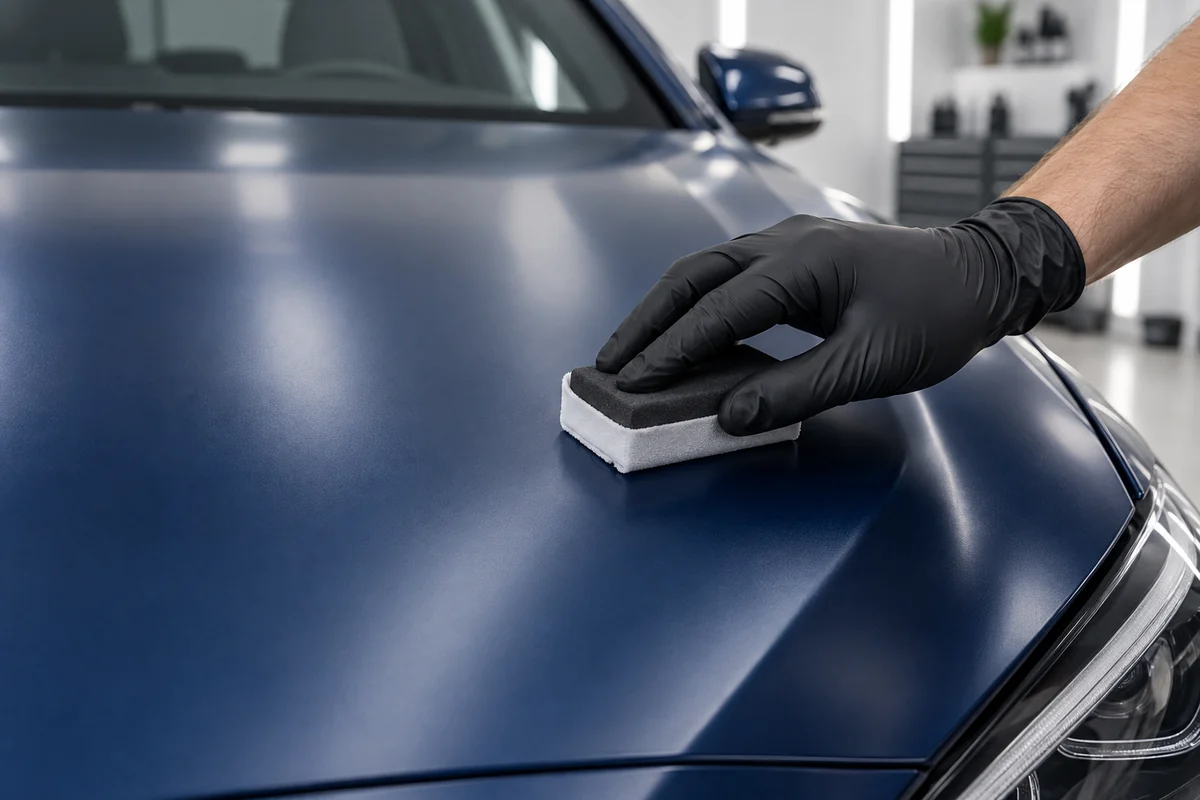
Decide what you want the coating to change
A compatible coating can make an intact vinyl wrap easier to clean and improve water repellency. It is an optional surface treatment, with a separate purpose from replacing damaged film or improving the way the wrap was fitted.
Match the treatment to the problem. Difficult-to-release road grime may justify a compatible coating. Lifted edges need an installation assessment, while a persistent stain needs identification before treatment. Inspect the dry wrap first so surface contamination is not confused with damage.
Water beading is a visible surface behaviour, but it is not proof that the car is protected from every form of damage. Water can still dry on a coated panel and leave mineral deposits. Sand can still scratch when dragged across the surface. Bird droppings still need prompt attention through the permitted cleaning method.
Keep colour-change vinyl, paint protection film and ceramic coating separate in your plan. Decorative vinyl primarily changes appearance. PPF is a separate film category selected for its specified protective properties. A coating goes on the exposed surface of a compatible material. A product suitable for PPF does not automatically have approval from the manufacturer of your colour-change vinyl.
For a car parked outside in Dubai, include suitable shade and prompt cleaning in the care plan.
Check the film, coating and warranty together
Find the film manufacturer, series, finish and fitting date before selecting a bottle. Add any printed layer, overlaminate and existing treatment to that record. The word vinyl covers different products, while ceramic is used on everything from maintenance sprays to coatings with a defined application and curing process.
Ask for the exact coating name, its supported surfaces and current instructions. Approval for paint alone is insufficient. Check the film supplier’s position as well, particularly when the vinyl still has warranty coverage.
The warranty distinction is particularly important for 3M 2080. Its July 2023 maintenance FAQ says that 2080 films with coatings or other aftermarket additions are not warranted under its MCS terms. It also places coating use on a user test-and-approve basis. A successful sample test does not reinstate that coverage. Confirm the current terms for your film and warranty market before approving treatment.
Separate the three types of cover in a quotation. The film manufacturer’s terms cover the material under stated conditions. The installer’s workmanship terms cover fitting. A coating warranty concerns its own product and maintenance requirements. A package name does not combine them into one promise.
Ask who handles each claim and what maintenance evidence they require. Replacement film may need its own fresh treatment.
Test the appearance of gloss, satin and matte vinyl
A gloss finish is judged by clarity and even reflection. Matte and satin are also judged by the consistency of their lower sheen. A darker patch, shiny streak or visible residue can spoil that appearance even if the coating repels water. Judge the dried result on the actual material rather than relying on a general matte-safe label.
| Finish | Check in suitable light | Reason to pause |
|---|---|---|
| Gloss | Clear, even reflection without smears | Haze or residue that remains after the instructed levelling |
| Satin | Consistent soft sheen and colour | Uneven darkening or stronger shine in treated areas |
| Matte or textured | The intended low sheen and visible texture | Glossy patches, pooled product or altered appearance |
Use an offcut of the same film where possible. Apply and allow it to cure according to the named product's instructions, leaving an untreated comparison area. Examine both under diffused light and from several angles. A loose sample helps establish appearance, although it cannot reproduce every condition of an ageing installed panel.
For an existing wrap, a permitted inconspicuous-area test may also be needed. Agree where that test will happen and what happens if it leaves a visible change. Do not use an obvious bonnet area as the first experiment. A carbon-look or other embossed material also deserves its own assessment because residue can collect around the texture.
Photograph the approved sample and record its film code and coating. Use that reference when assessing the finished vehicle.
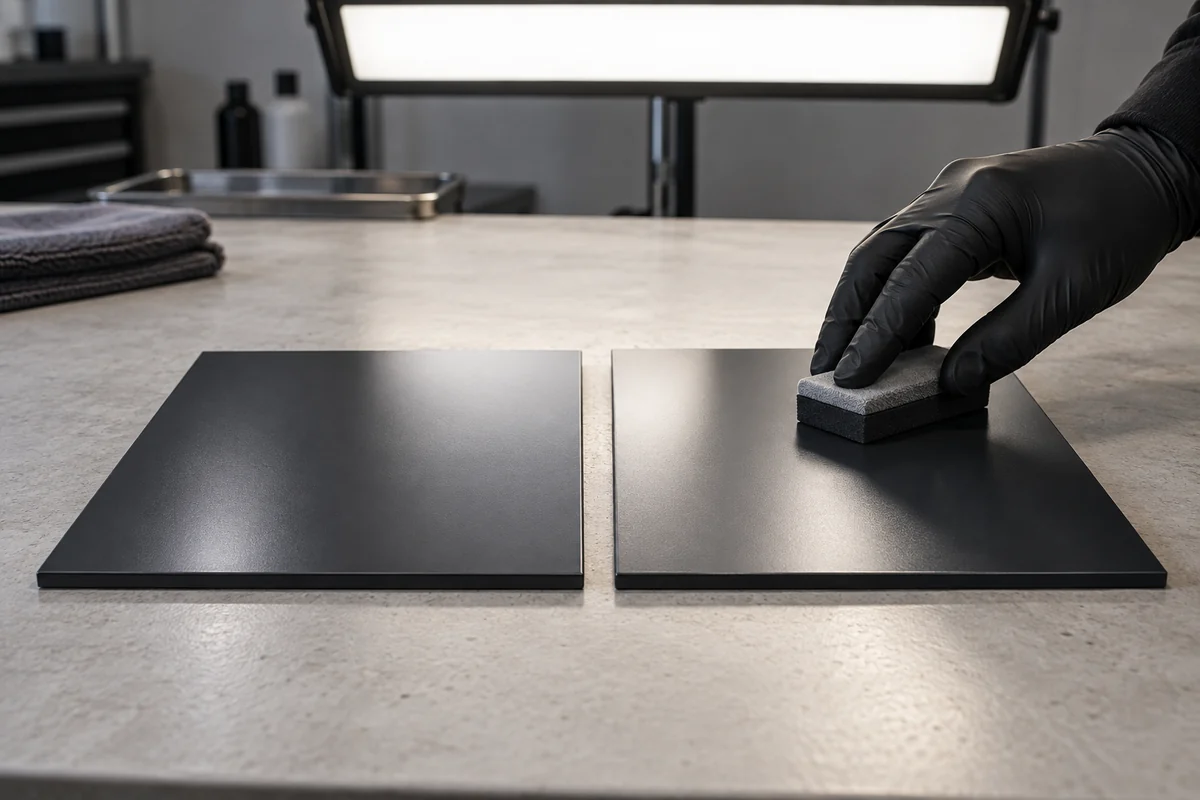
Choose application tools from the product instructions
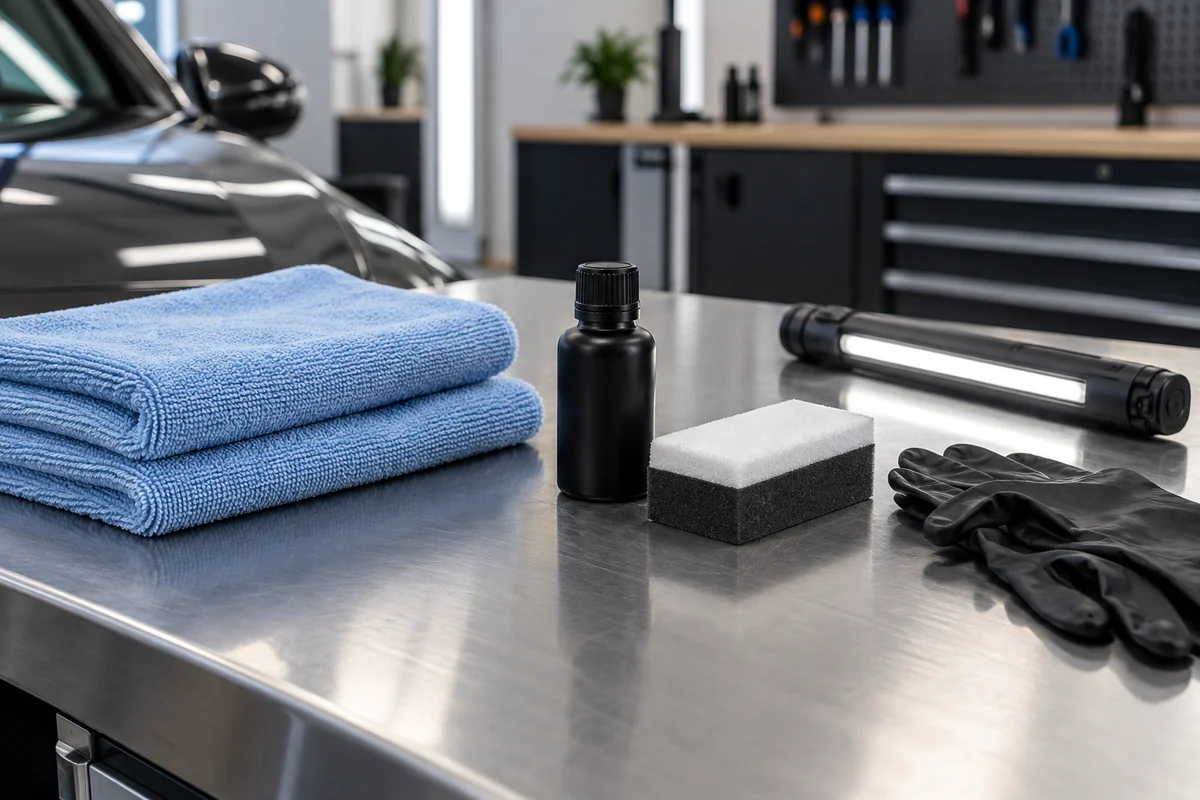
Start with the cleaning products, preparation wipe, applicator and towels specified for the coating. Good lighting matters as much as the bottle because residue can be difficult to see on broad panels. Arrange clean tools within reach before application.
- A suitable wash mitt and clean drying towels remove ordinary dirt before preparation.
- The specified coating applicator spreads the product across a manageable area.
- Separate clean microfibre cloths allow residue removal and a final inspection.
- Bright diffused lighting helps reveal streaks from more than one angle.
- The label and safety data sheet determine gloves, ventilation and other handling precautions.
Different systems use foam-filled pads or suede-covered blocks. Use the supplied or recommended applicator and keep replacements available if one becomes dirty. A gritty pad should be changed immediately, not wiped across another panel.
Keep coating towels apart from wax, polish and interior-cleaning cloths. Check them for dirt and hardened residue before touching the wrap. Once the product has cured in a cloth, that cloth may no longer be suitable for delicate contact. Follow the supplier's cleaning or disposal advice rather than returning it automatically to your wash kit.
Use heat-assisted curing only when the coating instructions permit it and the film requirements can also be met. An installation heat gun is not a substitute for a specified curing process.
Inspect the existing wrap before preparing it
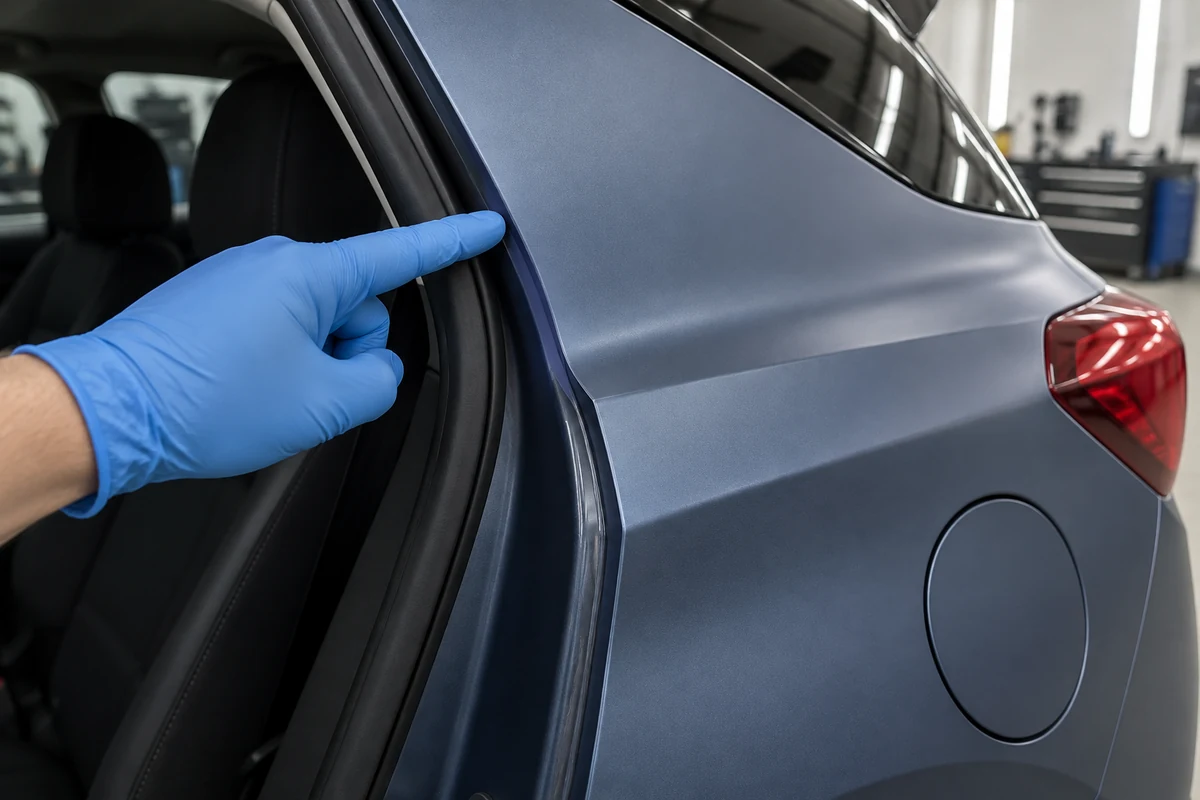
Wash and dry the car sufficiently to distinguish contamination from damage. Look for lifted edges, cracks, tears, persistent colour changes and areas where the surface is no longer uniform. Record what you find before preparation. A wet surface can make a defect less visible, so make the condition decision when the finish is dry.
Check handles, mirror housings, fuel access and bumper returns without picking at the film. Photograph any open edges and arrange an installer’s assessment before wet preparation. Keeping liquid out of a lifted edge avoids adding contamination beneath it.
Consider how much useful life remains. Treating a sound recent wrap is a different decision from paying to prepare film that is already becoming brittle. An old but intact panel does not automatically need replacement, and a new-looking wrap is not automatically suitable. Base the choice on its condition, product history and the intended ownership period.
Tell the applicator about previous waxes or coatings, including anything you cannot identify. This changes the preparation plan. Repeated solvent wiping is a poor way to investigate an unfamiliar surface treatment.
Agree whether any repairs will leave untreated replacement film beside previously coated panels. The coating record and appearance sample can help plan a consistent result. This is also the point to decide whether coating the entire exterior or selected compatible surfaces fits the project.
Clean and prepare without treating vinyl like paint
Remove loose grit before contact washing, use cleaning products allowed for the finish and rinse thoroughly. Dry the surface and attend to water trapped around details before moving to the preparation stage. A freshly washed panel is a starting point, not proof that residues from every earlier treatment have gone.
Targeted decontamination should answer a specific problem. Confirm that the chemical is suitable for the film and its finish, test as instructed and observe the stated dilution and dwell time. Do not adopt a paint-preparation routine simply because the bottle can remove contamination effectively from clear coat.
Claying is not a mandatory step on every wrapped car. Nor is machine polishing. Abrasive contact can alter the surface, especially on matte or satin material. If contamination cannot be removed through the supported approach, get the film or coating supplier's advice instead of assuming that a softer clay mitt or lighter polishing pad makes the process safe.
Use an IPA preparation wipe only where the film and coating guidance allow it. Check the specified dilution, whether it is applied to the cloth, and the required surface conditions. A stronger mixture is not automatically better at preparing vinyl.
Before opening the bottle, check for fresh dust, moisture emerging from seams and fingerprints on prepared panels. Keep the car in the application workspace once the surface is ready.
Apply and level in manageable sections
Check the current instructions for the bottle you will use. Application area, removal timing and coat count belong to that product. Avoid flooding seams or trying to increase durability by leaving a thicker wet layer.
The HALOv2 application sheet provides a useful product-specific sequence after film compatibility, warranty acceptance and the sample test.
- Set up indoors. Keep the vehicle indoors for application and at least 12 hours afterwards. Shake the bottle and wear the specified gloves.
- Prepare the cooled surface. Follow its washing and decontamination directions for existing film. The sheet specifies 30% IPA on an MF1 cloth. Confirm that preparation is permitted for your vinyl.
- Load the AP2 applicator. Apply the product to the supplied pad and put the bottle aside.
- Work a small area. Use overlapping strokes across roughly 60 × 60 cm, or follow a bodyline.
- Remove the residue. Use a clean MF1 cloth, working from outside the treated area towards the inside.
- Inspect before continuing. Check with another clean cloth and bright diffused light. HALOv2 uses one layer.
Change contaminated or saturated contact tools. Keep the next section small enough to spread, level and inspect within the coating’s working instructions. Never combine an older two-layer HALO method with the current HALOv2 sequence.
Arrange curing and the first wash before handover
A coating can feel dry before it is ready for normal exposure. Establish the required indoor period, water restrictions and first-wash timing from the named system. The wrap's own post-installation restrictions may also apply when the film is new. Arrange the work so both sets of conditions can be satisfied.
| Stage | What to confirm |
|---|---|
| Leave the indoor space | The earliest release time for the exact coating. HALOv2 specifies at least 12 hours indoors after application. |
| Get the surface wet | The coating’s water-exposure restriction and what to do after accidental early wetting. |
| First wash | The permitted wash time and cleaner, accounting for any new-wrap restrictions as well. |
How soon can a new wrap be coated?
Wait until the installer has completed finishing and the film’s required settling or inspection period. Then check when the chosen coating’s preparation may begin. A 12-hour indoor coating cure is not permission to wash or chemically prepare a newly installed wrap immediately.
In Dubai, a hot bonnet or warm outdoor bay may differ substantially from the indoor conditions required by the coating. Check the actual surface and environment. Coating in direct sun can complicate application and residue removal. Shade alone is not equivalent to a controlled indoor workspace when the instructions require indoors.
Inspect the dry finish before collection. View broad panels, contours and details from several angles for streaks, haze and inconsistent sheen. Keep the agreed sample nearby if appearance was a concern. Resolve a visible issue through the named product's supported method before treating the vehicle as ready for normal use.
Maintain the coated wrap and investigate changes
Continue a compatible cleaning routine after curing. Rinse loose dust, use clean gentle contact tools and dry appropriately so water does not simply evaporate on hot panels. The vinyl wrap maintenance guide explains the wider care and inspection decisions. Your coating's restrictions remain an additional check.
When performance changes, note the affected panels and recent cleaners before deciding to add another layer.
| Change | Next check |
|---|---|
| Dark streak or high spot | Ask the applicator whether residue is still workable and which correction the product permits. Avoid treating matte vinyl like polished paint. |
| Weaker water beading | Check dirt, mineral deposits and recent wash products through the supported cleaning method before judging coating failure. |
| Stain or persistent mark | Identify the deposit and assess the dry film. Stop escalating chemicals if permitted cleaning does not improve it. |
| Lifted or cracked film | Arrange a wrap assessment. Surface coating cannot restore the adhesive bond or missing material. |
The correction method depends on the coating’s cure state and the film beneath it. A cured high spot on matte or satin vinyl may need specialist assessment because abrasive correction can change the sheen.
CARPRO describes CQUARTZ Skin as a coating for vinyl and PPF with water repellency and UV-resistant properties. Use the care instructions for the chosen system. Physical film damage still needs its own repair assessment.
Keep the application date, coating name and care instructions with the vehicle. Tell the installer about coated adjoining panels when a wrapped part is replaced.
How long does ceramic coating on vinyl wrap last?
Coating life depends on the product, preparation, exposure and care. Gtechniq describes HALOv2 as lasting up to two years on PPF and vinyl when properly applied and maintained. That is a manufacturer’s product claim, not two extra years of wrap life or a guarantee for every car parked outdoors in Dubai.
The renewal decision should follow a clean-surface assessment. Water repellency and the physical condition of the vinyl need separate checks.
Ask what the chosen system requires at maintenance visits and whether any top-up product is permitted. Keep the application date and care record, then reassess when cleaning becomes harder or the appearance changes. Recoating by calendar alone can overlook contamination, an earlier treatment or film that now needs replacement.
Choose DIY application or professional coating
DIY application is a practical option only when the product permits it and you can provide the required preparation, lighting and curing conditions. A small sample is a useful starting point. Being able to spread the liquid is only part of the job. You also need to identify residue and complete each section within the product’s working process.
| Condition | DIY may be suitable | Seek professional assessment |
|---|---|---|
| Film and earlier treatments | Known products with a supported preparation method | Unknown coating, damaged film or conflicting guidance |
| Workspace | Clean, suitable indoor space available through curing | Outdoor-only parking or poor inspection lighting |
| Finish and access | Approved sample and areas you can inspect and reach | Uncertain sheen, difficult details or existing streaks |
For professional work, ask how the sample, preparation and final inspection will be handled. Confirm where the car stays during curing and who addresses visible application defects. The useful distinction is control of the complete process, not an assumption that any workshop or any bottle provides the same result.
Decide whether coating is worth the work for this wrap
Compare the preparation and coating cost with the condition of the vinyl and how long you intend to keep it. A sound wrap with a care routine you will follow may suit an optional treatment. Film already needing replacement deserves that assessment first. Neither a coating brand nor a stronger beading demonstration settles the decision.
Ask a quotation to identify the coating, supported surfaces, preparation, sample approval, indoor curing and aftercare. Clarify whether trim, glass, wheels or PPF are separate items. Different surfaces can need different products, so a whole-car package name should not obscure what is actually being applied to the wrap.
Request a written total with VAT treatment and any additional preparation charges. A previously treated or contaminated wrap can need more work than a clean new surface. Compare the included work and handover arrangements, not just the package name.
For an assessment and quotation, see our ceramic coating service. Tell the team that the surface is vinyl so a paint-correction package is not treated as the preparation plan for your wrap.
Assess the actual combination
Discuss coating your existing wrap
Share your film details, fitting date and the finish you want to preserve. Our Al Quoz team can discuss the condition and proposed treatment before you decide on application.
Common questions about coating vinyl wrap
Can you put ceramic coating on a vinyl wrap?
Yes, where the coating supports the actual vinyl and finish and you accept the film manufacturer’s restrictions. Check both products, approve an appearance test and follow the named application method. A paint coating is not automatically suitable for vinyl.
Will ceramic coating make a matte wrap glossy?
An unsuitable product or uneven residue can change sheen. Even a coating sold for matte film needs an appearance test on the actual material. Approve the cured result before applying it across visible panels.
Does coating keep the 3M 2080 warranty unchanged?
No. The 3M 2080 maintenance FAQ says that films with coatings or other aftermarket additions are not warranted under its MCS terms. Test-and-approve use does not restore that coverage. Confirm the applicable written terms before proceeding.
Can I apply ceramic coating to a wrap myself?
Yes, if the product permits DIY use and you can meet its preparation, lighting and curing requirements. Start with an approved sample. Unknown earlier treatments, damaged film or inadequate indoor space are reasons to seek professional assessment.
How long should a coated wrap stay indoors?
Use the exact coating’s instructions and any applicable new-wrap restrictions. HALOv2 specifies at least 12 hours indoors after application, but other systems can differ. Confirm water exposure and first-wash timing separately at handover.
Can coating fix peeling edges or faded vinyl?
It cannot restore a failed adhesive bond or repair cracked film. Assess the cause and condition first. Cleaning may improve contamination-related appearance, but persistent fading or physical deterioration needs a separate repair or replacement decision.
Does water beading mean the wrap cannot stain?
No. Minerals can remain when water dries, and deposits still require prompt compatible cleaning. Beading describes surface behaviour, not immunity from stains, scratches or impact damage.
How long does ceramic coating over wrap last?
The duration is product-specific. Gtechniq describes HALOv2 as lasting up to two years with proper application and maintenance. This is not a guaranteed local lifespan or an extension of the vinyl warranty. Assess care, contamination and film condition before recoating.