
Vinyl wrap maintenance
How to Maintain Your Vinyl Car Wrap in Dubai
Keep your vinyl wrap clean with products matched to its film and finish. Rinse away sand before contact cleaning, remove fresh deposits promptly and inspect the dry surface after washing. Have lasting stains, lifting edges or cracks assessed before trying stronger chemicals or DIY heat.

Start your vinyl car wrap care routine
The most useful maintenance plan starts with the material on your car. Find the manufacturer, film series, color and finish on the installation record. Plain color-change vinyl, printed vehicle graphics and paint protection film can have different care requirements. A product being suitable for painted bodywork does not establish that it suits all three.
If you bought the vehicle already wrapped, ask the previous owner or installer for the film reference and fitting date. Record any known coating and repainted panels. Until you have that information, avoid experimental solvents, polishing or a new coating. An unfamiliar wrap is a reason to identify the surface before treating it.
Base car wrap maintenance on how the vehicle is used. A car kept indoors between occasional drives has a different contamination pattern from a daily driver parked outside. Look for the actual dirt and fresh deposits rather than assuming that the same calendar interval suits both. The aim is to clean appropriately and notice a developing issue, not to keep rubbing an already clean surface.
| When | Check or action | What changes the plan |
|---|---|---|
| At handover | Collect the material and care instructions | First-wash and coating restrictions |
| When fresh contamination appears | Remove the deposit promptly using the film’s approved method | A deposit that needs specialist treatment |
| When the car needs washing | Remove loose grit before gentle cleaning | Raised edges or damaged film |
| After cleaning and drying | Look at the finish, seams and vulnerable areas | A persistent mark or physical change |
| Before a new treatment | Confirm compatibility and test as directed | Changed sheen or uncertain warranty terms |
Decide what needs cleaning before choosing a method
Loose dust, a sticky deposit and a permanent surface mark need different responses. If there is visible sand or grit, a quick dry wipe can drag particles across the film. Remove loose contamination through an appropriate rinse before making contact. A feather duster is not a substitute for that step on a sandy car.
Waterless cleaning is a specific product-and-method decision. Avery Dennison's Supreme Wrapping Film care brochure allows its recommended waterless approach when the vehicle is not overly dirty, with hand washing first for an extremely dirty vehicle. This does not make an ordinary dry cloth or duster an equivalent method.
For a proper wash, choose shade and follow the cleaner’s permitted surface conditions. Use a compatible cleaner and clean, non-abrasive contact tools. Work so the product can be removed as directed before drying on the film. Follow the material's pressure-equipment instructions rather than applying a universal pressure, nozzle distance or temperature to every wrap.
A brushless automatic wash still needs suitable chemicals and spray conditions. Its label alone cannot confirm compatibility with your particular finish or existing edge condition. Tell the operator the car is wrapped and show any damaged area before work begins.
For the rinse, hand-wash and drying steps, follow our wrapped-car washing guide. Have lifted or damaged areas assessed before a routine wash.
Choose products that preserve the finish you paid for
Gloss, satin and matte are appearance choices, so judge a treatment by what it does to the original sheen. Making a matte panel shinier is not necessarily an improvement. An apparent clean patch can become an unwanted gloss patch if the product changes how the surface reflects light.
Read the film recommendations and product instructions together. Confirm the finish, dilution, application conditions and required rinse or wipe. A broad “vinyl safe” label does not establish compatibility with every film.
Avery Dennison's vehicle-wrap maintenance bulletin separates finish-specific methods and recommends testing new products in an inconspicuous area. Its chrome-film guidance also calls for extra care with contact and scratching. Use the current instructions for the material on your car rather than transferring a recipe between finishes.
Keep paint-correction machines and general abrasive compounds out of routine vinyl care. A manufacturer-supported treatment for one film does not approve it for another. Ask whether the proposed treatment removes residue or alters the film surface.
| Finish | What to check | What to avoid |
|---|---|---|
| Gloss | A cleaner or finishing product listed for the exact film | General paint-polishing compounds without film-specific approval |
| Matte or satin | Original sheen after a small test area has dried | Unapproved shine-enhancing products that leave a glossy patch |
| Chrome-effect or textured | Finish-specific tools and cleaning directions | Scrubbing, brushes and abrasive contact |
If a new cleaner leaves streaking or a changed reflection, stop before treating the rest of the vehicle. Record the product and application method. Complete only the appropriate cleanup from its instructions, then seek advice if the change remains. More rubbing can make it harder to distinguish residue from damage.
Keep contact tools and cleaning supplies clean
A suitable towel can still scratch if it has picked up grit. Keep clean cloths separate from used ones, and retire a cloth from bodywork use if its contact surface becomes contaminated. Tools used on wheels or gritty lower areas should not move straight onto the main wrap surface.
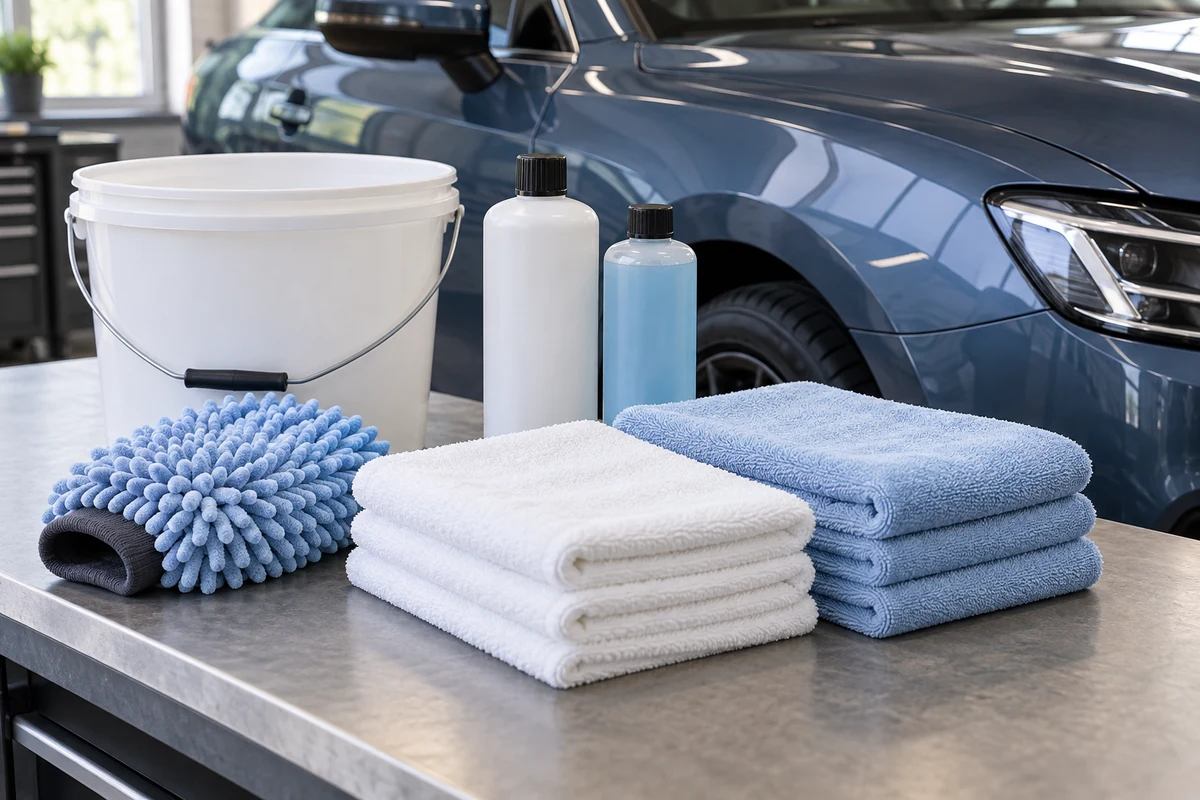
Store dry towels where they stay clean, not loose on a dusty trunk floor. Check the wash mitt and bucket before use. A kit does not need a large collection of specialist products, but you should know which cleaner serves regular washing and which, if any, is approved for targeted deposits.
When a mobile wash service cleans the car, agree the method before the appointment. Give the operator the film and finish reference and point out any existing concern. Request clean, appropriate tools. A more expensive package or a “ceramic wash” name does not explain whether the treatment suits the vinyl.
Keep liquids in their original labelled containers and follow storage instructions. A bottle left in a hot vehicle is not automatically suitable for long-term storage. Avoid anonymous decanted mixtures, especially if another person might use them without knowing their dilution or purpose. For occasional spot care, plan a small kit around the approved method.
Handle deposits without chasing them with stronger chemicals
Bird droppings, insects and tree sap should be treated promptly with the method approved for the film. Soften a bonded deposit as directed before attempting gentle removal. Scraping it with a fingernail or forcing a dry cloth across it can damage the surface while leaving part of the contamination behind.
A fuel spill needs prompt attention. The vehicle-wrap section of 3M's product-care guidance calls for wiping fuel off immediately, then hand washing, rinsing and drying as soon as possible. Follow the correct handling method rather than waiting until the next scheduled full wash.
For tar, oily residue or an unidentified adhesive mark, establish an approved remover before trying one. Do not assume that a bodywork solvent or household degreaser is suitable. ORAFOL's color-film maintenance terms warn against aggressive chemicals and abrasive products on the films they cover.
Water spots also need a product-specific response. A faint ring may be removable residue, while a persistent change may need assessment. Clean using the permitted method, dry the area and look at it under consistent light. Do not copy a paint-detailing acid treatment without checking the film requirements.
Once a deposit has been removed, stop trying to erase a mark that no longer responds. Photograph it and note what you have used. A lasting stain, altered texture or change in sheen is a different problem from dirt still sitting on the surface. Tell the installer whether the spot is improving, unchanged or becoming more visible.
Inspect the surface visually after cleaning
Look at a clean, dry car in reasonably consistent light. An overall view shows whether the finish looks different across a panel. A close view reveals an edge or isolated mark. Avoid deciding that the film has faded from one photograph taken under different lighting.
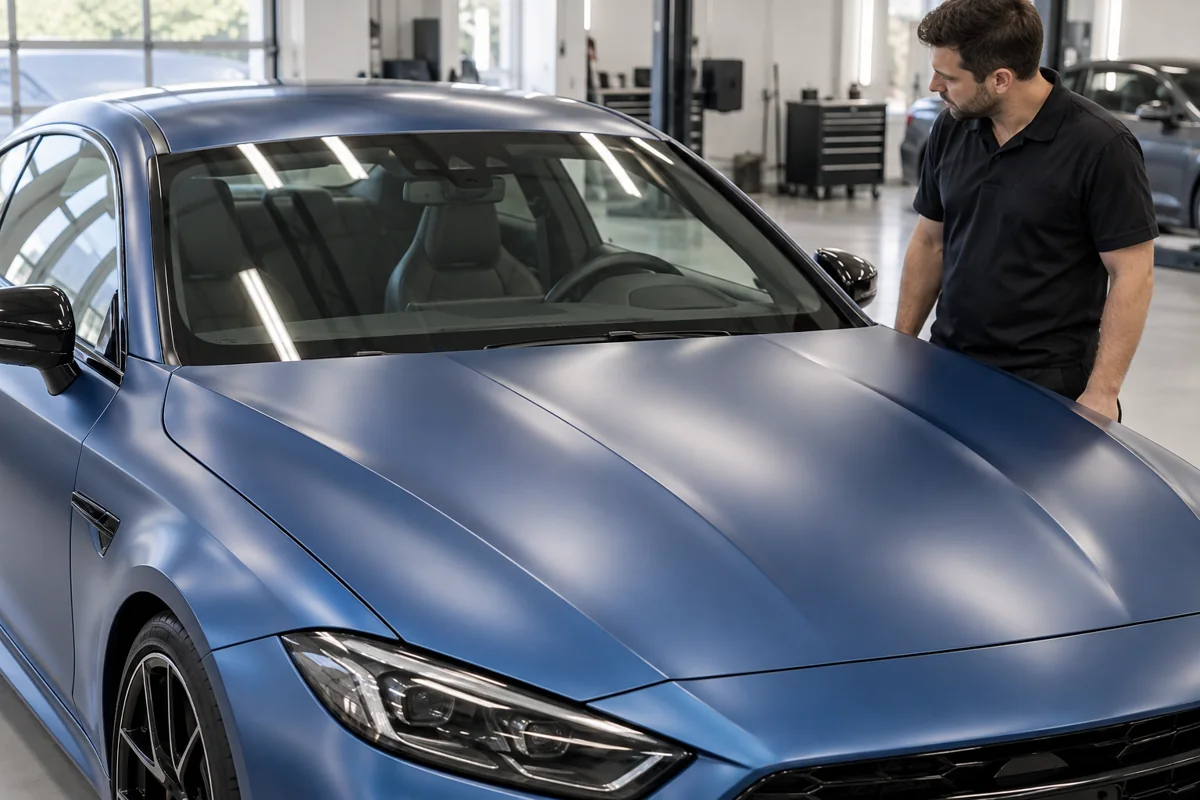
Check the roof and hood for persistent color or sheen changes. Look at visible door seams, mirror edges and bumper corners for lifting, cracks or separation. Examine the fuel area for spill marks. You do not need to pull an edge, run fingers under a seam or dismantle trim to make this useful check.
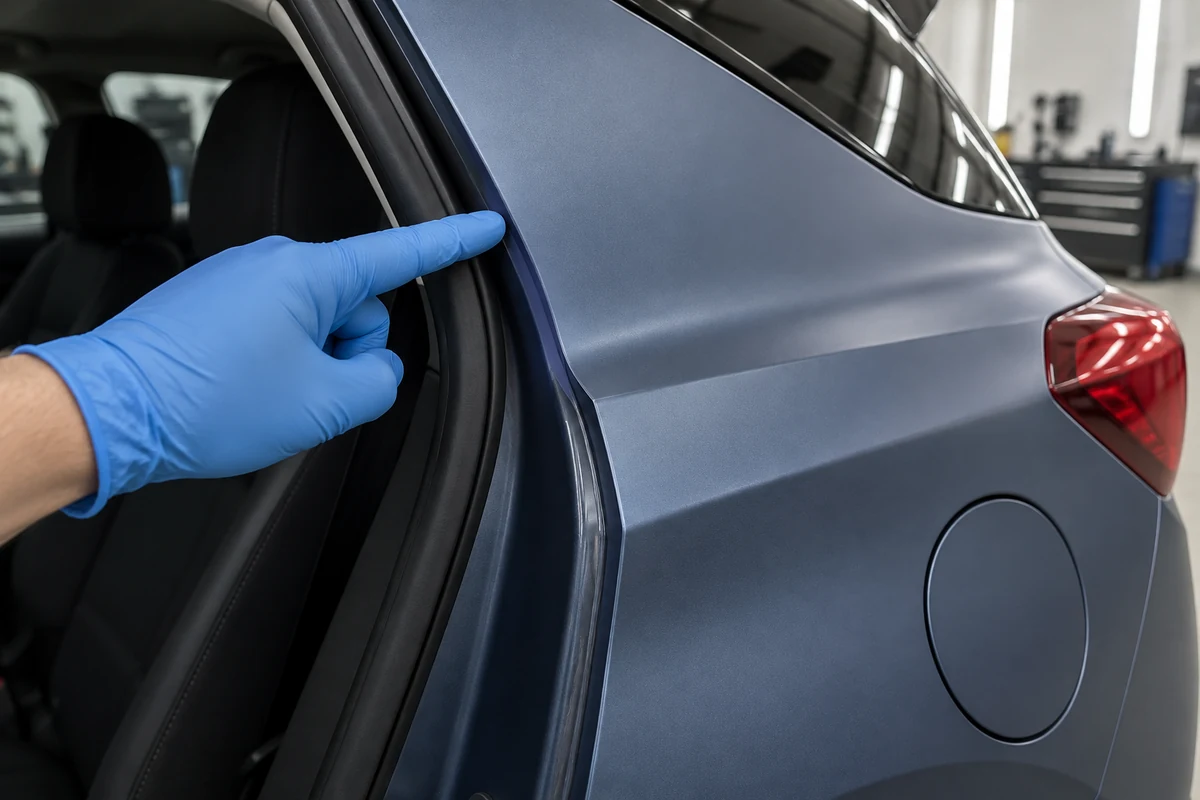
If you notice a lift, photograph it before touching it. Do not glue it down, press a dirty edge into place or use a hairdryer or heat gun as a maintenance shortcut. Assessment needs to distinguish film condition, contact and fitting concerns. Heat alone does not establish the cause or prove that the piece remains suitable for repair.
Record when a bubble appeared and whether the area changes after the car cools. Do not puncture it because it looks like trapped air. Debris, film tension and loss of contact can produce raised areas too. A photograph and installation history give the workshop more useful information than an attempted repair that changes the evidence.
For spreading cracks, brittleness or pieces beginning to detach, arrange timely assessment for replacement or professional removal. This is beyond ordinary cleaning. Keep pressure jets and abrasive contact away from the affected area while seeking the appropriate next step.
Treat coatings and shade as different decisions
Covered storage can reduce avoidable exposure, while a compatible finishing product may make contamination easier to manage. Those are different jobs. Neither establishes a fixed number of extra years of life or makes a vinyl wrap immune to staining, fading or lifting.
For Dubai parking and seasonal exposure planning, see our summer-care guide. In the ongoing routine, choose practical covered parking where available and keep checking the condition. If a cover is used, confirm suitability and keep the car and the cover's contact surface clean so grit is not trapped between them.
Before a ceramic coating, identify the named product, film compatibility, effect on sheen and warranty implications. The 3M 2080 maintenance FAQ excludes aftermarket coatings from MCS warranty coverage and states that 3M does not warrant coated 2080 film. The linked FAQ is Revision A from July 2023. Confirm the current warranty terms supplied for your material and region before coating. This statement is not a warranty decision for every Dubai installation or every wrap brand.
A generic UV spray every few weeks is not a universal maintenance requirement. Ask for the product's actual purpose and renewal instructions. A coating should be chosen for supported benefits on your material, rather than to compensate for a damaged surface or replace cleaning. Record any approved treatment so later assessment can account for it.
Plan repair or replacement from condition
Durability and warranty are different pieces of information. A manufacturer's expected service life describes stated conditions. A warranty has its own coverage and exclusions. Ask which region, surfaces, finish and care requirements apply. Roofs and hoods can have different exposure and terms from upright side panels.
Keep the installation date, material reference, invoice and initial photographs together. At a later inspection, record what has changed and where. This helps you discuss the affected panel without assuming that every mark proves poor installation or that every problem is caused by Dubai heat.
If removal is proposed, disclose repainted panels, known paint weakness and earlier repairs. A wrap-care routine cannot guarantee that the underlying paint will remain unaffected during removal. The professional needs to assess the film and substrate, then select the appropriate process rather than simply pulling from a corner.
Choose continued care, panel replacement or removal
| Finding | Useful next step | Limit |
|---|---|---|
| Mark disappears after approved cleaning | Continue the suitable routine | More aggressive treatment is unnecessary |
| Persistent stain or altered sheen | Arrange a finish assessment | Do not assume polishing will restore it |
| One torn area or lifted corner | Assess local repair or panel replacement | The cause, substrate and surrounding film still matter |
| Widespread cracks or brittle film | Plan removal and replacement assessment | A care product cannot renew deteriorated vinyl |
Compare a replacement sample beside the existing clean, dry film before agreeing coverage. The 3M 2080 maintenance FAQ identifies manufacturing lot, aging and condition as reasons a replacement section may look different. Review color and sheen under consistent light. Metallic, textured and color-shifting finishes also require the correct fitting direction. A small patch is worthwhile only when the appearance and surrounding material remain acceptable.
If the film is deteriorating, allow time for professional removal, inspection of the uncovered paint and any repair or curing before a new wrap.
Ask for an itemised quote separating cleaning, optional compatible treatment, panel replacement, removal and paintwork. Confirm the inclusions and VAT treatment. If removal is already planned, a new coating may not address the need. For a sale or lease return, check the required vehicle condition and allow time for assessment.
Leave clear instructions with anyone caring for the car
Keep a short care record on your phone or with the vehicle paperwork. Include the film and finish, fitting date, first-wash instructions, approved cleaner, any coating and the workshop contact. Add an overall photograph and a close view of an existing concern, with its location and date.
Before a detailing appointment, describe the surface accurately. If only the roof or selected panels are wrapped, identify them. If the car has both vinyl and PPF, note where each material is fitted. This prevents an operator from treating every exterior surface as the same finish.
Ask the operator to report an unexpected change before continuing. A lifted edge or persistent mark may need assessment rather than inclusion in the next treatment stage. When the car returns, look at the clean surface and retain the names of any products applied. Clear instructions make the maintenance plan easier to follow when more than one person looks after the vehicle.
Record recent chemicals, washes or impacts when reporting a new defect. Compare photographs of clean, dry surfaces in similar light. These records help assessment but do not establish warranty eligibility.
Questions about vinyl wrap maintenance
How long will a vinyl car wrap last in Dubai?
There is no single lifespan for every vinyl wrap in Dubai. The named film, finish, panel orientation, exposure and care conditions matter. Check the applicable regional durability and warranty terms with the installer. Use the clean, dry condition to plan assessment rather than treating a headline maximum as a guaranteed replacement date.
When can I first wash a newly wrapped car?
Follow the first-wash interval for your exact film. For example, the linked 3M 2080 maintenance FAQ specifies at least 72 hours after installation. Confirm the applicable instructions at handover. If fuel or another damaging deposit reaches the film during that interval, contact the installer promptly for the correct spot-cleaning method.
How often should I wash a vinyl-wrapped car?
Avery Dennison’s linked maintenance bulletin recommends cleaning when dirty and gives every two weeks as an ideal routine. This is a product-specific example, not a schedule for every wrap. Follow your film instructions, adjust for actual contamination and remove fresh damaging deposits promptly.
Can I use a dry duster between washes?
Avoid dry dusting where sand or grit is present. Remove loose contamination with the appropriate rinse before contact cleaning. A manufacturer-approved waterless product and method for light soil is a separate option, not permission to wipe a sandy panel with a dry cloth.
Can I polish a dull vinyl wrap back to gloss?
Do not assume paint-polishing methods are suitable. First establish whether the dullness is removable residue or a change in the film. Use a named, manufacturer-supported method if one exists for that finish, and have persistent changes assessed before abrasive treatment.
Does every car wrap need ceramic coating?
No. It is an optional material-specific decision. Check compatibility, the effect on the finish and warranty terms before application. Regular cleaning and exposure management remain necessary with or without a coating.
Should I reseal a small lifted edge with heat?
No. Arrange assessment instead of heating or gluing it yourself. Dirt, damaged film, loss of contact and fitting concerns can affect the repair. Photograph the area and record when the change began before an attempted fix alters it.
What if I cannot identify the film on a used car?
Ask for the original invoice or material record and consult the installer where possible. Avoid unfamiliar solvents, polishing and new coatings while the surface remains unidentified. Tell the workshop about known repainting, age and any previous products used.
Noticed a change in the film
Discuss your wrap’s condition
Tell our Al Quoz team the film reference, installation date and what has changed. An overall photograph and a close view can help us discuss the next assessment step.