
Choose the film around your car
Choosing the Best Wrap for Your Luxury Car
Choose decorative vinyl for a different look, or paint protection film when road-wear protection comes first. Compare the exact product, finish and fitting scope before booking.

Start with the change you want to make
The best wrap for a luxury car depends on whether you want a new appearance, protection for the existing paint, or both. A suitable decorative vinyl can change colour and sheen. Clear PPF keeps the paint colour visible while providing a protective layer. Satin PPF changes the surface appearance, and colour PPF combines a new colour with product-specific protection.
The badge does not determine that choice. A motorway-driven grand tourer with sound original paint may need a different scope from a lightly used weekend coupe whose owner wants a temporary restyle. Tell the installer how the car is used, where it is parked and how long you intend to keep the film.
| Your priority | Category to consider | Check before choosing |
|---|---|---|
| Change the exterior colour | Vehicle-grade decorative vinyl | Finish, conformity and approved service conditions |
| Keep the existing colour and gloss | Clear gloss PPF | Protection specification and panel coverage |
| Keep the colour with a softer sheen | Satin or matte-effect PPF | A sample on the actual paint finish |
| Change colour and add protection | Colour PPF or a named protective colour film | Construction, available finish and local terms |
PPF is a sacrificial surface, not armour against every impact. Self-healing descriptions concern specified minor film-surface marks. They do not mean a dent, deep cut or chip in the paint will repair itself.
Compare the complete job against published budgets
Wrapping.ae's current exterior colour-wrap guides provide a starting budget. A luxury-car quotation still needs the exact model, film and covered surfaces. Specialty materials, unusual bodywork and repaired paint need an individual scope.
| Coverage | Published guide | VAT and additional work |
|---|---|---|
| Roof, bonnet or boot panel | AED 1,200–2,000 | Confirmed separately in the written quote |
| Full sedan exterior | AED 8,000–15,000 | Confirmed separately in the written quote |
| Full 4×4 or SUV exterior | AED 15,000–25,000 | Confirmed separately in the written quote |
These published wrapping budgets are planning guides, not installed prices for every luxury model. They do not establish a clear PPF or colour PPF price. Old-film removal, preparation and additional door-shut coverage must be identified separately.
Compare final VAT-inclusive quotations for equivalent work. A lower exterior-wrap figure and a full-body protection package may describe different products and panels. Ask for the manufacturer, range, colour code, edge treatment and exclusions before treating the totals as comparable.
Identify the product beyond the word premium
Cast describes a manufacturing process. PVC describes a polymer. They are not opposing material categories, so describing all PVC as cheap and all cast film as something different is misleading. Ask for a vehicle-wrap product whose current specification suits the shape and intended use.
For example, 3M Wrap Film Series 2080 and Avery Dennison Supreme Wrapping Film are named decorative cast-film ranges. A catalogue brand alone does not tell you which finish is being quoted or whether that exact product is available. Record the full reference and inspect a sample.
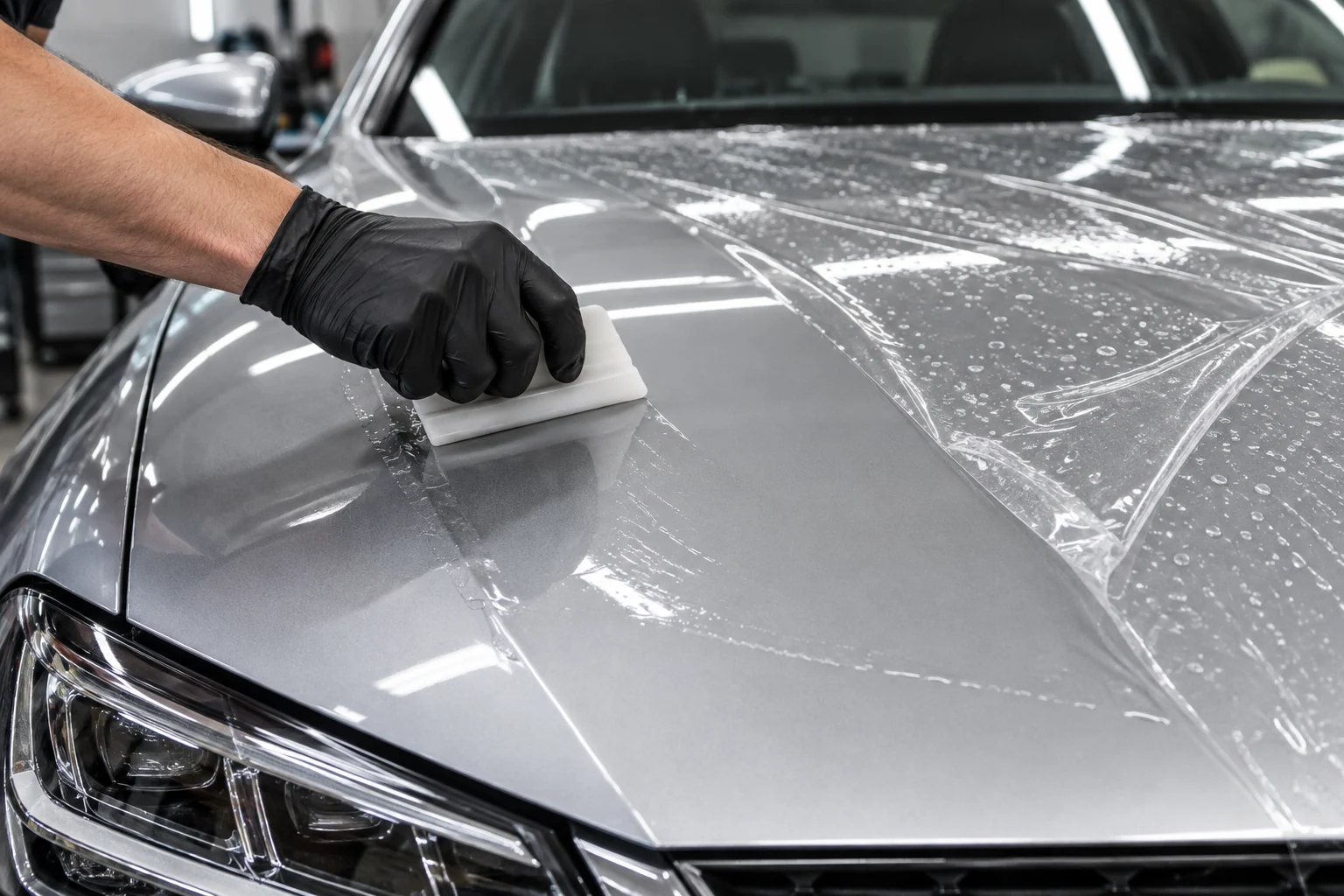
Protection films need their own assessment. TPU means thermoplastic polyurethane, a material used in many PPF products. That acronym does not establish the topcoat, finish, installation method or warranty. “Hybrid wrap” is equally incomplete without a named product and construction.
3M Protection Wrap Film Color Series is one documented protective colour-film example. Its minor surface-mark self-healing feature is distinct from ordinary decorative vinyl. Confirm local supply and terms rather than applying an overseas warranty headline to a Dubai installation.
If an installer proposes clear protection over decorative vinyl, ask for confirmation that the exact combination is supported. Added layers change the installation and removal job. Do not assume that two individually reputable products create a compatible system.
Assess original, repaired and specialist paint first
A new luxury car and an older restored car should not receive the same assumptions. Check the existing finish before ordering film. Chips, touch-ups, rough repairs and peeling clear coat can remain visible, and adhesive film does not restore unstable paint.
Disclose repainting, previous body repairs and existing protective coatings. Ask the installer to record the condition of each affected panel with photographs. If repairs are needed, agree who completes them and when the refinished surface will be ready for the selected film.
Avery Dennison's guidance on suitable paint surfaces highlights removal concerns around aftermarket paint, chips and touch-ups. Sound factory paint is a more appropriate starting point than a weak repaired finish, but no inspection should become a blanket guarantee of damage-free removal.
Preserve the appearance of factory matte paint
Factory matte, frozen or satin paint needs a finish-specific discussion. A glossy protective film changes its visible sheen. Compare a suitable protection-film sample on the car and ask the vehicle manufacturer about permitted preparation and care. Avoid routine polishing that could alter the original finish.
For example, XPEL STEALTH is a satin PPF designed for preserving a suitable original finish or converting a gloss appearance to satin. That does not prove an exact sheen match to every manufacturer's matte paint. Check the result before agreeing full coverage.
Choose the finish in ordinary light
Gloss, satin and matte describe sheen, not one fixed level of durability. Gloss gives clearer reflections. Satin softens them. Matte has a lower-sheen appearance. A metallic or pearl effect can appear within different finishes, so the colour name alone leaves part of the decision unresolved.
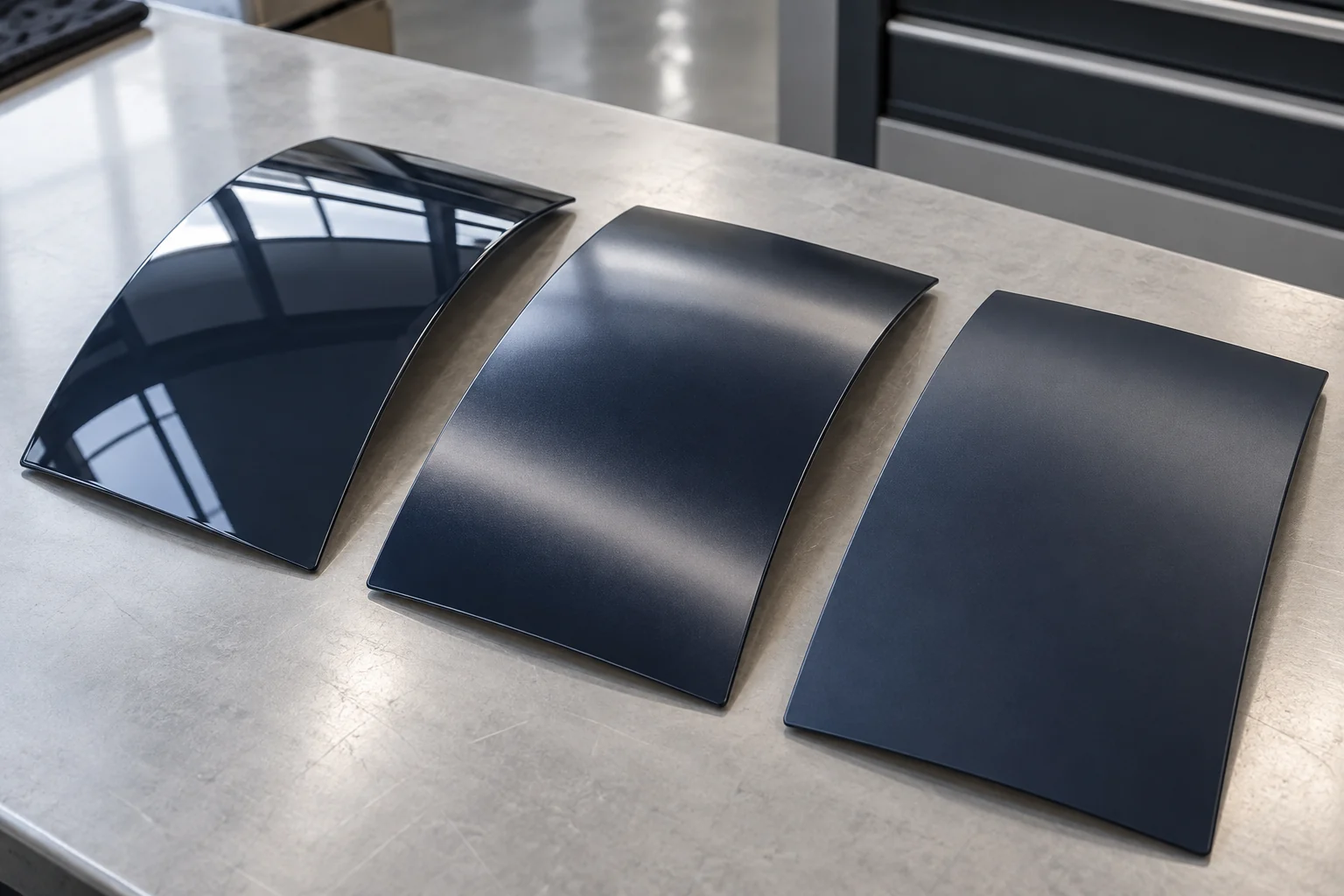
View physical samples in daylight and shade, then beside the car's wheels, glazing and trim. A dark gloss finish may emphasise reflections you like, while a satin sample may suit a quieter appearance. Screen previews help with shortlisting but cannot establish the installed colour or texture.
Chrome, textured and colour-shift products need additional sample and fitting checks. Do not choose them on a promise that a particular effect automatically handles Dubai heat better. Ask whether the sample is directional and how that affects adjacent panels and any future replacement.
Approve the manufacturer's code, finish and coverage together. If the ordered product changes, inspect the substitute before installation. Keeping the name and sample with the work order is more useful than a description such as “luxury black”.
Define the edges and hidden areas you expect to see
A full exterior wrap usually describes agreed outer body panels. It should not be assumed to include door shuts, inner bonnet surfaces or every trim component. Open the doors and boot while discussing the scope, especially when the original and new colours contrast.
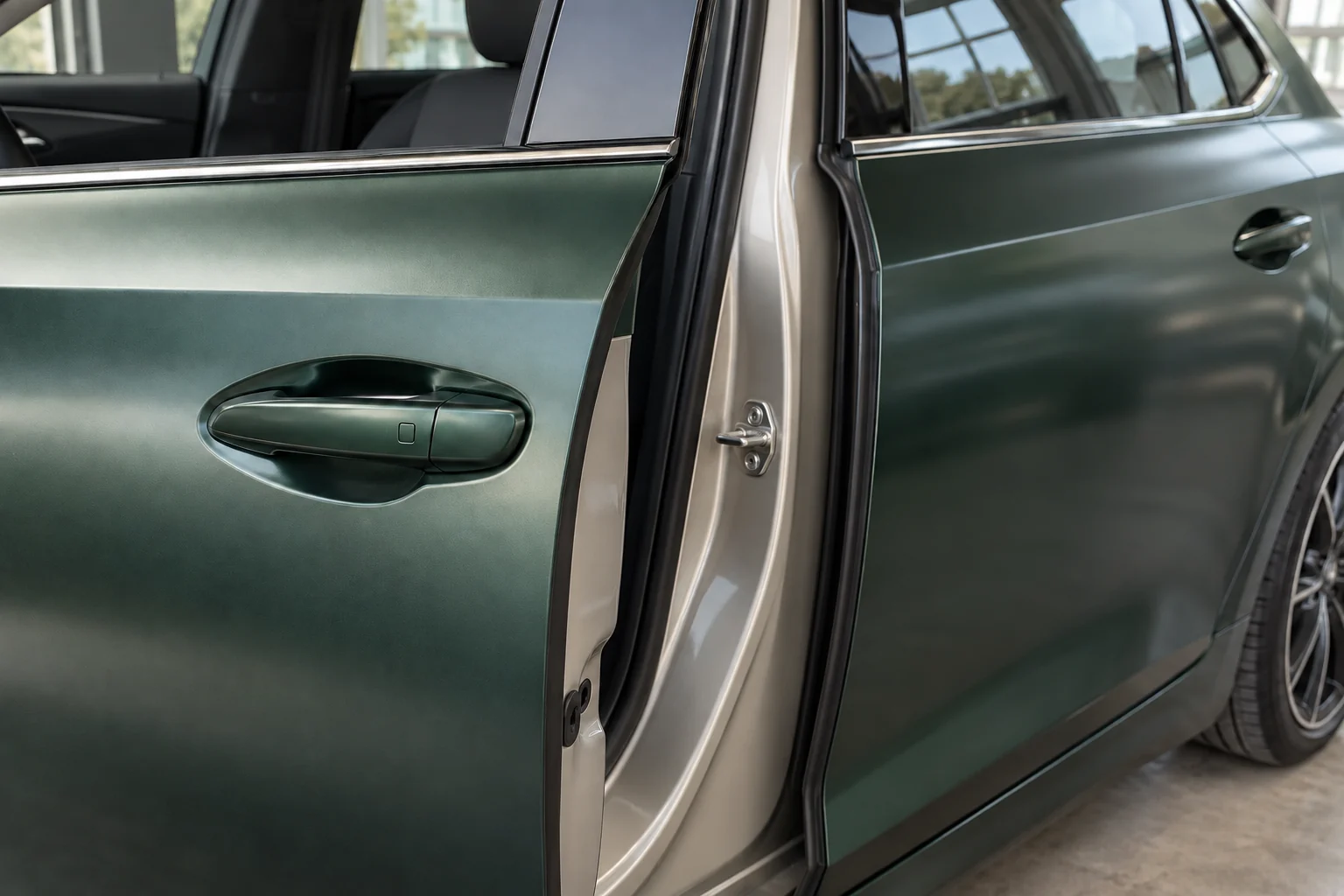
Ask where film ends around mirror bases, handle recesses, bumper openings and badges. A necessary join or inlay should be discussed rather than hidden behind a promise that every complex panel will be seamless. Look at the planned boundary from normal viewing positions.
For protection-led work, consider the panels that receive road wear on your routes. A full bonnet, front bumper and mirrors differ from a narrow bonnet strip. Full-body coverage adds other surfaces, but confirm the coverage map rather than relying on a package name.
Mixing satin film and gloss paint creates a visible transition. Check whether that is deliberate. Partial satin coverage may leave a contrast line that would not be present with a compatible clear gloss product.
Ask how the installer will handle your model
Luxury bodywork can involve deep recesses, unusual trim and moving aerodynamic parts. Ask the installer to explain the fitting plan for the actual car. Evidence of work on similar shapes is more useful than a broad claim that only exotic-car specialists can apply film correctly.
- Cutting and edge accessAgree pre-cut patterns, knifeless methods or other suitable techniques, plus the policy on cutting near paint.
- Trim removalIdentify which parts need removal, who refits them and how damaged clips or pre-existing trim issues will be handled.
- Sensors and moving partsKeep cameras, radar equipment, lights and moving clearances compatible with the vehicle and film instructions.
- Work conditionsAsk how the workspace controls contamination, lighting and the temperature required by the selected product.
Do not request maximum stretching or aggressive dismantling as proof of quality. The aim is a stable finish with an agreed scope. Unnecessary disassembly can add work, while a poorly planned one-piece installation can leave stressed material around a recess.
Confirm the exact model year, trim and any aftermarket body kit before a pre-cut pattern is selected. Ask how the pattern will be checked against the actual panels and where it leaves exposed margins. A digital template is a starting layout, so agree any required adjustments and the expected visible edge before fitting. Include access to the charging or fuel flap, tow-eye covers and serviceable trim in that discussion.
Check pre-existing warning messages and agree functional checks after refitting. Body-panel suitability does not establish permission to cover radar or camera equipment. Follow the vehicle's requirements and resolve compatibility before work starts.
Separate service life, care and warranty
No universal lifespan follows from the phrase luxury wrap. The exact film, colour, panel exposure, installation and care affect the outcome. Ask for terms covering UAE use and the intended surfaces. A roof and a vertical door may have different exposure conditions.
Read material warranty and workmanship support separately. Identify covered faults, exclusions, the claim route and whether labour is included in a remedy. A long warranty headline is not a promise against stone impacts, accidents or neglected contamination.
Check coating compatibility before adding a treatment
A ceramic treatment is not a substitute for impact-protection film or a verified thermal barrier. Before adding one, check compatibility and warranty consequences. The 3M 2080 product bulletin specifically warns that coatings and other aftermarket additions are outside its stated MCS warranty coverage. Read the applicable local terms for the chosen installation.
Obtain product-specific washing instructions and share them with whoever cleans the car. Avoid abrasive treatments that change the selected sheen. Keep the first-wash timing, approved cleaners and inspection advice with the invoice rather than relying on one routine for every film.
If you want to preserve the original paint colour, our paint protection film options provide a separate service route. Discuss the selected range and coverage instead of treating an appearance-led vinyl quotation as an equivalent protective package.
Resolve colour approval and ownership conditions
For a Dubai-registered vehicle, plan colour-change approval before fitting a different exterior colour. The RTA's vehicle inspection guidance directs licensed owners to obtain a permit through the relevant Dubai Police route. Confirm the current process for your proposal, including unusual reflective finishes, and any required inspection or record update.
Check permission for a leased, financed or company-owned car. Removability does not settle a contract condition. Ask the insurer how a colour change and the new film are treated, and keep the answer with your records. Film, installation and vehicle warranty conditions should be reviewed separately.
Inspect the finish and plan future repairs
Inspect the car with the installer in ordinary light before collection. Compare the named film and finish with your approved sample, then check agreed edges and hidden areas. Review joins, contamination and changes in reflection, and confirm trim and access points are correctly restored.
Collect the invoice, product reference, installation date, care sheet and support terms. Keep any available batch information. If a panel later needs replacement, compare the new material against the weathered finish and agree the repair boundary before work begins.
If the car already has film, identify it before adding another layer. Ask whether the existing material should be removed, how the underlying paint will be assessed and whether removal changes the booking or cost. Keep old-film disposal and any follow-on paint preparation in the written scope. A new outer finish should not conceal an unresolved problem underneath.
Arrange professional removal before the film deteriorates beyond its supported condition. Review repaired paint and the actual film age at that stage. Wrapping does not guarantee an increase in resale value, and returning to the original appearance still requires care and an appropriate removal plan.
Discuss the film before booking
Bring the car and your preferred finish
Share the model, paint history and whether you want a colour change or protection. Our Al Quoz workshop can discuss samples and the fitting scope with you.
Common questions about luxury car wraps
Is PPF always the best wrap for a luxury car?
PPF suits a protection-led brief. Decorative vinyl may suit a colour or finish change better. Compare the exact product, paint condition and coverage rather than choosing by the vehicle's price.
Is cast vinyl different from PVC?
Cast describes how a film is made, while PVC identifies a polymer. Those terms are not alternatives. Choose a named vehicle-wrap film with a specification suited to the application.
Can satin PPF preserve factory matte paint?
A suitable product may protect a factory matte finish, but its sheen must be checked on the car. Confirm permitted preparation and compatibility with the vehicle and film guidance.
Does colour PPF repair stone chips?
No. A protective film may help reduce subsequent wear on covered panels, but it does not restore chipped paint. Assess existing damage before installation.
Does a full wrap include door shuts?
Only when the written scope includes them. Check inner returns and visible original paint with the doors open before comparing quotations.
Will a wrap increase the resale value?
There is no guaranteed increase. Condition, buyer preference and the quality of the work matter. Keep the paint assessment and installation records.
Are these budgets prices for colour PPF?
No. The published guides cover exterior colour wrapping. Clear PPF, colour PPF, specialty materials and additional preparation need their own written quote, including the final VAT-inclusive total.