
Choose your panel coverage
Full vs Partial Car Wrap Coverage
A full exterior wrap changes the color or design across the agreed painted body panels. A partial wrap changes selected areas while keeping the remaining paint visible. Choose full coverage for a coordinated exterior change, or partial coverage for accents and targeted graphics. The right comparison starts with the panels, film and finish included in each proposal.
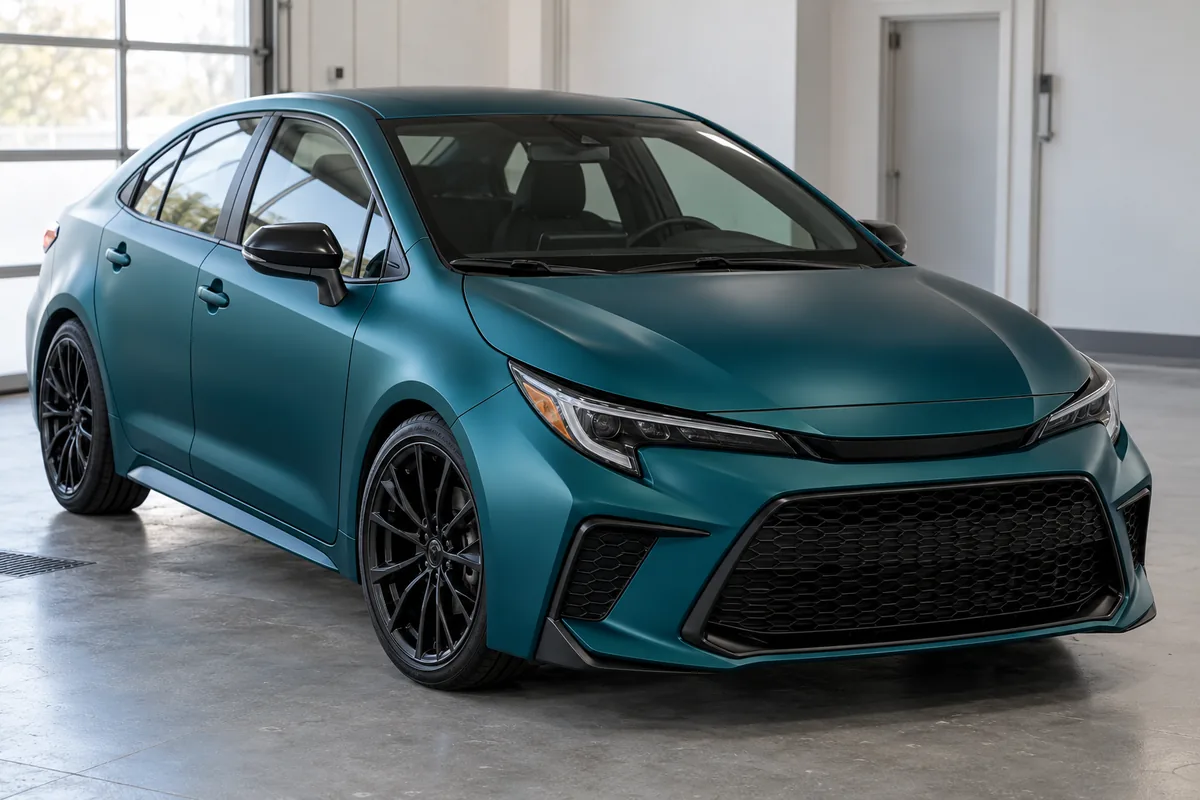
Compare coverage by panel rather than percentage
A full wrap usually means the visible painted exterior, such as the hood, doors, wings, rear quarters and painted bumper surfaces. Confirm the roof, mirror caps, handles and spoiler separately. Glass, lights, grilles, textured plastics and recessed inner surfaces are different materials or fitting tasks. The word “full” does not establish that every surface is included.
A partial wrap may cover an entire roof, a pair of doors, a lower body section or a printed design across several panels. It need not be half the car. Racing stripes and individual logos use smaller areas again. Ask for a marked photograph or layout showing exactly where the film starts and stops.
| Decision | Full exterior wrap | Partial wrap |
|---|---|---|
| Visual result | A coordinated color or design across agreed exterior panels | Original paint remains part of the appearance |
| Coverage plan | List included panels and exceptions | Mark individual panels and visible design boundaries |
| Cost comparison | More material and usually more fitting work | Less area, with cost still affected by complexity |
| Future replacement | A replacement panel must match surrounding film | Check both the existing film and exposed paint |
| Paint beneath | More of the exterior becomes hidden from inspection | Covered and uncovered areas remain in different conditions |
| Best starting point | You want the exterior to read as a different color | You want defined accents or a focused graphic layout |
A percentage alone can be misleading. Two designs described as a half wrap might use very different panel areas, cutting paths and fitting time. Compare the layouts on your actual body style, including the rear view, rather than treating matching package names as matching work.
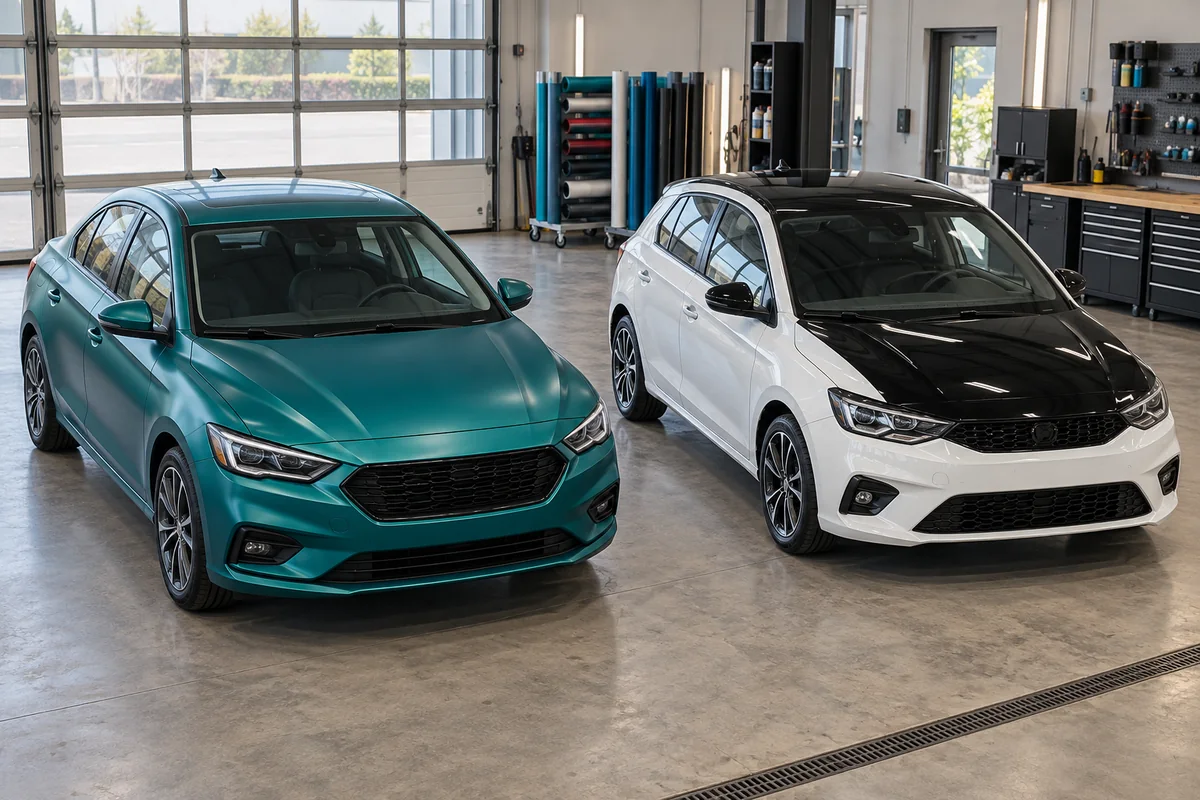
Use the original paint as part of a partial design
A black roof on a white hatchback creates a deliberate two-tone appearance without changing the doors and bumpers. A hood accent, mirror caps or a stripe can also give a clear result with limited coverage. Choose the parts for how they work together, rather than adding disconnected panels simply because they fit a budget.
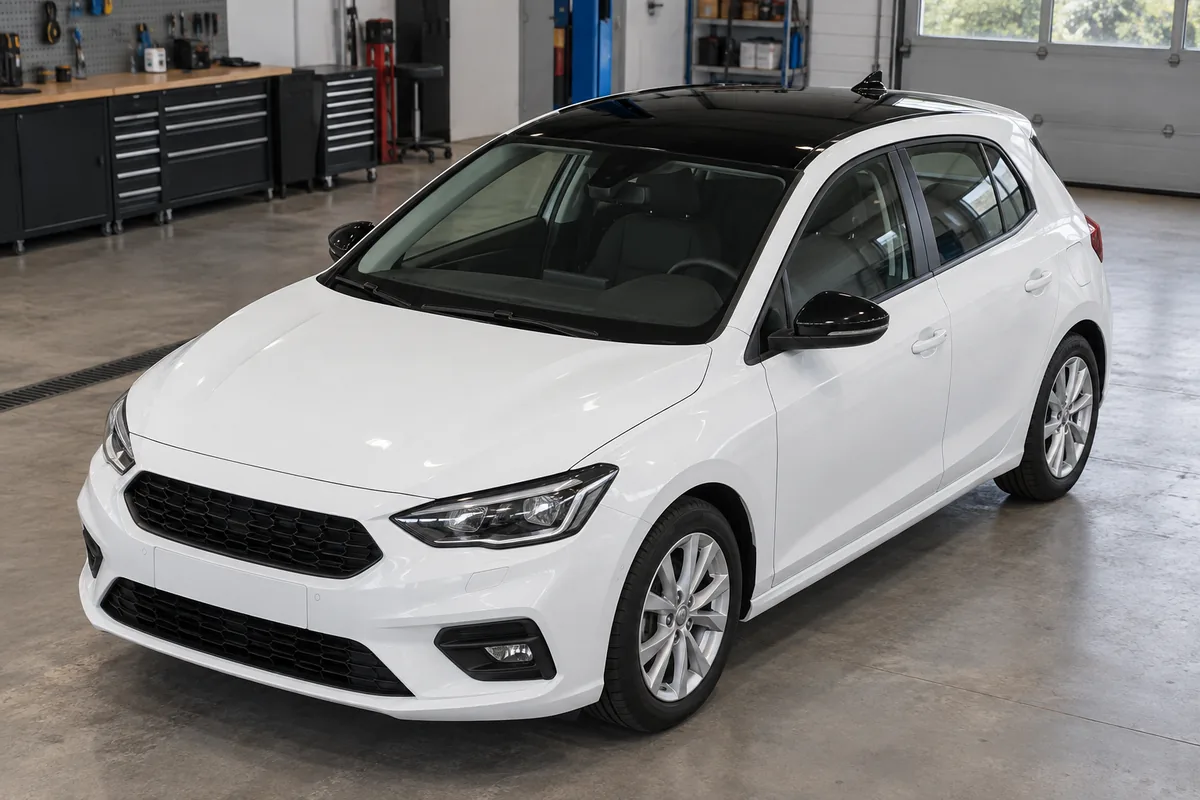
For a partial printed design, decide where the background meets the paint. A clean panel boundary may suit a solid accent. A graphic ending in the middle of a door needs a deliberate outline, proportion and color relationship. Trying to imitate the exact paint color in printed vinyl can produce a visible mismatch, especially when the lighting changes.
Review the car from the front, sides and rear. A side mock-up can miss a roof line or an abrupt ending at the tailgate. Include handles, moldings and door gaps so they do not interrupt an important design element. Check the proportions on the real vehicle before approving production.
A full printed wrap gives the artwork a larger continuous background, but more area does not automatically create clearer branding. A readable name and a small amount of information can work on selected panels. Our car graphics options explain the distinction between lettering, partial layouts and printed exterior designs.
Separate the coverage decision from the film choice
Full and partial describe area. They do not tell you whether the material is solid-color vinyl, printed graphic film or paint protection film. Ask for the manufacturer, product range and color or finish code. A quotation described only as premium vinyl leaves an important part of the comparison unanswered.
Color-change vinyl provides a chosen surface appearance. Printed graphics need a suitable film, ink and protective layer system. Cast wrap products can be appropriate for vehicle contours, but the named product still needs to suit the actual curves and substrate. A material intended for flat signs is not automatically suitable for a contoured bumper.
If stone-chip protection is the main goal, assess PPF coverage separately. XPEL’s paint protection film range includes full-car and selected-area protection choices. Clear PPF can retain the underlying color, while colored products change it. A full vinyl color wrap should not be treated as an equivalent stone-chip protection package.
Look at a physical sample in daylight before choosing gloss, satin, matte or a textured effect. For directional finishes, neighboring panels need a coordinated orientation. The larger the coverage, the more important it becomes to check that the whole car reads consistently from different angles.
Compare the extra coverage you would actually use
A partial wrap can reduce the initial spend by covering fewer panels. The saving is not a fixed percentage. Several contoured accents or a detailed printed layout can involve more work than their surface area suggests.
Ask for a partial panel map and a full exterior alternative using the same film and preparation standard. Then identify what the extra coverage changes for you. If the roof accent already delivers the look you want, unused body coverage may not justify the additional cost.
For current budgeting, use our car wrapping price guides. Confirm the final payable total, film, preparation and exclusions in the written proposal. This comparison helps decide which surfaces belong in that proposal. Our full wrap budget breakdown explains how VAT and separately agreed work change the payable total.
If a full color change is likely later, agree whether the first-stage accents could stay. Repeating preparation or replacing weathered accent film can change the combined cost. Treat staged work as a planned design choice, not an automatic saving.
Check paint condition before choosing either option
More coverage does not correct poor paint, and limited coverage does not remove the need for preparation. Loose clearcoat, corrosion, damaged paint edges and body repairs need assessment before adhesive film is fitted. A dent changes the contour beneath the wrap and can remain visible.
Tell the installer about resprayed panels, previous graphics and any coating already on the paint. Agree how the proposed areas will be cleaned and made suitable for the chosen film. Recently refinished surfaces need the paint manufacturer’s curing requirements considered alongside the film instructions.
For a partial wrap, inspect the exposed paint as well. A clean new accent beside heavily weathered paint may create a contrast you did not expect. Assess the whole visible result before deciding whether selective coverage meets your aim. Wrapping a faded roof is not a reliable way to repair failing paint beneath it.
Take dated photographs of the included panels and record existing defects. Keep the paint history with the installation details. If the vehicle is leased or belongs to someone else, get the necessary owner approval before agreeing a color change or applying graphics.
Agree where edges and joins will be visible
A full exterior wrap does not automatically include the door jambs, inner trunk opening or underside of the hood. These areas need separate access and finishing decisions. Original paint may remain visible when a door opens even though the closed exterior has a consistent new color.

For a light car changing to a dark finish, ask how the outer returns will be handled and where the original color can still show. A close inspection around handles and panel gaps is useful. Do not assume a photo of the closed car proves that every opening has changed color.
A partial wrap has its own boundary decisions. Ending an accent at an appropriate panel edge can make the transition deliberate. A stripe or side graphic may have exposed cut edges across the paint. Mark those positions on the approved layout and ask how the material’s instructions will be followed.
Some complex areas may need an inlay or join. A planned seam is not automatically a defect, and a promise of a seamless result everywhere is not a substitute for a fitting plan. Ask where joins are expected, how they will appear and which trim will be removed and refitted. Lights, cameras, sensors, vents and other functional parts need to remain unobstructed.
Compare exposure panel by panel
Partial coverage is not inherently less durable, and full coverage does not make every panel age uniformly. A roof accent receives different exposure from a vertical door. Compare the actual film, panel orientation, parking and permitted care.
On a partially wrapped car, a product suitable for the painted doors may be unsuitable for a matte roof. Identify the different surfaces to anyone washing or detailing the vehicle. Use the wrapped-car washing guide with the fitted film's instructions.
Keep the film code, installation date and applicable warranty terms. Scope the warranty to the selected panels and exposure instead of assuming one advertised lifespan covers either layout.
Check the proposed color and advertising approvals
Do not assume that calling a design partial makes it exempt from approval. Show the actual panel layout and color change to the relevant authority before production. For a Dubai-registered vehicle, confirm the color-change requirements with Dubai Police and the registration steps with RTA. Other emirates have their own processes.
Advertising is a separate decision from personal styling. Mada Media’s current commercial vehicle advertising permit service distinguishes front-door logos, partial wraps and complete wraps. It requests a design and mock-up of all four sides, with documents depending on the vehicle and application.
The service also identifies additional requirements where advertising changes the vehicle’s original color or the vehicle is rented. Confirm the applicable permit category, approved artwork and any registration update before installing business graphics. A small logo still needs assessment under the advertising rules, rather than being treated as automatically permit-free.
Keep approval and installation charges separate when comparing proposals. Government service fees are not the price of the vinyl work. Confirm the current charges and renewal requirements through the service handling your application, and retain the accepted design with the finished vehicle record.
Plan for replacement panels and later expansion
A damaged roof accent may be replaceable without rewrapping the doors. A damaged panel on a full wrap may also be replaceable on its own. The important question is whether the new film matches the surrounding finish and whether the repair changes the accepted coverage or design.
Keep the film range, color code and available batch details. New material can differ from an older exposed installation. Metallic, textured and color-shift products also need direction checks. A sample placed beside the existing film is more useful than assuming that the same product name guarantees an invisible match.
For printed graphics, retain the approved artwork version and production specification. A design crossing multiple panels may need more than one piece replaced to keep the image aligned. A patch placed over torn vinyl can leave a noticeable outline and is not equivalent to replacing the affected panel.
If you might expand a partial wrap later, tell the installer before the first job. Agree whether the initial accents would remain, be removed or be replaced. Different installation dates can leave a finish mismatch, and the later work still needs preparation. Expansion is possible in some layouts, but it is not automatically a simple top-up purchase.
Removal also needs a plan. Repainted or poorly bonded surfaces may lift with adhesive film, and covered and exposed paint may differ in appearance afterwards. Neither coverage choice guarantees damage-free removal or a higher resale price. Retain the original condition photographs and disclose relevant paintwork when selling the car.
Inspect the agreed coverage at handover
Inspect the car in good light from both sides and through the agreed openings. Check the planned joins, graphics alignment and any trim that was refitted. Compare the result with the approved panel map and sample finish rather than with an undefined promise of complete coverage.
Common questions about full and partial wraps
Can a partial wrap cover more than half the car?
Yes. Partial describes selected coverage rather than a universal percentage. Ask for the included panels and boundaries to be marked on the vehicle layout.
Are racing stripes the same as a partial panel wrap?
They are a smaller graphic application, often made from cut vinyl. A complete wrapped hood and two narrow stripes have different material, edge and fitting scopes, even if both are advertised as partial work.
Does a full wrap include a panoramic glass roof?
Not automatically. Glass is a different substrate from painted metal. Identify the roof construction and agree appropriate work separately instead of assuming color-change body film covers the glazing.
Can I choose a full wrap with contrasting accents?
Yes. A coordinated exterior change can include another color on the roof, mirrors or other agreed areas. Have the layering, boundaries and compatible materials included in the fitting plan.
Will a partial wrap change how much the cabin heats up?
Do not choose a cosmetic roof accent on a promise of a specific cabin-temperature reduction. Color-change vinyl is not a substitute for a glazing or thermal-control product with documented performance.
Is DIY partial wrapping always the cheaper option?
Material is only part of the cost. Mistakes, replacement film, preparation and removal can change the total. A small area with difficult curves may require more skill than its size suggests.
Compare two clear coverage plans
Discuss the panels you want to change
Share your car model, current color and a photo of the look you have in mind. Our Al Quoz workshop can discuss a partial layout and a full exterior alternative with their fitting scope.