
Diagnose a failed removal attempt
Stubborn Vinyl Wrap Removal Troubleshooting
If vinyl breaks into flakes, stretches without releasing, separates into layers or leaves smearing glue, identify the specific failure before changing the technique. Paint transfer or a changing finish means stop. This guide helps diagnose a difficult attempt, rather than repeat the normal removal process.
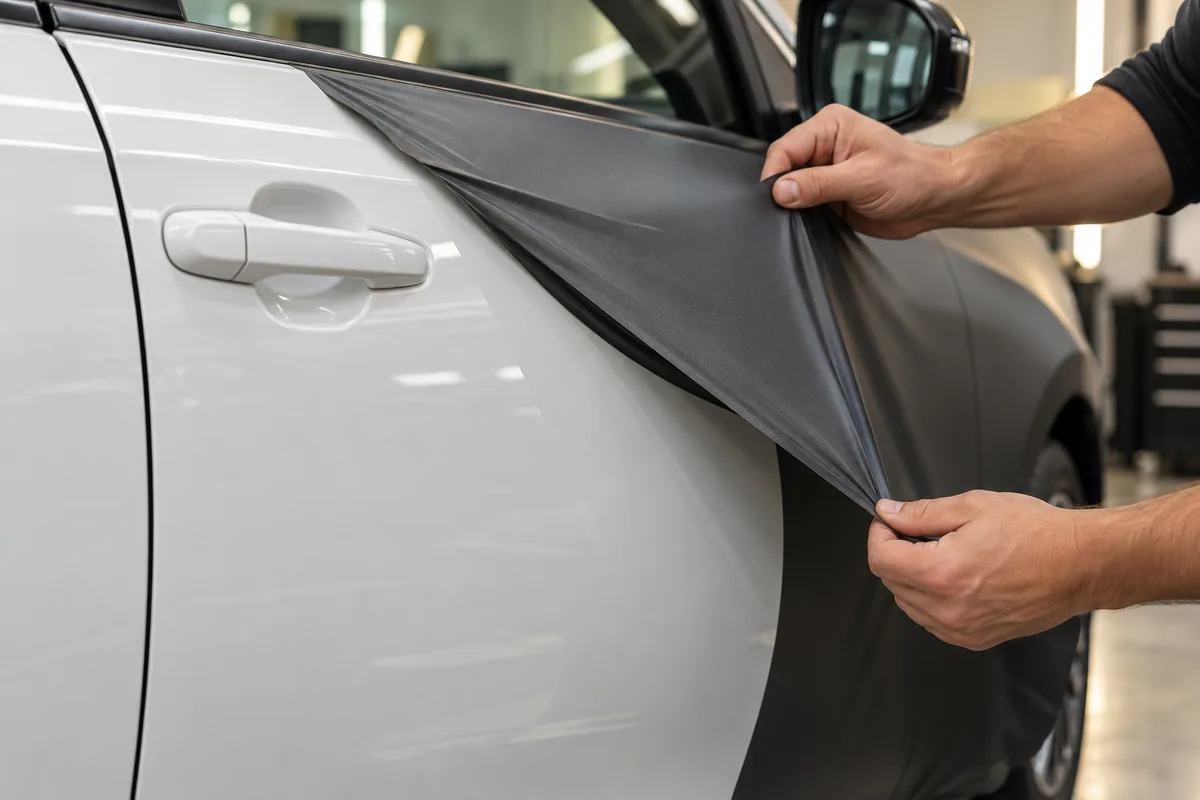
Identify what failed during the attempt
Begin with the observed problem rather than a stronger tool. Film fragments, a separated laminate, exposed adhesive and paint transfer need different next decisions. Record where the failure happens and whether another panel behaves differently.
If work has not started, use the main car wrap removal and paint safety guide for the normal assessment and sequence. Here, the question is what to reassess after that process becomes difficult.
| Observed failure | Useful distinction | Next decision |
|---|---|---|
| Vinyl breaks into flakes | Existing cracks or fragile film differ from a single accidental tear | Reduce the working area and reassess persistent breakage |
| Film resists pulling | Adhesive resistance differs from a trapped return | Check the release boundary and access before changing heat |
| Only one layer lifts | Laminate or added graphics may separate from the base | Identify the attached layer before choosing treatment |
| Glue smears after wiping | Loaded cloths differ from a finish that has changed | Check the cleaning stage and inspect the coating |
| Paint comes away | Coating loss is not ordinary adhesive residue | Stop that area and arrange paint assessment |
Keep the film name, fitting records and repair history with the observations. This troubleshooting concerns decorative vinyl. Do not apply it to unidentified PPF, window film or peelable paint merely because the material is adhesive.
Read the release boundary before changing a variable
Use the previously assessed accessible area and the identified product's instructions. Observe the attached boundary as well as the loose sheet. Does the film move, does adhesive remain and does the newly exposed finish stay stable?
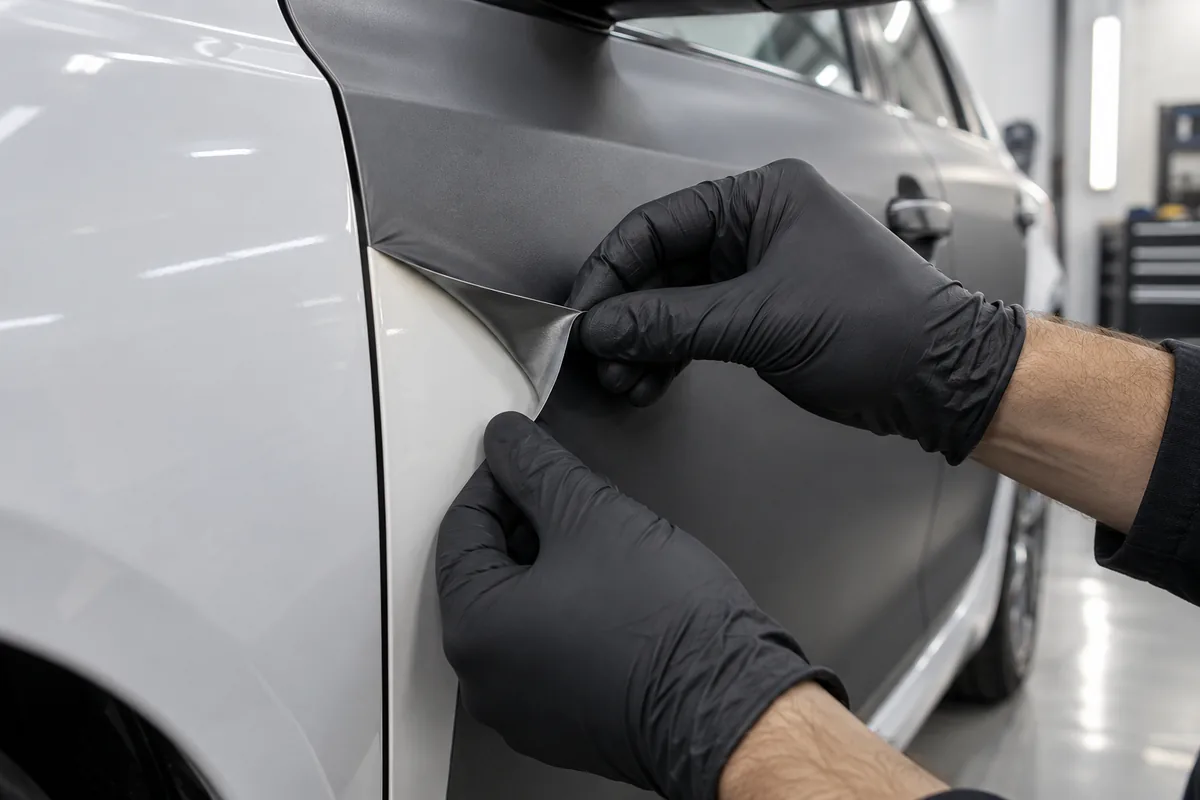
Changing heat, working area and pull direction together makes the result harder to interpret. Compare one instruction-approved change at a time. Inspect the exposed section again after it cools and reassess separately where the coating, film or access changes.
Keep removed fragments for inspection. If paint is present on a piece, stop the affected area. The task has changed from improving film release to assessing a coating problem.
When cracked vinyl leaves small islands behind
A wide pull can cross several existing cracks and leave detached islands on the panel. Reduce the working area and note whether the film breaks ahead of the release boundary or only at the grip. Those observations are more useful than repeatedly trying to lift a full sheet.
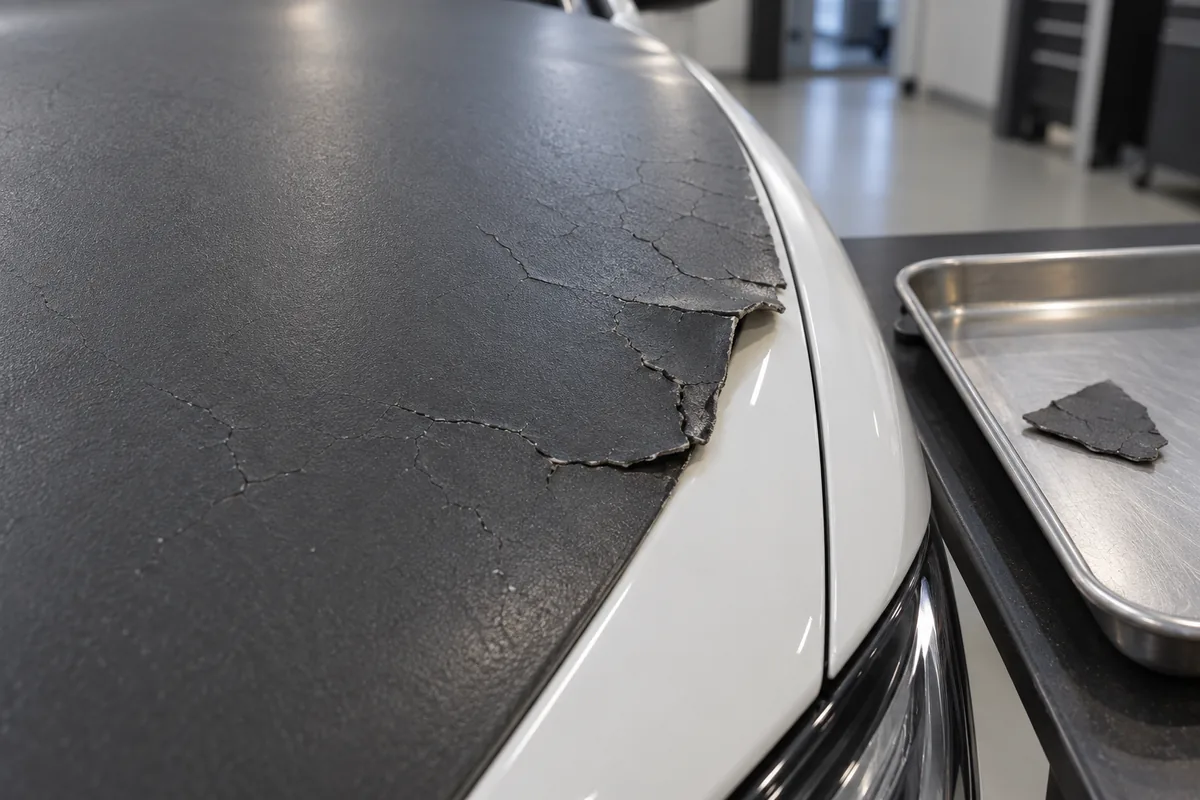
Tearing does not automatically mean insufficient heat. Age, exposure, film construction, printed ink and overlaminate can affect how the sheet holds together. Review the identified product requirements before warming it further.
Compare the roof or hood with a vertical door separately. Different condition across the car can explain why one area becomes more difficult, but appearance alone cannot prove the cause. There is no universal three-year threshold that makes steam essential.
If fragments remain unmanageable, pause and ask for an approved specialist plan. Do not score strips through vinyl against the paint, chase every island with a sharp scraper or substitute sanding for removal. The heat gun and steam comparison explains the limits of alternative equipment and treatments.
When the edge resists despite warming
First distinguish an adhesive release problem from an edge still held behind trim. A folded return, second graphic or inaccessible component can retain the film even while the visible panel releases.
For an approved heat-assisted method, check the measured surface response against the product guidance. The heat-gun display is not the vinyl temperature. A hot arrival from direct sunlight also changes the starting conditions.
Review the pulling direction for the identified adhesive category. 3M's removal bulletin distinguishes angle approaches. Copying one shallow angle to every film can miss that distinction.
If an appropriate adjustment still produces resistance, reassess the attached boundary and equipment access. Do not keep increasing heat or force in the same spot. Changing to steam will not repair weak paint or release a physically trapped return.
When stretching or layer separation hides the real boundary
Watch whether the release boundary moves while the loose sheet stretches. An unsupported section, excessive warming or an unsuitable pulling direction may need reassessment. Stretching alone does not identify which variable is responsible.
Support the released material so its weight does not keep pulling the attached part. Reassess a smaller controlled area before it tears or drags across the exposed paint.
On a printed wrap, the transparent laminate can separate while the printed base stays attached. An additional sticker can also lift while an older wrap remains beneath it. Examine the removed piece and the panel together instead of calling every remaining layer glue.
Identify the attached layer and obtain its removal instructions. A cleaner for exposed adhesive is not automatically a treatment for intact vinyl or laminate. Check individual materials where different graphics or finishes meet on the same vehicle.
When the cloth spreads glue instead of clearing it
Check whether the cloth contact face is loaded with softened residue. Fold to a clean face or replace it according to the product method. Smearing can become worse when the same contaminated contact area is carried across the panel.
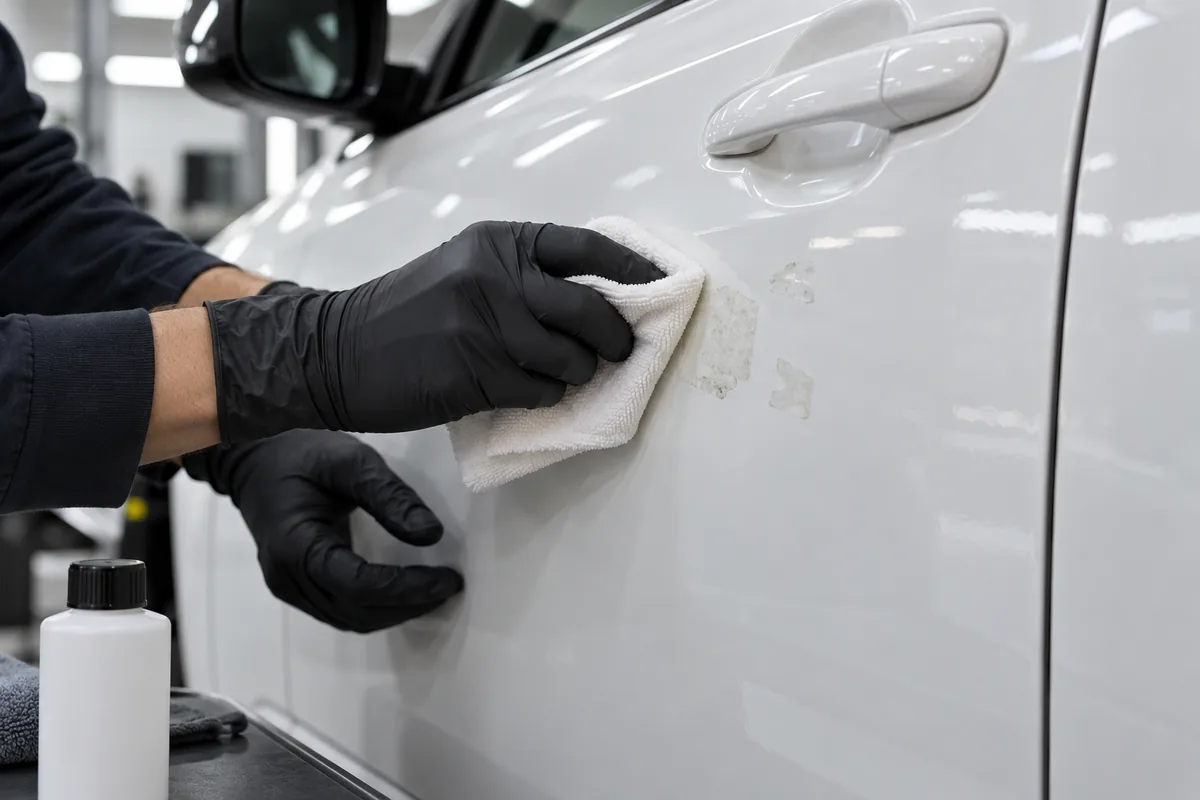
Confirm the cleaner is suitable for the exposed coating and the actual task. Follow its specified application and cleanup instructions. For example, the 3M 08984 technical sheet identifies professional use and restrictions around fresh or uncured paint.
If the patch stops feeling sticky but an outline remains, inspect the dry finish before adding more product. A color difference, scratch or missing coating cannot be diagnosed as glue from one distant photo.
Stop if the finish softens, changes color or transfers onto the cloth. Keep heat equipment separate from chemical treatment and follow the actual safety sheet. More pressure or a stronger solvent is not the default next step.
When the visible sheet moves but a return stays trapped
Look for the remaining attachment around handles, badges, seals and panel returns. Do not stretch the visible film across a component to reach an unseen edge. Access may need appropriate component removal and refitting.
A plastic tool can still mark paint if chipped, dirty or forced against it. Check its contact area rather than treating plastic as a guarantee. Powered eraser wheels also need a suitable surface and their own instructions. They are not an automatic solution to poor access.
Record which fitting holds the remaining film and agree the access work. Once that area is cleared, check for small strips left behind and the condition of any disturbed component.
When paint transfers or a dry outline remains
Paint or clear coat on the removed sheet means stop the affected area. Preserve the piece and photograph the exposed finish. A new heat source, different pull or stronger cleaner cannot reattach a coating that has come away.
A dry outline after approved cleanup is a different finding. It may need assessment for remaining contamination, weathering differences or a coating defect. Do not continue treating every visible boundary with solvent.
The paint-risk section of the main guide explains why coating condition and removal technique both matter. Repaint history calls for assessment, but does not prove a panel will fail. Polishing cannot replace a missing paint layer.
Give the workshop a clear record of what was tried
Send photographs of the whole affected area, the attached boundary and removed pieces. Include the heat equipment, any recorded surface readings, cleaner names, dwell times and tools. Keep product labels or clear photos of them.
Describe the order of the attempts, not just the last treatment. Multiple layers, cleaner residue and hidden attachments can change the remaining task. Leave the paused area free of additional treatments while an assessment is arranged.
Ask for the revised scope to distinguish remaining film release, residue cleanup, access work and any coating assessment. Unexpected findings should be documented before additional work is agreed. Use the main guide's removal quote checklist for the full coverage and collection requirements.
Change the plan from the observed failure
Identify the attached layer, inspect the release boundary and change only an appropriate variable. Keep useful evidence from the attempt. Coating transfer or a changing finish requires a pause and assessment.
Questions after a difficult removal attempt
Should every tear be treated with extra heat
No. Note whether the film already has cracks, whether the loose section is supported and whether the direction follows the product guidance. Persistent breakage needs reassessment rather than repeated warming.
Should I discard the pieces that came off
Keep useful pieces if layers, adhesive or possible paint transfer need examination. Store them separately from the vehicle and clean cloths, and photograph the area they came from.
Can I pressure-wash the remaining fragments away
Do not improvise pressure washing as the next step. Any proposed specialist process must suit the identified film, coating and nearby vehicle openings. First reassess why the pieces remain.
What if the film is removed but the panel still looks different
Inspect it clean and dry. Record whether the mark is sticky, a color difference or a visible coating defect. Ask for the cause to be assessed before approving more cleaner, polishing or paintwork.
Plan the next step
Is your wrap breaking or refusing to release?
Share photographs, the film details, known paint repairs and what has already been tried. The workshop can discuss an assessment and the remaining removal work.