
Compare the equipment and its limits
Heat Gun vs Steam for Car Wrap Removal
A heat gun and a steam device are alternative heat sources for suitable wrap films. Neither is universally safer or faster. Compare the named film requirements, surface control, access and moisture before choosing. Chemical film treatments, adhesive cleaners and powered decal tools serve different tasks.
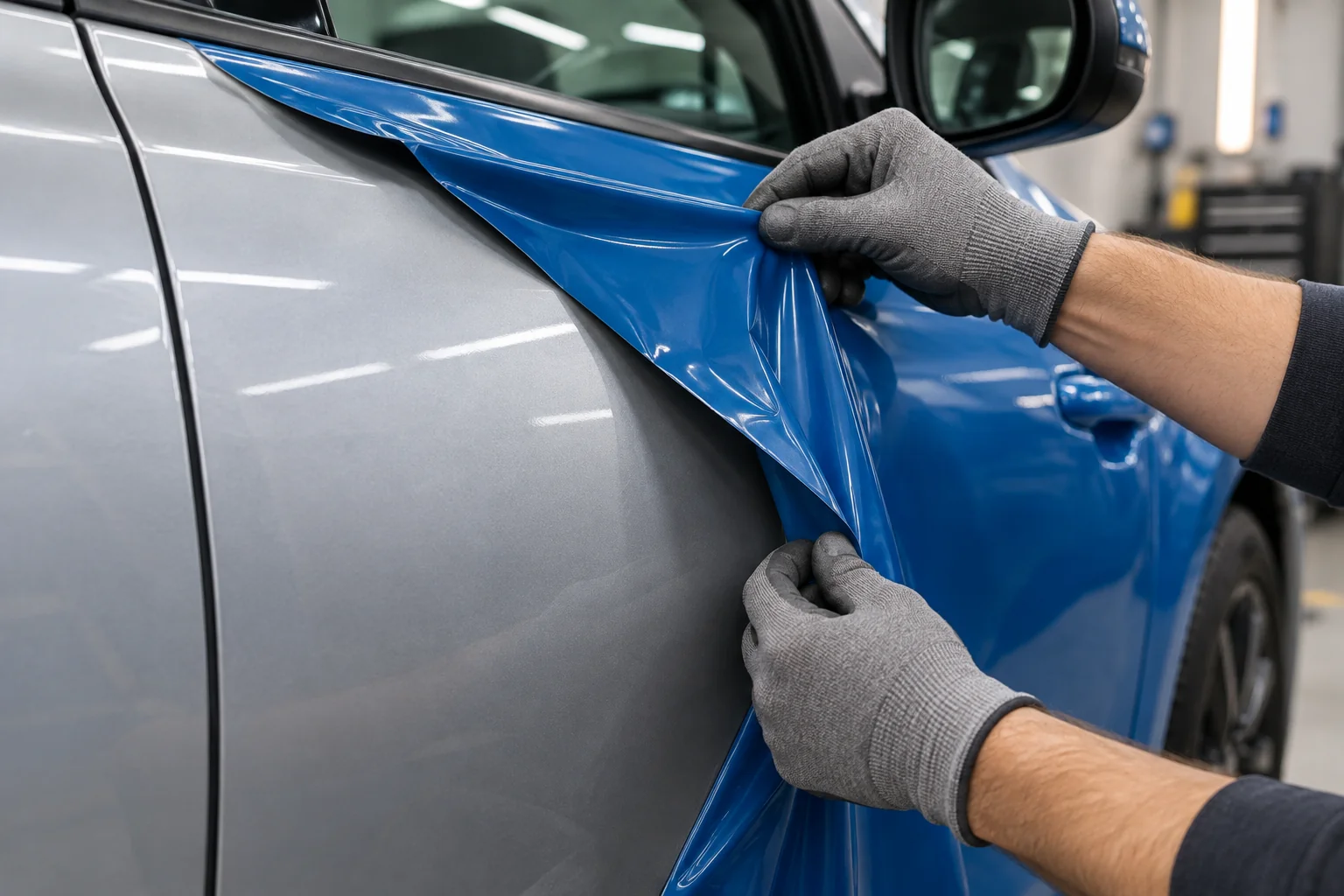
Compare the task before comparing the equipment
Hot air and steam both supply heat to help release suitable film. Chemical film removal, adhesive cleanup and mechanical decal removal do different jobs. A tool can be appropriate for a small remnant while being unsuitable for a complete wrapped panel.
For the full assessment, removal sequence and collection checks, start with our car wrap removal and paint safety guide. This comparison helps you understand why a workshop selects one approach rather than another.
| Approach | Task it may suit | What to check first | Selection limit |
|---|---|---|---|
| Controlled hot air | Releasing an identified film using its heat-assisted method | Surface measurement, airflow control and access | A display setting does not establish panel temperature |
| Steam-assisted removal | Releasing film where the product permits steam and access is suitable | Outlet control, moisture, runoff and nearby components | Steam is not automatically gentler or residue-free |
| Specialist film treatment | An identified brittle graphic requiring an approved treatment | Film and substrate compatibility, label and safety sheet | An adhesive cleaner is not necessarily a film remover |
| Adhesive cleaner | Cleaning exposed residue after film release | Paint condition and product-specific application | It does not replace missing clear coat or remove every surface mark |
| Mechanical decal tool | Selected small graphics or remnants on an approved surface | Tool instructions, coating and friction control | Suitability for a small decal does not establish full-wrap suitability |
Heat gun and steam differ in control and access
A heat gun supplies directed hot air. The operator can adjust equipment controls and movement, but still needs to establish the surface response. Nozzle choice, airflow, working distance and the panel affect the result. A high maximum tool temperature is not evidence of better removal control.
A steam device introduces heat and moisture. The operator must manage the outlet, hose, hot surfaces and runoff. A broad accessible painted panel presents a different working situation from a mirror housing, camera opening or crowded trim return.
| Criterion | Heat gun | Steam device |
|---|---|---|
| Heat delivery | Directed airflow controlled by equipment and movement | Hot vapor controlled at the outlet and working area |
| Equipment handling | Nozzle access and a safe resting place matter | Hose routing, outlet handling and runoff also matter |
| Surrounding materials | Heat-sensitive trim and coatings need assessment | Heat and moisture-sensitive components need assessment |
| Evidence for choosing it | Product guidance and an appropriate removal test | Product permission for steam and an appropriate removal test |
ORAFOL's vehicle film guidance recognizes hot air and a steam device as options for the products it covers. That does not establish steam as the best choice for every vinyl or vehicle surface.
Compare the test result using the intended equipment rather than a blanket claim about speed. What matters is whether the film releases controllably, how much separate cleanup remains and whether the surrounding surface stays suitable. Changing the heat source cannot stabilize failing paint.
Film treatment and glue cleanup need different products
Brittle film still attached to the vehicle and adhesive already exposed after peeling are different materials to address. A specialist may assess a named film-removal treatment for a difficult graphic. Ordinary adhesive cleaner should not be assumed to penetrate or remove an intact film layer.
When comparing a proposed chemical approach, ask which material the product is intended to treat and which substrates it permits. Include repaired paint, protective coatings and adjacent plastic in that compatibility check. A stronger product is not necessarily a more suitable product.
The 3M graphics removal bulletin distinguishes adhesive removal categories and related methods. Product identification therefore comes before deciding that every stubborn wrap needs heat and chemicals.
Application, cleanup, ventilation and protective equipment must come from the selected product's instructions and safety information. Keep chemical work separate from heat equipment. If removal has already failed, the stubborn vinyl troubleshooting guide explains how to identify the remaining problem before selecting another treatment.
Keep powered decal tools within their intended task
A rotary decal-removal tool can introduce friction and heat at the contact surface. It requires a compatible substrate, suitable tool control and adherence to the manufacturer's operating limits. Calling it a rubber wheel does not make every finish safe.
The 3M Stripe Off Wheel specification describes use for small, hard-to-remove detailing, includes a maximum operating speed and warns about friction heat on sensitive substrates. A professional should check the exact wheel and surface before use.
That specification does not justify stripping a whole hood with an unidentified drill attachment. Sanding discs and abrasive pads also change the task from releasing film toward abrading the surface. Ask why a mechanical approach is proposed for that particular remnant instead of buying the most aggressive attachment available.
Ask for a method justified by the removal test
A useful explanation names the film, identifies the task and describes the equipment proposed for the accessible area. It also distinguishes film release from later residue cleanup. A tool brand or an impressive maximum temperature is not enough.
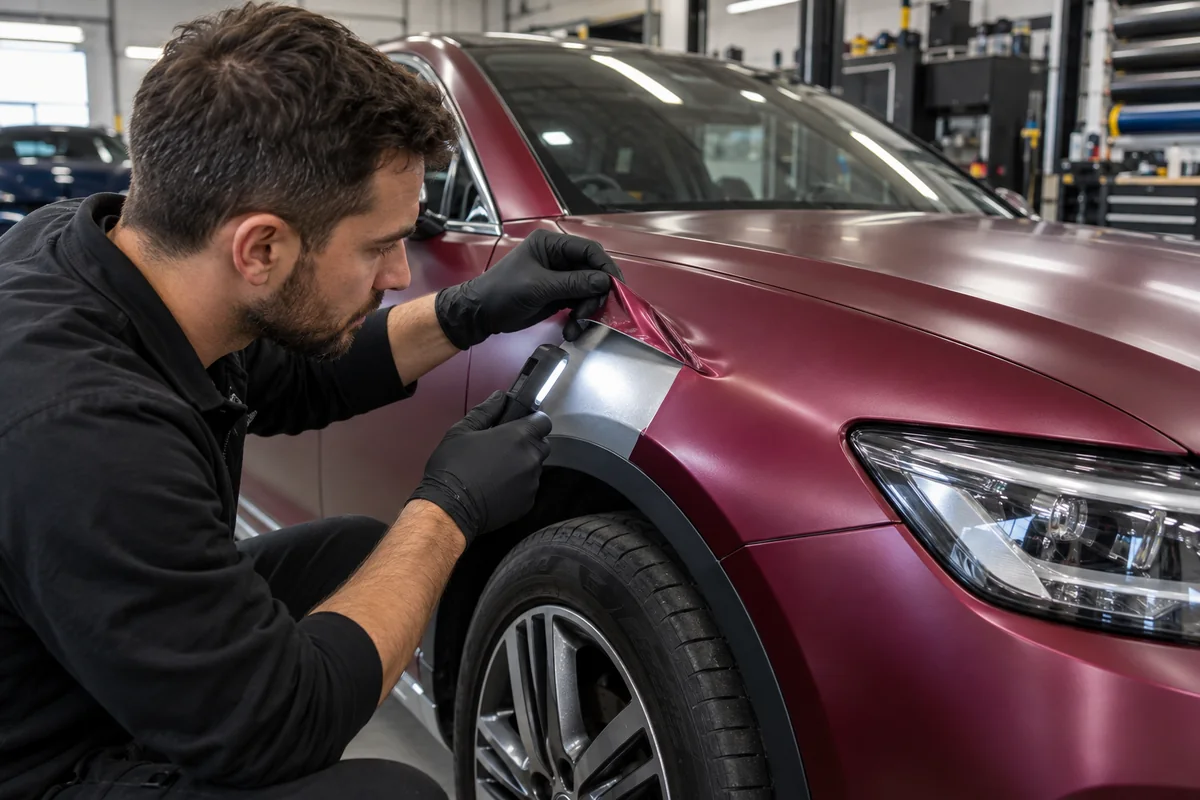
Stop if paint or clearcoat begins to lift. If the film repeatedly breaks, pause and reassess the material and method. Continue in small controlled sections only while release remains suitable, and assess residue separately.
- Which product instructions support the proposed approach?
- What did the small test show about film release and residue?
- Does another panel or material require a separate equipment decision?
- What finding would stop the work or require a different method?
A vehicle may need more than one approved approach across its coverage. That is different from swapping between chemicals and powered tools without identifying the problem. Keep the reason for any change connected to an observed finding.
Do not buy a steamer, heat gun or wheel simply because the current film looks old. Owners can first gather material records and arrange an assessment. Equipment spending is useful only after the task, suitability and control requirements are clear.
Choose the equipment from the job it must do
Compare heat sources for film release, chemicals for their specified material and mechanical tools for their limited application. Product instructions and a controlled test should justify the selection. The highest temperature or strongest cleaner is not a useful shortcut.
Questions about choosing removal equipment
Is steam always faster than a heat gun
No general speed claim applies to every film and vehicle. Compare the test release, access and cleanup needed for the identified material. Equipment setup and component protection also belong in the practical comparison.
Does a heat gun need the highest possible temperature rating
A maximum rating does not show how well the tool controls a suitable removal task. Assess usable controls, airflow, accessories and surface measurement against the product requirements.
Can one chemical remove both vinyl and its adhesive
Only assume that if the named product instructions explicitly cover the identified materials and surface. Film removal and residue cleanup may need separate products and stages.
Should a hair dryer be bought instead of a heat gun
A hair dryer may provide warmth for some small graphics, but that does not establish suitability for a complete wrap. Identify the material and required control before buying equipment. A workshop assessment can avoid an unnecessary purchase.
Choose an approach after assessment
Discuss the right removal approach
Share your car model, wrap age, known paint repairs and photographs of the film. Our Al Quoz workshop can discuss inspection, removal scope and preparation for your next finish.