
Protect the panels that matter to you
Full Front or Full Body PPF for Dubai Driving
Full front paint protection film (PPF) covers the leading panels listed in your quote. Compare it when front-end chips are your main concern. Add selected contact areas for your use, or consider full body coverage for broader painted-surface protection or a consistent satin finish. Package names alone do not define which panels are included.
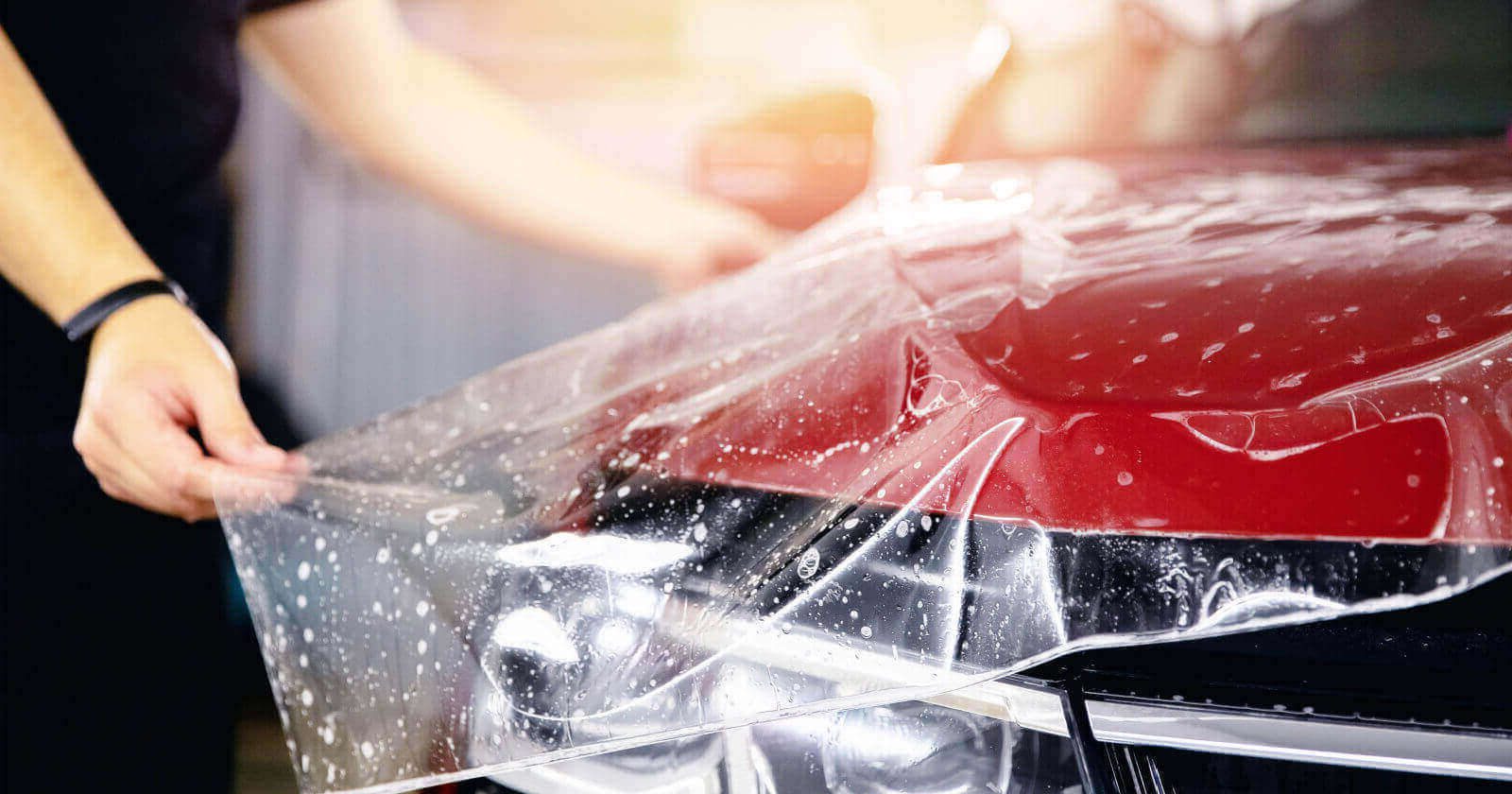
Start with a panel map instead of a package name
Two quotes can both say “front protection” while covering different amounts of paint. One may stop partway across the hood. Another may include the whole hood but leave out the mirrors. That difference can matter more than the headline price.
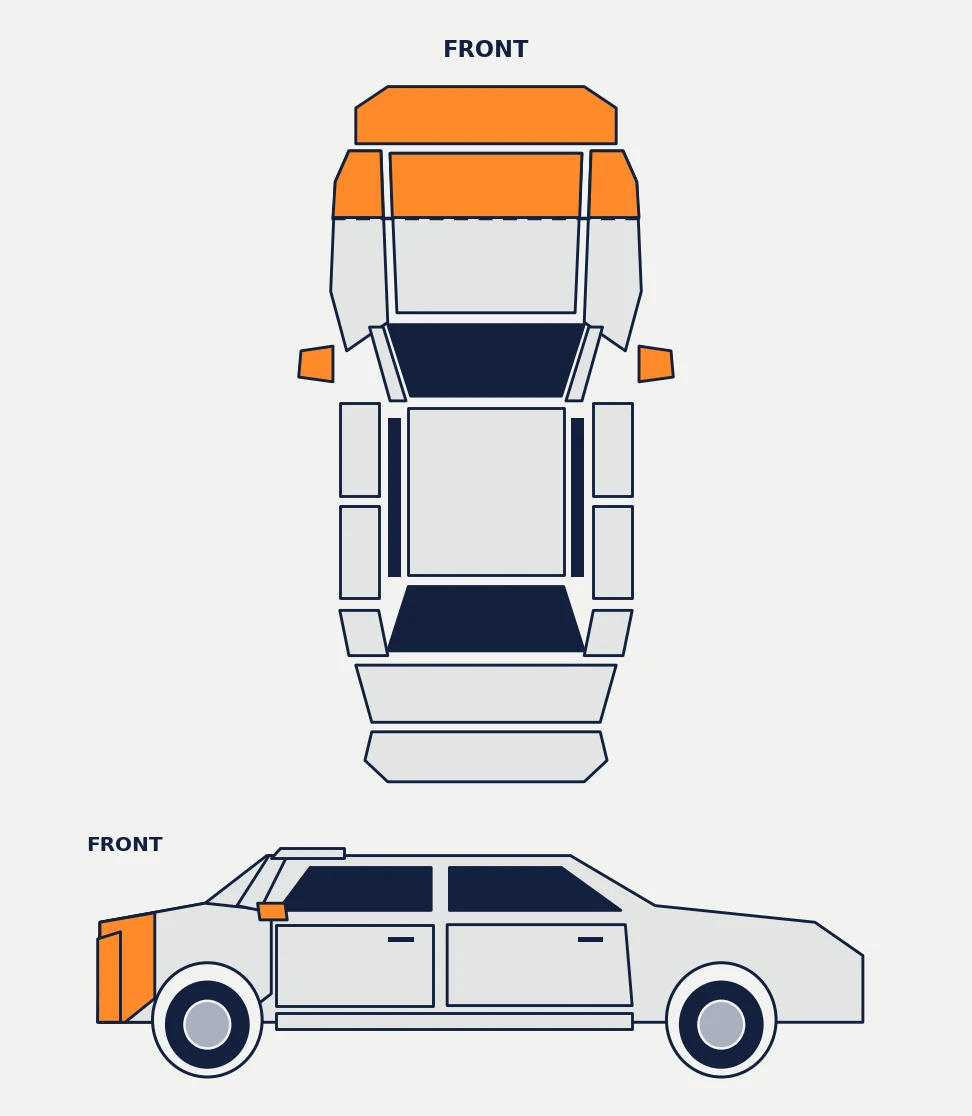
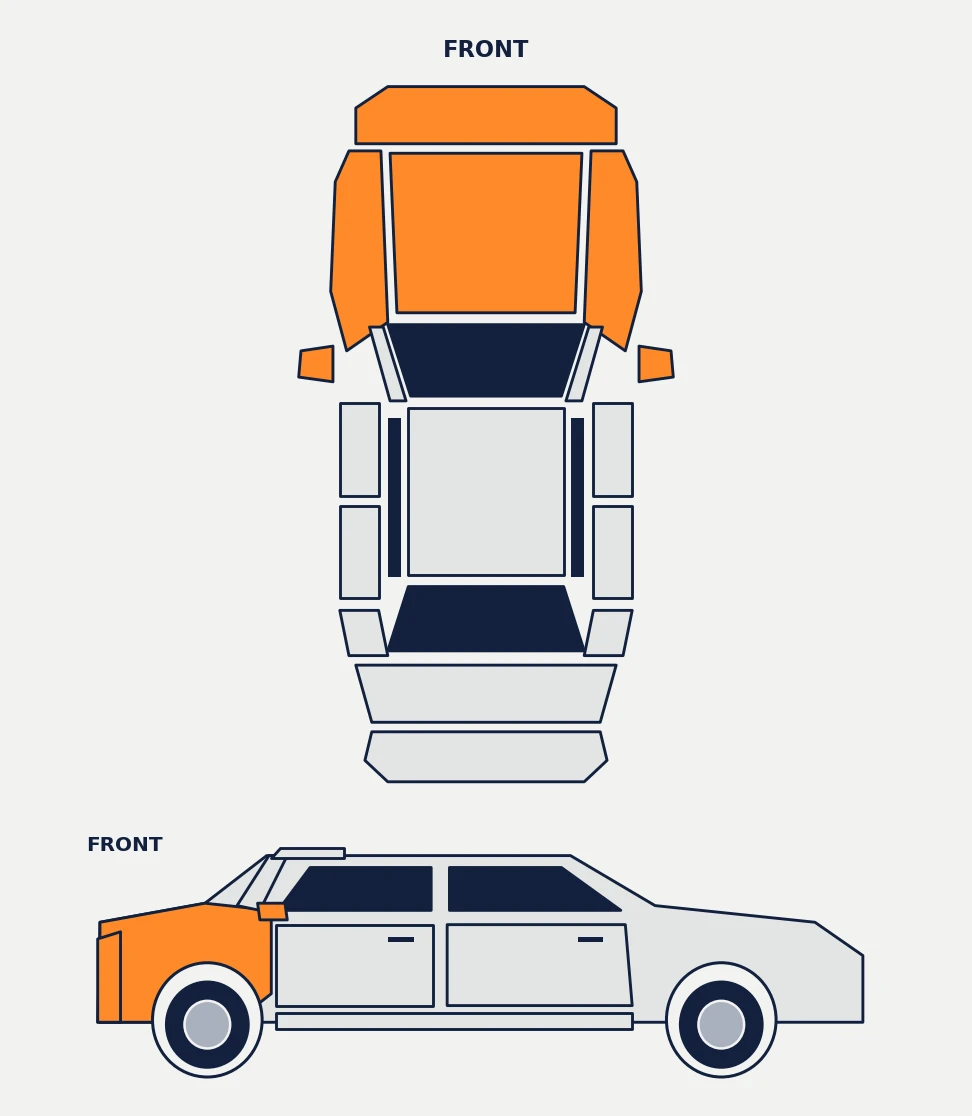
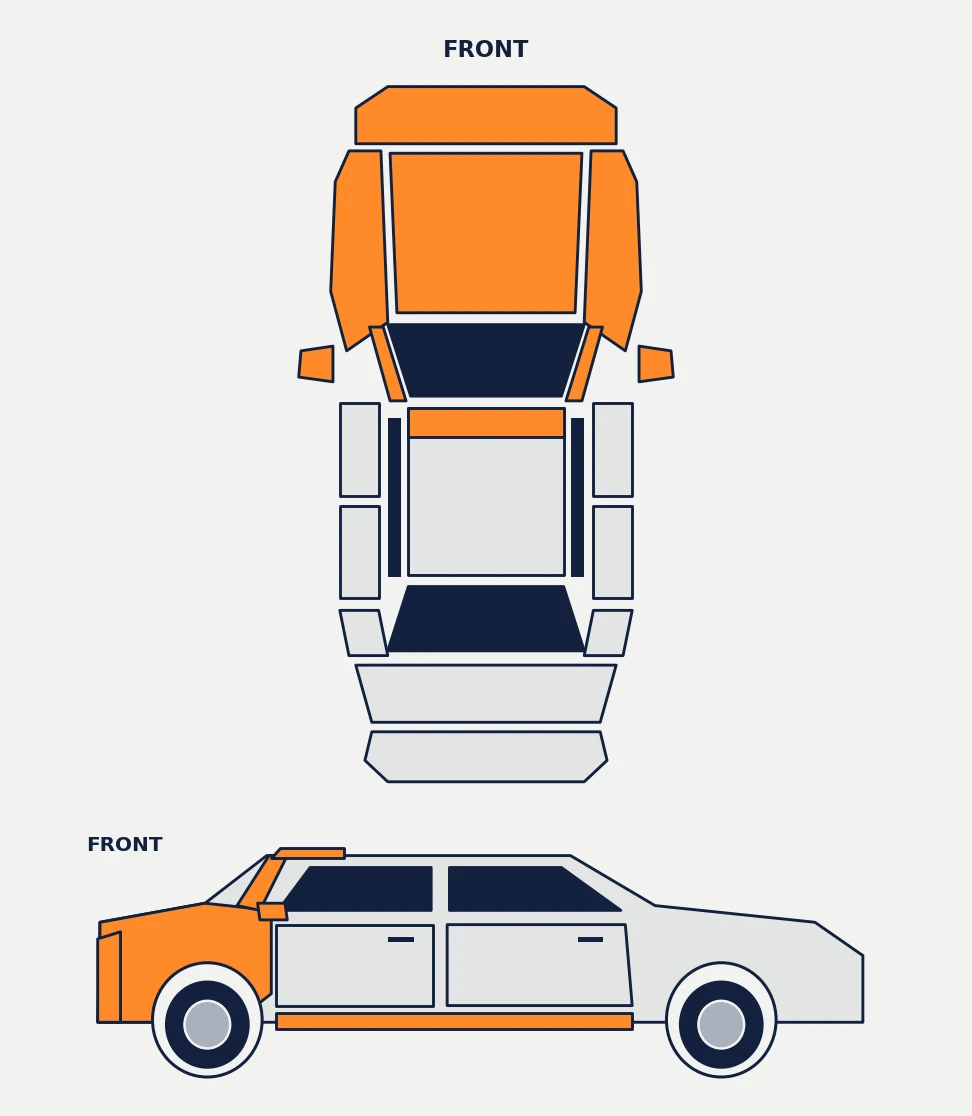
Partial front, full front and extended front are useful descriptions, but they are not universal specifications. The maps below define four examples for comparison. They are not fixed Wrapping.ae packages or cutting patterns.
Dark areas represent glass and wheels. Each example assumes a sedan with a painted roof. The side view represents both sides of the car, so paired panels must appear twice in the written scope. Lights, trim and inner door openings are excluded. Confirm the layout on photos of your actual vehicle.
Partial front example
Full front example
Extended front example
Full body example
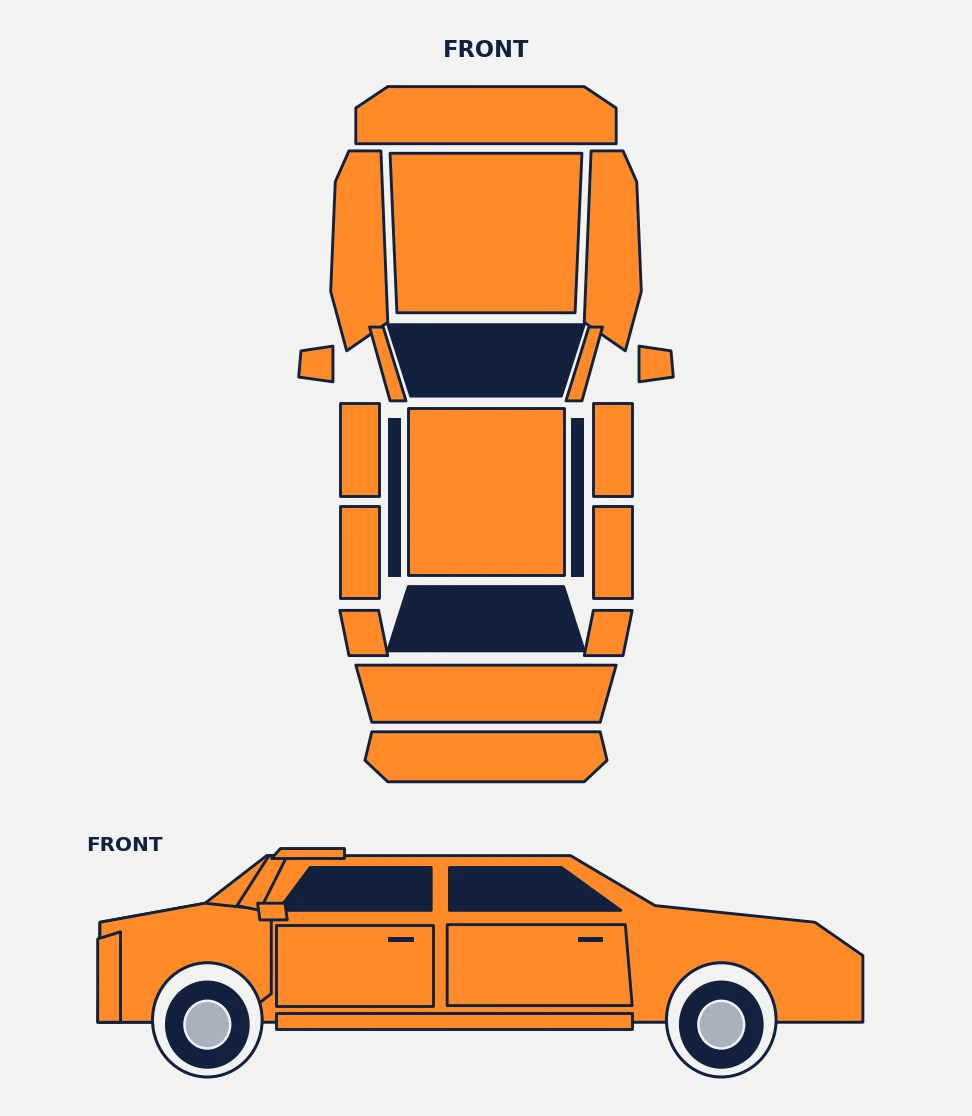
The exact depth of a partial hood piece should be marked on the quote photograph. Do not accept “half hood” as a precise measurement. Body shape, pattern and your appearance preference decide where the line belongs.
Mark both the included and excluded areas
Ask for front, rear and both side views of your actual car. Outline each partial piece and mark glass, textured trim and open grilles separately. A drawing of a sedan cannot define coverage on an SUV with a tailgate spoiler, a pickup bed or a vehicle with a panoramic roof.
Keep the approved views with the quotation and use the same views at collection. If the plan changes during fitting, approve the revised boundary before the work continues.
Compare what stays exposed with each option
More film protects more of the specified surface. It does not make the same product stronger on the hood, prevent every chip or turn the car into a dent-resistant shell.
| Plan | Main reason to compare it | Important limitation |
|---|---|---|
| Partial front | Concentrate a smaller material area on selected leading surfaces. | The remaining hood and fenders stay exposed. Cross-panel boundaries are visible at some angles. |
| Full front | Cover complete leading panels without a film line across the hood. | Doors, rear panels and the roof are not protected by this plan. |
| Extended front | Add defined lower-side and upper-front areas to the full front. | The name needs an explicit add-on list. It does not mean almost full body. |
| Full body | Cover the agreed painted exterior or coordinate a satin finish. | Higher fitted scope, more edges to maintain and continuing exclusions around nonpainted surfaces. |
For pricing and booking, use the PPF service and coverage guide. Compare the same vehicle, film, finish, preparation and edge treatment before interpreting a difference in totals.
Let your driving and parking choose the next panel
Think about a normal week. Where does the car travel, where does it sit, and which surfaces get touched? “Dubai driving” includes very different use patterns, so one mandatory package would be a poor starting point.
Regular highway commuting
Compare the full front example first when flying road debris is the main concern. Then inspect lower sides and areas around the wheels. Body shape, tire position and existing marks may justify selected extra zones.
A roof strip should have a defined purpose and boundary. It is not automatically needed on every highway car.
City trips and frequent parking
Door cups, door edges and loading ledges may deserve attention when repeated hand, bag and luggage contact is the concern. Full front coverage alone does not address those areas.
Film can reduce some surface wear. It cannot prevent a neighboring door from denting your panel.
Longer ownership and a consistent finish
Compare full body coverage if you want film over the wider painted exterior and accept the upkeep and replacement budget. A satin conversion creates an additional reason to plan the whole visible finish.
Keeping a car longer does not automatically make full body the right purchase. Existing paint, priorities and cost still decide.
A car parked outdoors also needs appropriate washing and prompt attention to deposits. Buying more film does not remove those jobs. The Dubai PPF weather and care guide covers that separate part of ownership.
Choose small additions for a specific contact point
You do not have to jump directly from full front to full body. A few carefully chosen pieces may address the concern that the front package leaves unanswered.
- Painted A-pillars and roof leading edgeDefine the painted strips around the windshield. A panoramic glass roof is a separate substrate.
- Rocker panels and lower side skirtsIdentify the painted parts below the doors, including their start and end points. Textured plastic is a separate decision.
- Areas around the wheelsMark each proposed impact patch on the actual bodywork. A rear-wheel patch is not the complete rear quarter.
- Door cups and edgesState the number of handle recesses and door edges. A cup insert does not cover the whole outer door.
- Rear loading ledgeSpecify the painted top ledge exposed during loading. It is not the same as covering the full rear bumper.
3M’s application guidance identifies door recesses, edges and loading ledges, while XPEL’s panel guidance also discusses areas near the wheels and rockers. Their inclusion in your package still needs agreement. A brochure showing a protected rocker does not put that rocker on your invoice.
Ask what each added piece solves. If nobody can connect it to your use, appearance goal or observed wear, leave it out of the first comparison.
A partial hood line is a real appearance choice
A partial hood leaves an exposed film edge across a painted surface. That edge may catch light or become more noticeable if residue collects along it. View a representative installation before choosing the smaller scope.
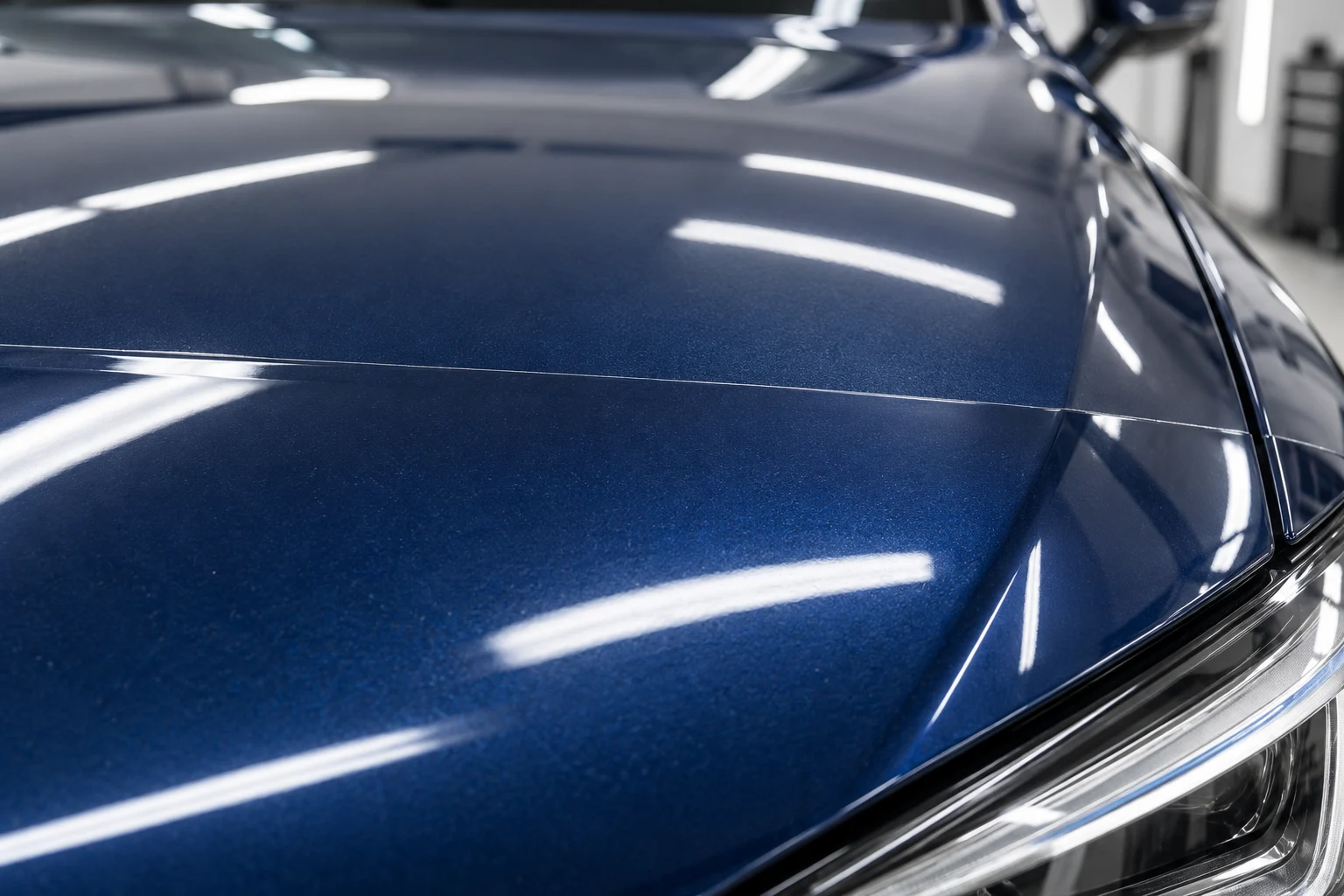
A complete hood avoids that cross-panel stopping line. Wrapped edges are another decision. Full panel does not guarantee that film can tuck around every edge or opening.
Badges, vents, washer jets, tight returns and neighboring components change access. Ask which edges will finish near the boundary, which can be tucked and where relief cuts or separate pieces are expected.
Compare a realistic edge plan with another realistic plan. An absolute promise of no visible edge anywhere is not a useful specification. Also agree which trim, if any, will be removed and refitted.
Check gloss and satin consistency before choosing coverage
Clear gloss film lets the underlying paint color show, but the surface texture and reflections can still differ from uncovered paint. Check a sample in daylight and workshop lighting, especially when a piece ends mid-panel.
Satin film on gloss paint makes the coverage decision more visible. A satin hood beside glossy fenders can be a deliberate design. It should not be a surprise at collection.
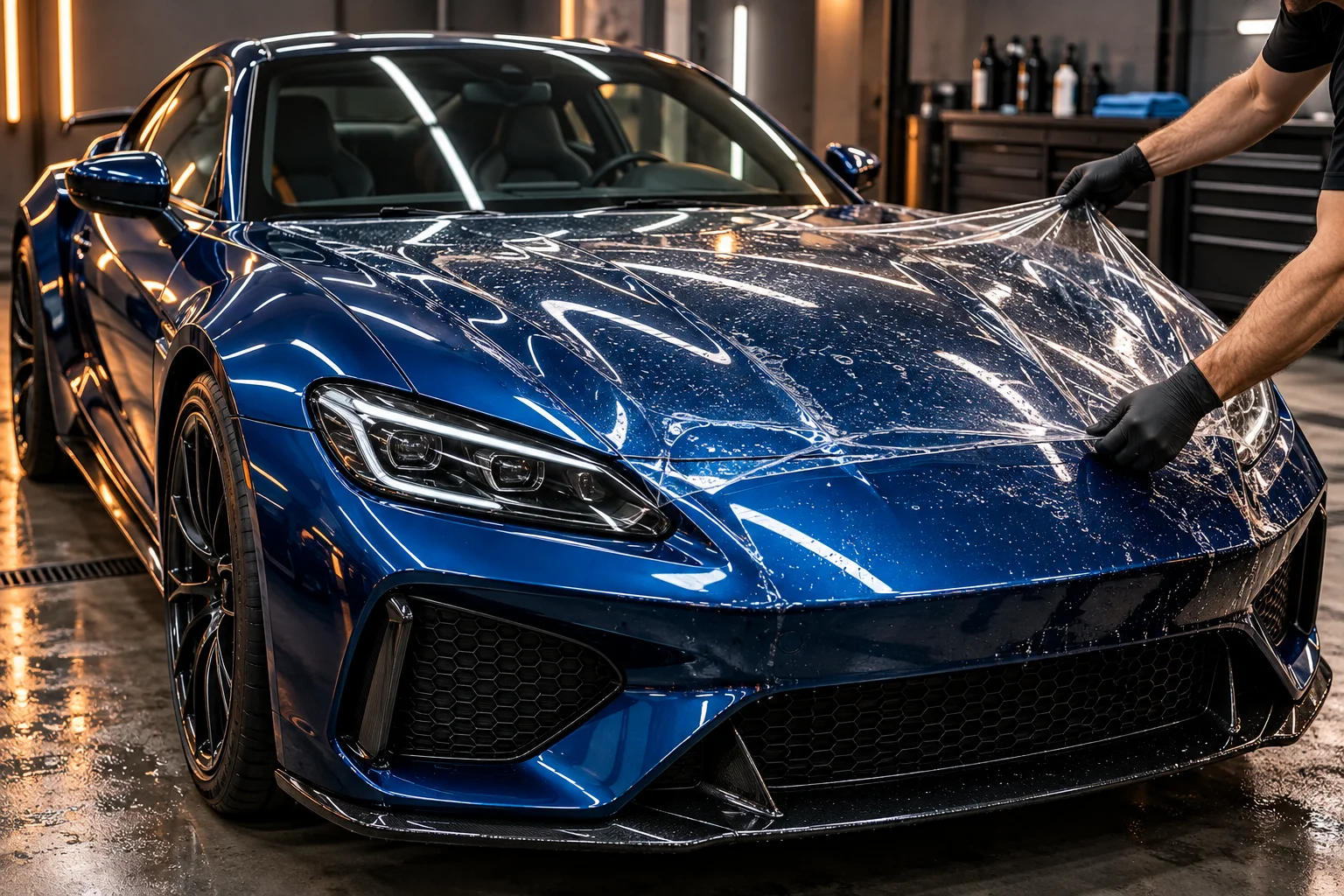
Factory matte or satin paint needs a product-specific sample check. Do not assume every matte film matches every factory finish. Colored PPF also requires a coordinated appearance plan, including original color visible in openings.
If your goal is a decorative vinyl color change rather than PPF protection, use the full and partial vinyl wrap comparison. The shared word “full” does not make the materials interchangeable.
Full body still needs an exclusion list
Full body should describe the agreed painted exterior. It should not silently promise every surface from the windshield to the wheels.
Name the exterior paint
List the hood, both bumpers, front fenders, doors, rear quarters, trunk or tailgate, painted roof, mirror caps, rockers and any painted spoiler. Adjust for your body style.
Separate the other surfaces
Decide on glass, headlights, textured trim, badges, wheels, inner door openings and sill entries separately. The product, access and warranty position may differ.
Parking sensors, cameras and other functional components need an appropriate fitting plan. Do not approve film over a lens or sensor face merely because it sits inside a painted bumper. Follow the vehicle and product requirements.
Existing stone chips, dents, failing clear coat and previous repairs need assessment before any package is accepted. A full-body label does not repair those defects or make an unsuitable panel ready.
A sample quote request you can compare line by line
Use this example for a five-door vehicle with a painted roof. It requests the full front plus selected additions, not a confirmed package or selling price. Replace the example choices with your actual panel map.
Manufacturer and exact series · Finish · Vehicle model and year · Approved panel photos · Expected edge treatment
| Line item | Quantity and boundary | Quoted amount |
|---|---|---|
| Full front film and fitting | One full hood, one painted front bumper, two complete front fenders and two mirror caps | AED ___ |
| Painted A-pillars | Two exterior strips, with endpoints marked | AED ___ |
| Painted rocker panels | Two defined lower-side areas, excluding textured trim | AED ___ |
| Door cups | Four handle recesses, with pattern and finish confirmed | AED ___ |
| Preparation or old-film removal | Routine preparation identified, with correction or old-film removal itemized only if needed | AED ___ |
| Trim access and refitting | Name any parts removed, the agreed edge method and whether this labor is included above or charged separately | AED ___ |
| Tax and final payable total | Show the tax treatment and final total without counting tax twice | AED ___ |
For this example, doors beyond the cups, the roof, headlights, rear panels and inner openings are excluded. Ask for any desired change to be added as a new line before comparing totals.
Ask for the full body alternative as a second panel list using the same film and preparation assumptions. The added amount should buy identifiable extra coverage. Check whether it also changes the installation method, finish, warranty or included preparation, since those differences need their own explanation.
Keep the applicable product warranty, workmanship terms, collection plan and aftercare instructions with the quote. If comparing film brands, hold the panel map constant. Otherwise, you cannot tell whether the price difference comes from material or missing coverage.
Plan additions and replacement before the first installation
Starting with full front coverage and adding separate door or rear pieces later can be practical. The added panels still need inspection and preparation, and they remain exposed until fitted.
Upgrading a partial hood to a complete hood is different. Discuss removing the original piece and fitting a complete new one rather than assuming a second strip will create an invisible extension.
Keep the exact film code, finish and fitting dates. Fresh film beside an older exposed piece may not look identical. Product availability can also change, so later expansion is not a guaranteed perfect match or a guaranteed saving.
If a filmed panel is damaged, inspect the film and paint before ordering a replacement piece. Film can take damage without the paint being harmed, but that outcome is not assured. A dent or paint chip underneath requires its own repair decision.
At handover, walk around the car with the approved photos. Check mirrors, lower sections and roof boundaries, not just the hood. Record any agreed return inspection and the correct washing instructions for the installed film.
Coating the exposed paint is a separate choice
If you plan to add PPF later, tell the installer before applying a coating to those panels. Future film preparation may need to remove or address that treatment under the selected product’s instructions. A coating on an unfilmed door can help with care, but it does not turn that door into a PPF-covered panel.
Questions about choosing PPF coverage
Are headlights included in full front PPF?
Not automatically. Treat them as a separate material, suitability and warranty decision. Have both the coverage and approved product named rather than assuming paint-protection terms apply to a lamp lens.
Does a glass roof count as full body coverage?
Not in the painted-exterior examples here. Confirm roof construction and any suitable glass treatment separately. The package name should not be used as permission to apply body film to glazing.
Is full body PPF necessary on an expensive car?
Price alone does not decide the useful coverage. Consider paint condition, finish, use, ownership plans and the fitted scope you value. A well-defined front plan may still be appropriate.
Will covering the doors prevent parking dents?
No. PPF is a surface protection layer, not a structural barrier. It cannot prevent the panel from deforming under an impact.
Can ceramic coating replace PPF on the uncovered panels?
A suitable coating may help with surface care, but it does not give those panels equivalent stone-impact protection. Compare that separate benefit and check compatibility if coating the film itself.
Choose the smallest clear plan that meets your goal
Start with the problem, mark the panels and compare the same film on the same scope. Move from full front to selected additions or full body only when the extra protection or finish consistency is worth it to you. Keep every exclusion visible in the written quote.
Manufacturer guidance behind the panel choices
- 3M UAE examples of partial and full coverage
- 3M guidance on contact areas and film applications
- XPEL guidance on exposed body areas
Reviewed October 8, 2026. Manufacturer examples explain possible applications, not the contents of a Wrapping.ae quotation.
Bring a coverage goal
Get a PPF quotation with every panel listed
Tell our Al Quoz team your vehicle model, usual driving and the areas that concern you. Ask for full front and broader coverage options using the same named film so the difference is easy to compare.