
Materials and installation tools
Car Wrap Technology and Tool Upgrades
Car wrap technology helps with positioning, cutting, measuring and aligning graphics. Learn what air-release adhesives, knifeless tape and optical registration can do, then test which upgrades suit your film and working setup.
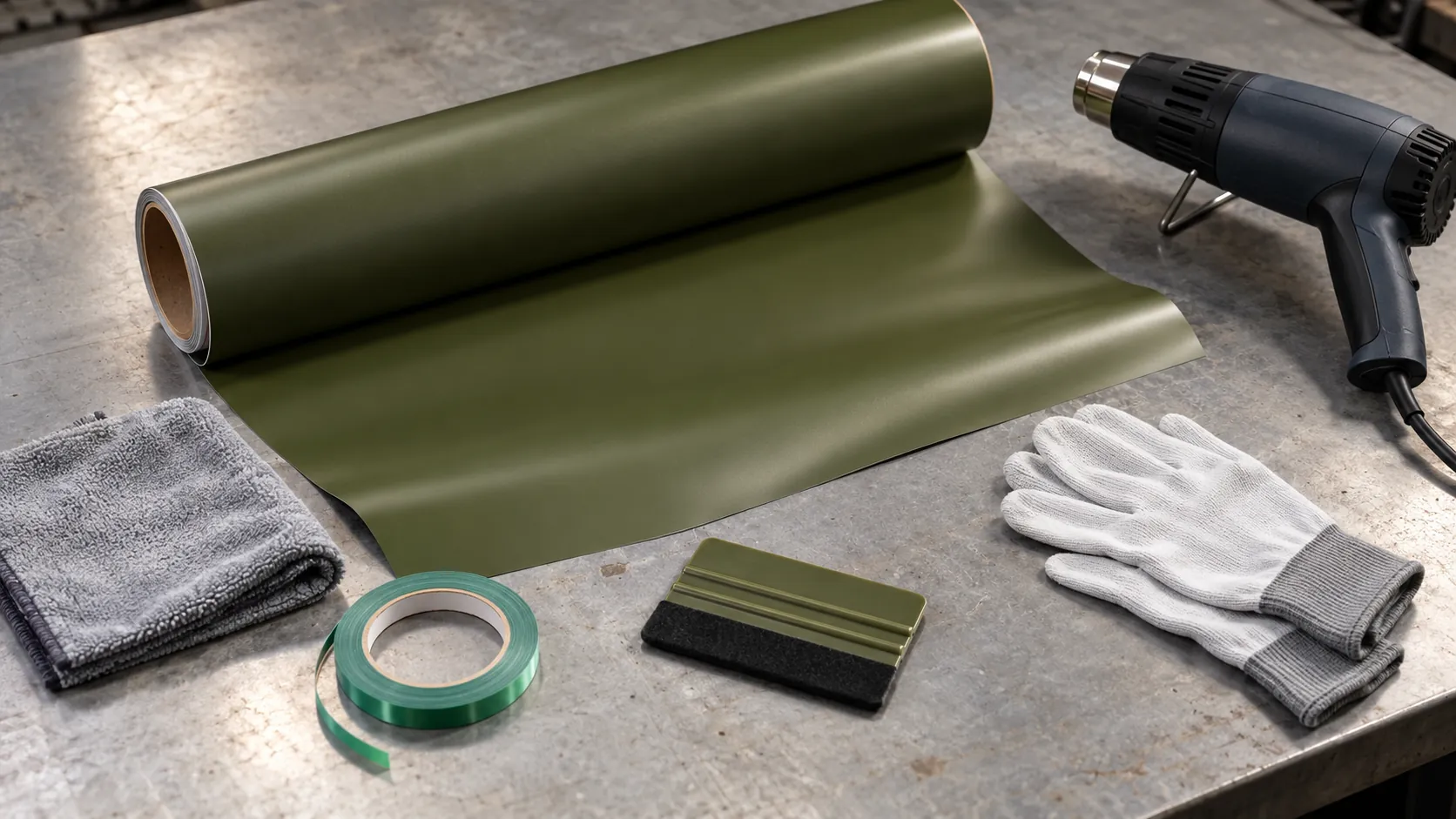
Choose technology that solves a specific installation problem
The most useful car wrap technology gives an installer more control over positioning, cutting, heating or checking the finished film. Repositionable adhesives, knifeless tape and optical plotter registration are documented examples. A digital display or a cordless battery alone does not guarantee a better installation.
Start with the problem you need to solve. Is a large sheet difficult to position? Does a graphic miss its cut line? Are you unsure how hot the vinyl has become? Each needs a different answer.
Buying a complete upgraded kit without identifying the problem can leave the same weakness in place.
This guide covers exterior automotive vinyl. Colour-change film, printed graphics with an overlaminate and PPF are different material systems. A cutter or application method suited to ordinary vinyl may need a different consumable or test for a thicker laminated graphic.
| Technology | What it helps control | What still needs checking |
|---|---|---|
| Repositionable adhesive | Initial placement before firm application | Surface condition, film limits and final contact |
| Air-release channels | A route for air to leave during application | Application sequence, contamination and trapped pockets |
| Knifeless cutting tape | A planned cut path without running a knife along the paint | Tape selection, film compatibility and technique |
| Surface thermometer | Temperature at the intended film area | Target size, measurement method and product instructions |
| Optical registration system | Cut alignment with a printed graphic | File setup, marks, media feeding and a test cut |
| Inspection lighting | Visibility of the fitted surface | Edges, recesses, finish and affected vehicle functions |
Start with the car wrap tool kit if equipment is missing. This guide addresses how documented technology works and whether an upgrade solves a repeatable problem.
Understand repositioning and air release as separate features
Repositionability and air release are often mentioned together, but they solve different problems. Repositionability helps with initial placement. Air-release channels provide escape routes for air while the film is being applied. Neither means that the sheet can be placed carelessly and become smooth by itself.
In 3M’s 2080 product bulletin, Controltac technology reduces the initial adhesive contact area to help sliding and repositioning. Comply technology provides air-release channels toward the graphic edge. Those are specific functions, rather than evidence that every film sold as premium has the same behavior.
Avery Dennison Supreme Wrapping Film describes Easy Apply RS technology for repositionability and slideability. Treat the product name, finish and fitting document as the starting point. These adhesive features are established technologies, not discoveries that only appeared in 2025.
On a practice panel, compare initial placement with the point at which firm squeegee pressure establishes contact. Notice how the material changes after it has been worked, warmed or repeatedly lifted, within the permitted method. Do not assume the behavior of a fresh offcut describes a heavily handled sheet.
Air release cannot remove a particle beneath the adhesive. A raised speck, an air pocket and a lifting recess need different assessment. Repeatedly pushing or heating the area can make the original cause harder to identify. Find the cause before choosing a correction.
Separate liners, cap sheets and permanent laminates
The backing liner protects the adhesive before application. Some films also have a removable protective sheet on their visible face. A permanent overlaminate on printed graphics is a different layer that remains part of the installed construction.
The linked 3M 2080 bulletin describes a clear protective layer on gloss and high-gloss films that can stay in place during fitting. Follow the selected film’s instructions for removal and finishing. Do not treat that removable sheet as permanent graphic protection.
Include the complete material construction in an upgrade trial. A cutting filament, blade setting or contact buffer tested on bare film may behave differently with the protective or laminated layers involved in the actual job.
Plan paint-safe cut paths with the correct knifeless tape
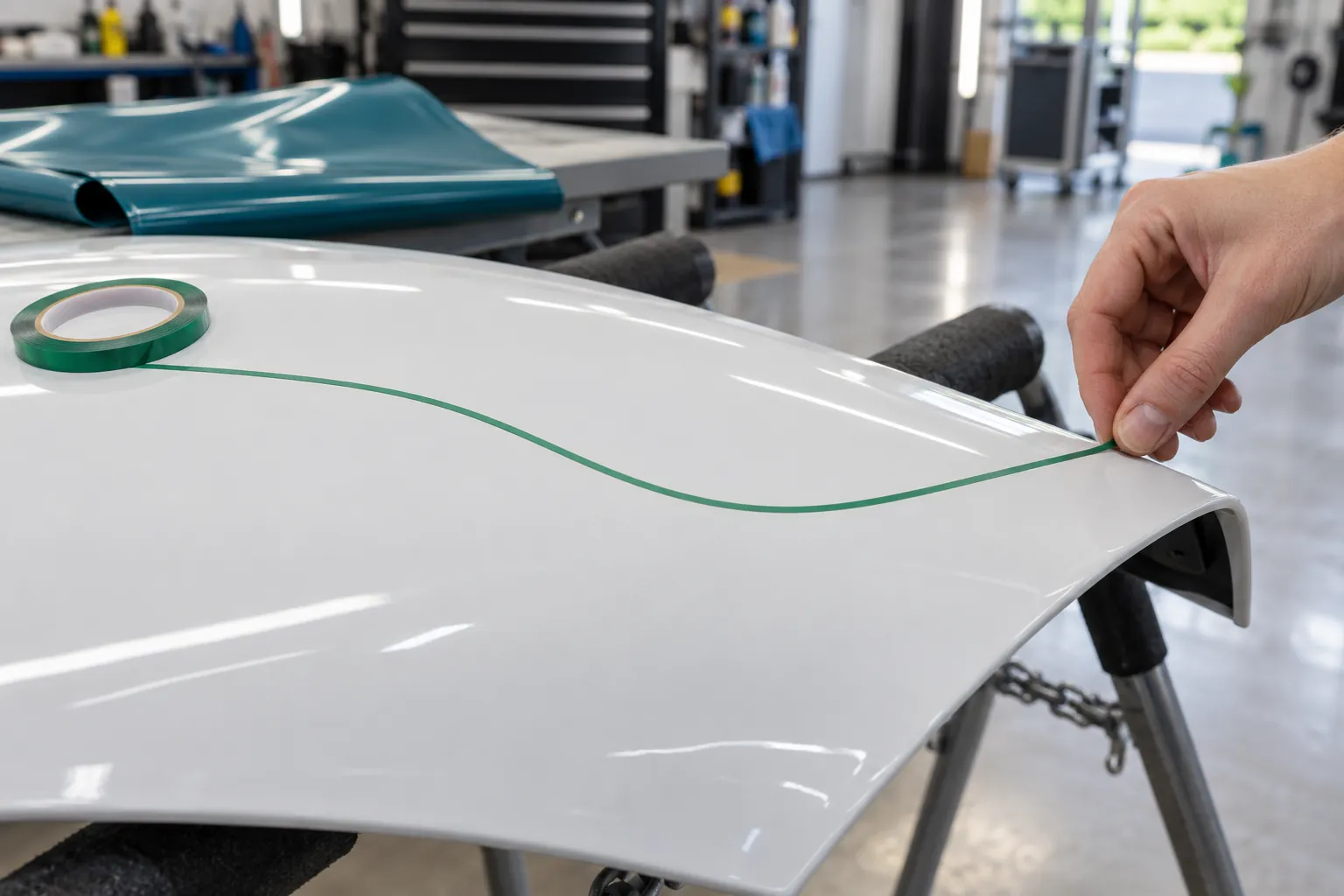
Knifeless tape contains a cutting filament. The installer lays out the intended path before applying film over it, then uses the filament according to the tape instructions. This changes where the cutting action comes from and reduces the need to trace that line with a knife on the vehicle.
The tape family matters. 3M’s knifeless product range includes Finish Line for general vinyl-wrap trimming, Design Line for flexible contours and Precision Line for specified specialist materials. The manufacturer also lists versions for panel gaps, stripes and perforated window film. A roll that looks similar is not necessarily interchangeable.
Test the exact tape and film combination on a suitable practice piece. Confirm that the filament cuts cleanly and that removing the tape leaves the intended edge. Pay particular attention to thicker laminates, reflective or chrome materials and PPF.
Follow any product-specific cover-tape or test requirements rather than treating a successful cut through ordinary vinyl as proof of universal compatibility.
Layout still takes judgment. Decide where the seam belongs, how it meets a panel edge and how much material is required for the permitted finishing method. Keep the tape accessible where the instructions require it. A beautiful curve in the wrong place is still a poor cut plan.
A knife remains useful for trimming loose material on a cutting mat or other suitable support. It should not be described as automatically sensing the paint underneath. Blade depth controls and sharp blades help with particular cutting tasks, but they do not make freehand cutting on a vehicle risk-free.
An installer should be able to explain the planned cutting method around painted surfaces and sensitive trim. Existing repairs and loose clear coat need assessment before tape or film is attached and removed. A premium cutter does not eliminate those substrate concerns.
Distinguish heat-gun controls from film-temperature measurement
A controlled heat gun is useful because its output can be adjusted for the task. The setting on its display usually describes the selected output or outlet air, not the temperature of the vinyl. Distance, airflow, movement and the starting panel temperature change the heat reaching the film.
Cordless equipment solves a cable-management problem. It does not automatically provide finer adjustment. For example, the official Bosch GHG 18V-50 specification lists two temperature settings of 300°C and 500°C. Those are tool-output settings, not instructions to bring automotive film to either temperature.
Compare usable controls, airflow, balance and the manufacturer’s safe resting position. For battery equipment, include the battery, charger and expected working pattern in the decision. A tool-only purchase price does not describe the complete setup, and quoted runtime needs its stated battery and operating conditions.
A suitable surface thermometer answers a different question. It measures the intended surface area using its specified method. With an infrared instrument, the laser is an aiming aid rather than the boundary of the measurement area. Fluke’s infrared measurement guidance explains why target size, distance and emissivity matter.
Reflective surfaces can complicate interpretation.
A thermal camera can make temperature differences easier to see, but a colorful image is not sufficient evidence that the required treatment was completed. Check the instrument’s accuracy, setup and suitability for the finish.
A decimal on a screen is not a guarantee that the reading is accurate to that decimal.
Keep shaping and final post-heating separate. The selected film and finish determine the procedure. A universal temperature or a timed sweep cannot establish that the relevant area received its required treatment. Tool controls help deliver heat, while suitable measurement checks what reached the surface.
Use holding tools to manage the sheet without damaging it
Magnets, suitable masking tape, roll stands and a clean workbench can improve handling before the first squeegee pass. Their role is to keep the material controllable while you establish position and plan the application. They do not determine the correct amount of stretch or where a seam should go.
Check the vehicle panel before relying on a magnetic holder. A magnet will not hold onto aluminum or plastic in the way it does onto suitable steel. The presence of a metal-looking finish does not establish the panel material. Choose a holding method appropriate to the actual surface.
Inspect the holder’s protective contact face and the panel for grit. Do not slide a dirty holder across paint or use clamping force as a substitute for supporting the sheet.
A holder that is secure on a flat test surface may behave differently near a curved edge or where the contact area is reduced.
A roll stand or supported cutting bench helps keep a large sheet off the floor and away from sharp edges. Plan where the liner and waste will go, and where a second person can stand if needed. That often solves a handling problem more directly than adding another small accessory.
Wireless tools can be convenient, but an outdoor mobile setup still needs suitable environmental conditions. In Dubai, check a vehicle arriving from the sun rather than relying on the air temperature. Wind, airborne dust and an unsuitable panel temperature remain relevant even when every tool runs from a battery.
Keep contact surfaces and consumables in working condition
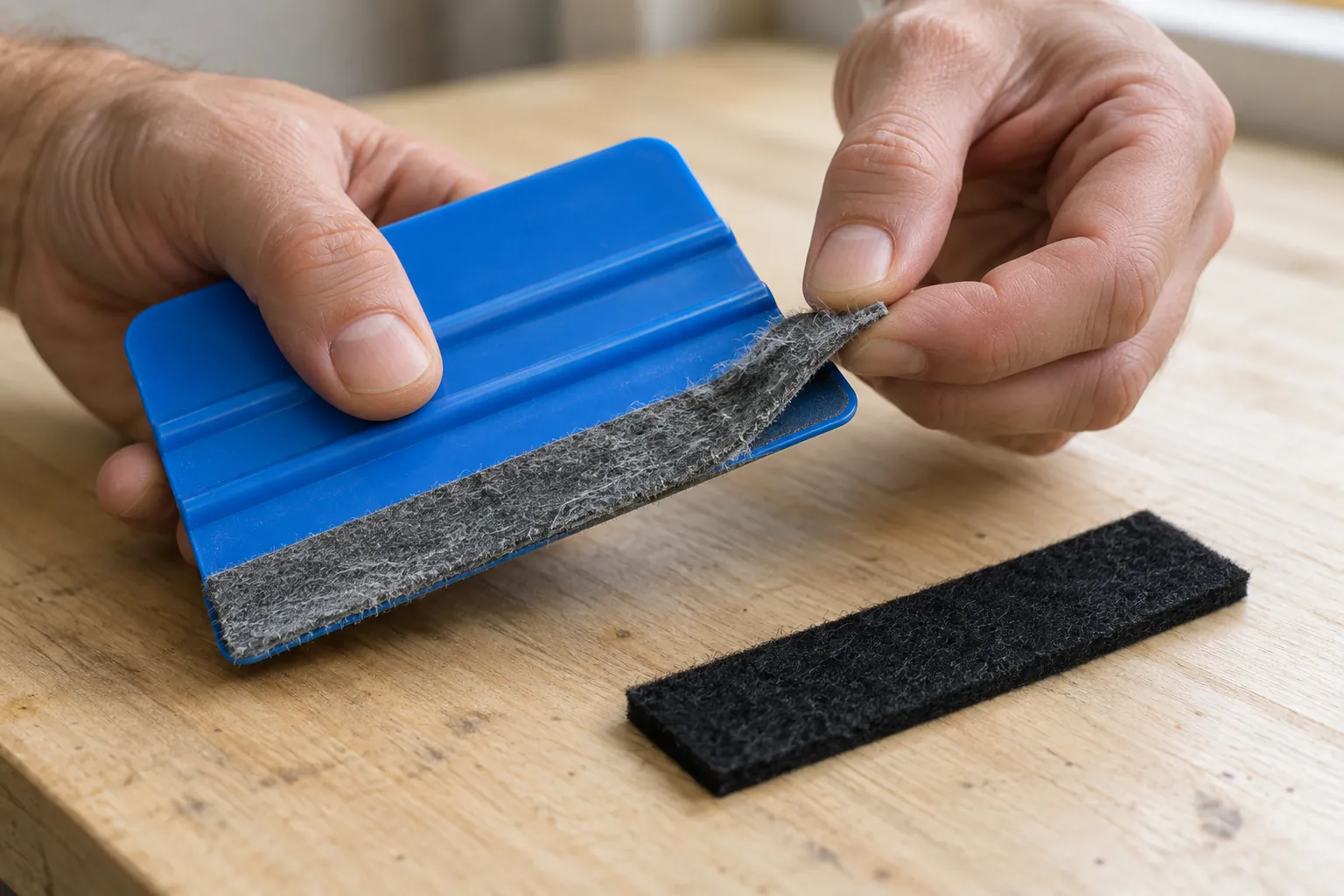
A squeegee’s shape, stiffness and working edge influence how it applies pressure. A felt buffer changes the contact surface and can help protect a finish when the film instructions permit it. Neither a soft cover nor an expensive handle prevents scratches when grit becomes trapped in the working edge.
Inspect buffers, gloves and cloths during the job. Keep clean replacements available and separate used items from prepared tools. If a buffer is damaged, loaded with debris or no longer seated correctly, address that condition before dragging it across more material.
Use the squeegee and application method specified for the film. Do not add soap or a slip solution merely because a tool is marketed for both PPF and vinyl. Avery Dennison’s Supreme Wrapping Film application bulletin specifies dry application and identifies suitable fitting equipment.
Preparation chemicals also need a defined role. Read compatibility instructions and safety data, allow the required drying and keep solvent containers away from heating work. A static-control wipe or cleaner cannot be credited with making any panel ready in one pass. Surface condition and residues still need assessment.
Adhesion promoters and edge sealers are product-specific choices. For example, 3M’s 2080 bulletin identifies Primer 94 for particular stretched areas. That is not permission to use primer as a general fix for dirt, poor contact or excessive tension. Check its approved use and consider the consequences for later removal.
Use optical registration to align printed graphics
Digital tools have a clear role in printed vehicle graphics. Design software prepares artwork, a raster image processor or RIP prepares the print job and a plotter follows cutting paths. Optical registration helps align a cut with an already printed image.
These functions should be described separately from fitting color-change film by hand.
Graphtec’s ARMS system uses a sensor to read registration marks. Those marks provide references for aligning the cutting operation with the print. Graphtec describes ARMS as Advanced Registration Mark Sensing. It aligns cutting data with the printed media rather than projecting fitting instructions onto a vehicle.
Registration still depends on the job setup. Marks must be suitable and readable, the media must feed correctly and the artwork and cutting file must agree. Run a test before committing the full graphic.
A registration feature cannot correct an incorrectly scaled design or decide whether a logo will cross a door gap.
Vehicle templates and digital proofs help plan coverage and communicate the design. Confirm the actual vehicle, body variant, modifications and important dimensions. A screen preview does not prove how a flat graphic will behave around a recess, handle or bumper curve.
A laser alignment aid can establish a reference line, but a curved panel still needs direct measurement and a seam plan. A blade plotter and a laser cutter are different tools. A machine name does not establish film compatibility or safe cutting on a vehicle.
For printed livery, use our graphics tools guide for the full artwork, print, laminate, cutting and proofing workflow. Here, the important distinction is whether a proposed upgrade improves file accuracy, production alignment or physical fitting. Those are different responsibilities.
Check material claims beyond the words eco-friendly and premium
Material innovation is part of wrap technology, but environmental labels need a specific meaning. Non-PVC identifies a material distinction. It does not, by itself, establish biodegradability, a local recycling route or lower impact in every situation.
3M Envision LX480mC is a documented non-PVC printable wrap film with specified ink and graphic-protection compatibility. That example does not mean every non-PVC film can accept any ink, overlaminate or installation method.
Ask for the complete material system. Identify the face film, adhesive, ink where applicable and protective layer. Check whether the proposed combination is within the manufacturer’s documented scope, and read the applicable warranty conditions.
A roll described as premium may still be unsuitable for the shape or exposure you have planned.
For waste handling, distinguish clean unused offcuts from liners, laminated printed scraps and used adhesive-backed film. Confirm what a local collection service actually accepts before promising that all wrap waste will be recycled. Avoid replacing one vague environmental claim with another.
Test an upgrade against a repeatable task before buying widely
Choose a representative practice task and define what success looks like. It might be a clean curved cut, reliable initial positioning or repeatable surface measurement. Use the same film and suitable practice substrate, and change one tool or method at a time where possible.
- Record the current result, including defects and setup time.
- Read the candidate tool’s instructions and check compatibility.
- Repeat the task after enough practice to use the tool correctly.
- Compare the finish after the required cooling or finishing stage.
- Include waste, replacement consumables and any extra setup in the comparison.
Do not judge only the fastest attempt. A quick pass that leaves a poor edge may create more work than a slower controlled one. Equally, one unsuccessful first trial may reflect unfamiliar technique rather than the tool’s limits. Keep the comparison fair and make the acceptance criteria visible.
A useful trial note records the product and finish, practice shape, tool settings where relevant, measurement method and result. Photographs under similar lighting help compare surface changes. Describe observed differences rather than claiming an unsupported percentage saving or a universal reduction in callbacks.
Compare the complete purchase, including batteries, chargers, software, consumables and support. Equipment also needs room to operate. The advertised tool price may cover only part of the setup, so compare itemised quotes on the same basis and check their VAT treatment.
Replacement parts and local support matter when a tool becomes part of daily work. For occasional jobs, a better bench setup or clean replacement buffers may solve the immediate problem without a major equipment purchase.
Verify the finished result and keep a useful installation record
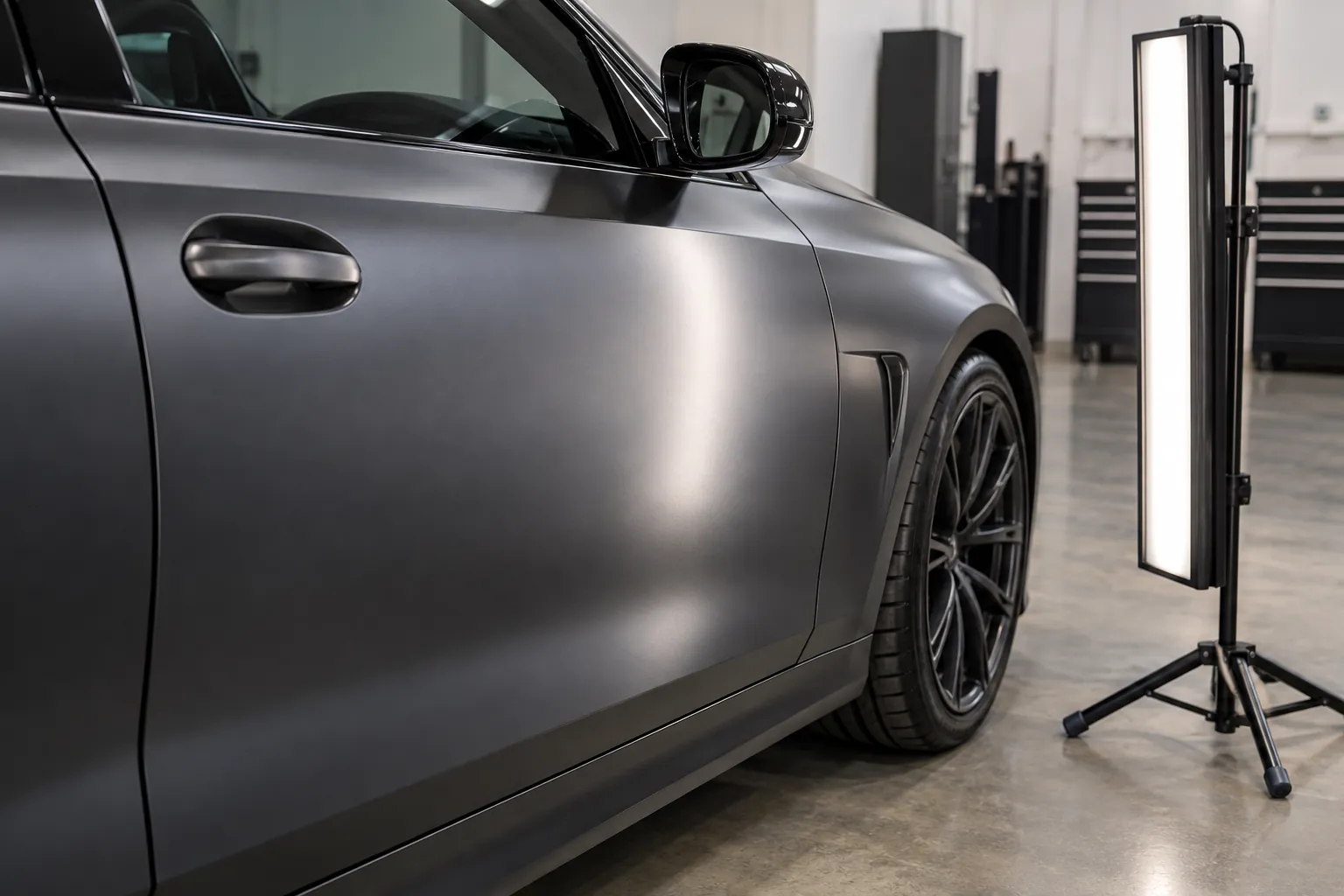
Review the fitted film under suitable light after the required finishing and cooling stages. Check edges, recesses, seams and the relationship between adjacent panels. Inspection lighting improves visibility, but it cannot establish adhesion strength simply from a smooth reflection.
Avery Dennison’s application bulletin also calls for checking vehicle components and functions affected by the work. Treat cameras, sensors, handles and moving trim as part of the handover where relevant. Do not assume that a visually tidy wrap proves all equipment still works.
Keep the film and finish reference, preparation notes, fitting instructions used and any agreed substrate limitations. For a printed job, include the approved artwork and material combination. Give the owner the appropriate care advice and a clear route for raising a concern.
Training remains relevant when the tool changes. Manufacturer instruction, practice and assessment are different things. 3M’s installer program distinguishes training from qualification testing. Buying a tool or completing a short demonstration does not establish a certification.
Questions about car wrap technology
Does an air-release film need less surface preparation?
No. Air-release channels help air escape during application. They do not remove contaminants, repair damaged paint or replace the product’s preparation instructions. Assess the substrate and use the specified cleaning method.
Is a cordless heat gun always an upgrade?
It can help with cable management, but compare its controls, airflow, balance and battery requirements with your actual task. Cordless power does not establish the vinyl’s surface temperature or complete the required finishing treatment automatically.
Can one knifeless tape cut every type of wrap?
Do not assume so. Tape variants have different intended uses, and specialist film or thicker laminated graphics may have specific requirements. Check the manufacturer’s compatibility guidance and test the exact combination on a practice piece.
Will a plotter eliminate cutting during installation?
It can prepare shapes and graphics from suitable files, but the fitting plan may still require trimming, seam decisions or corrections. Confirm the vehicle dimensions and cutting method rather than assuming a template covers every contour.
Are non-PVC wrap films biodegradable?
Non-PVC alone does not establish biodegradability. Ask for the product’s specific environmental documentation and confirm local waste acceptance. Film, adhesive, ink, laminate and liner may need separate consideration.
What should a beginner upgrade first?
Start with the weakness you can identify in a practice task. Clean working edges, a suitable work surface and accurate measurement may matter before a major equipment purchase. Learn the chosen film’s method and test one change at a time.
Should a clear protective top sheet stay on during fitting?
It depends on the film. Some products allow their removable cap sheet to remain during fitting. Follow the named material’s removal and finishing instructions. A cap sheet and a permanent overlaminate serve different purposes.
What does ARMS do on a vinyl plotter?
It reads registration marks on printed media to help align the cutting data with the image. It does not choose a vehicle seam plan or guide physical film application. Correct files, readable marks and a test remain important.
Discuss your wrap project
Planning a wrap or comparing installation options?
Tell us your vehicle model, intended coverage and preferred finish. We can discuss the material and fitting work at our Al Quoz workshop.