
Owner inspection and repair choices
Car Wrap Problems and Repair Decisions
A small lifted edge may be correctable if the film and adhesive remain usable. Torn, cracked or brittle vinyl usually needs a replacement assessment. First identify what changed and where, then compare a local repair, a panel rewrap and full replacement. Keep the affected area untouched until the installer has checked it.
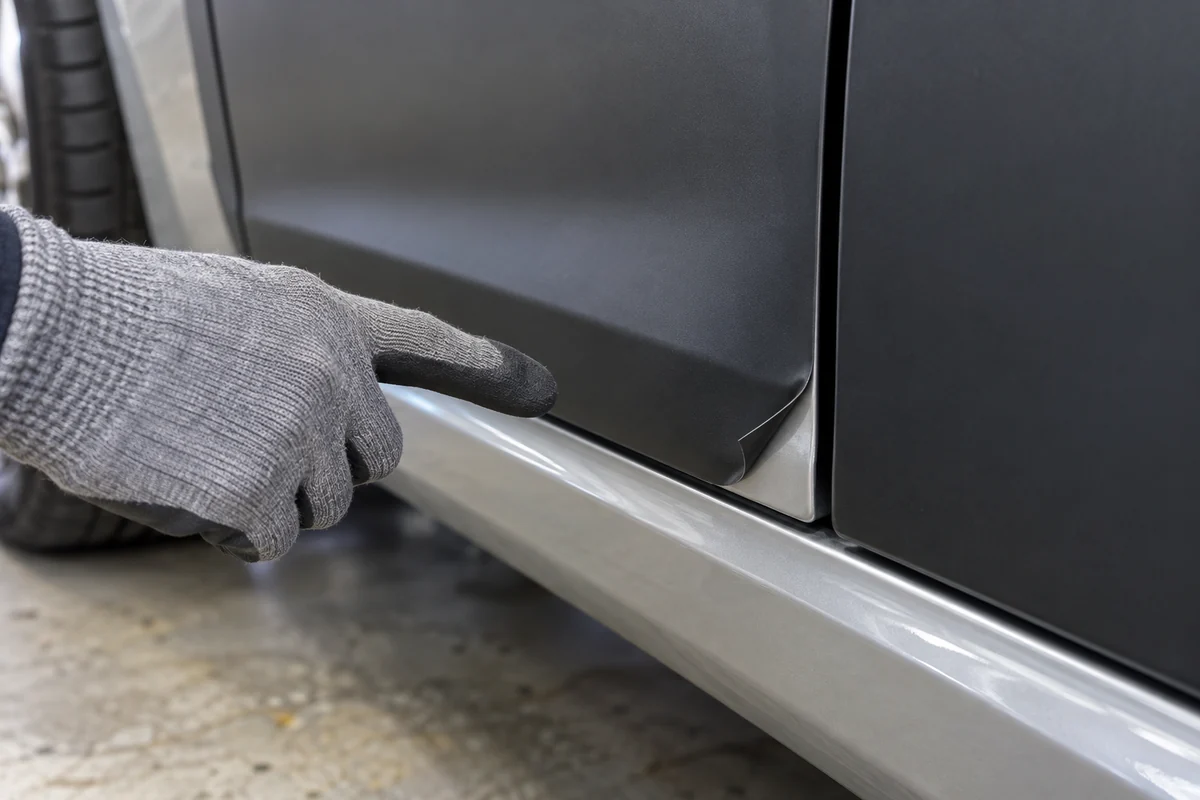
Identify what has changed before choosing a repair
Start with the location, appearance and timing of the defect. A lifted door edge after washing, a rounded bubble on a newly fitted hood and fine cracks across an older roof call for different checks. Photograph the panel in daylight, including one close view and one showing the surrounding area.
| Symptom | Check first | Possible next step |
|---|---|---|
| Lifted edge or corner | Exposed adhesive, dirt, tears and recurring lift | Assess local correction or replace the affected piece |
| Rounded raised area | Air, moisture, debris or a bridged recess | Identify the cause before releasing air or repositioning |
| Dull or uneven color | Surface residue, staining, gloss change and exposure history | Test appropriate cleaning before deciding on replacement |
| Cracks or brittle film | Extent across the panel and condition of adjacent pieces | Arrange removal and replacement assessment |
| Visible paint at a seam | Film retreat, a torn edge or an intentional panel gap | Compare with installation photographs and inspect the return |
Record whether the problem appeared immediately, after a wash, after a repair or gradually over months. Timing helps the installer investigate, but it does not establish responsibility on its own. Avoid covering the defect with a coating before it has been inspected.
What to do while waiting for an inspection
Leave the affected area visible and avoid experimenting with glue, strong cleaner or heat. If a loose piece is flapping, catching on something or obscuring a light or sensor, ask the installer how to make it secure before using the vehicle. Do not pull it back to inspect the paint yourself.
Check the rest of the car from normal viewing distance without disturbing sound vinyl. A defect on one mirror cap and deterioration across several exposed panels lead to different repair scopes. If a wash or detailing treatment immediately preceded the change, pause further treatment until the area has been reviewed.
Keep one useful record for the assessment
Use this checklist when contacting the installer. You do not need to diagnose the fault or identify a film brand by its colour.
| Record | Why it matters |
|---|---|
| Product, finish code and invoice | Identifies the film, original scope and applicable instructions |
| Fitting date and first appearance | Separates an immediate concern from a change that developed later |
| One close photo and one whole-panel view | Shows the boundary and whether the defect forms part of a wider pattern |
| Paint repairs and coatings | Helps assess the surface before correction or removal |
| Recent washing and previous repair attempts | Records chemicals, water exposure, added adhesive and recurrence |
Photograph the car in daylight before changing the defect. Keep installation photographs for comparison. Give the workshop the original files where possible so a cropped close-up does not conceal adjacent damage.
Check a peeling edge before trying to stick it down
Note whether one corner has curled, a longer strip has released or a seam appears to have moved back. The installer needs to assess the available material, adhesive condition and contact surface. A clean, intact piece presents a different repair opportunity from one that is torn, brittle or carrying grit underneath.
Pressing an exposed adhesive surface into place can trap contamination without correcting the original problem. Household glue or double-sided tape can also alter the boundary and complicate assessment. Keep the area clear of pressure washing and leave the film in its observed condition until the workshop advises how to secure it.
Why a repaired edge can lift again
Possible contributors include grit on the bonding area, weak or unsuitable paint, a coating beneath the film, incomplete contact and tension around a curved return. These are possibilities to investigate, not conclusions that can be reached from one photograph. The workshop should explain what it found and what the proposed repair will change.
A contaminated edge may need a fresh piece rather than more pressure. A piece that reaches a recess only under excessive strain may need a revised layout or an inlay. If paint is separating with the adhesive, replacing the vinyl alone will not make the underlying surface sound. Avery Dennison's guidance on suitable vehicle surfaces explains why paint condition matters to adhesion and removal.
Ask whether the next attempt changes preparation, access, material or layout. A corner that looks flat immediately after heating is not sufficient evidence that the underlying cause has been resolved.
Bubbles and lifted recesses can look similar
A round air pocket beneath intact film differs from a raised speck of debris or a larger section that spans a recess without contacting it. Photograph the shape and location rather than pressing repeatedly. Note whether there are several pockets, a crease beside the bubble or moisture emerging from an adjacent gap.
Air-release adhesives assist application but do not identify the contents of every raised area. The installer must determine whether the film can still be adjusted and whether the defect is an air pocket, contamination or loss of contact. A pin cannot remove a particle trapped beneath the vinyl.
Some manufacturer installation methods permit an air-release tool during fitting. That does not make puncturing an aged blister a universal repair. Keep knives, pins and concentrated heat away from an unidentified defect until the film and cause are known. A hole or crease may remain visible even if the raised area flattens.
For the tool-specific distinctions, our guide to vinyl wrap bubble-removal tools explains what applicators can and cannot correct. An overall condition assessment establishes whether one piece or a wider replacement needs attention.
Wrinkles, creases and retreating seams need different checks
A rounded air pocket raises an area of otherwise intact film. A wrinkle forms a fold or ridge, while a sharp crease can leave a visible line even after the material lies flat. Do not treat every raised mark as trapped air. Puncturing a fold will not restore a distorted finish.
Look at nearby bodylines, recesses and panel returns. A crease beside a stretched corner may call for review of the fitting layout. A line that appeared after contact or impact needs a damage check. The installer must decide whether repositioning is still possible for that film and application stage or whether a fresh piece is needed.
For a seam that exposes more paint than before, compare the boundary with installation photographs. Check whether the material has retreated, the edge has torn or the gap was part of the agreed coverage. Shrinkage and insufficient original coverage can produce a similar visible strip, but they require different explanations. Pulling an older piece to close the gap may leave too little usable material at the return.
Separate surface marks from cuts through the film
A light surface scuff and a tear through the vinyl need different assessment. Photograph the area after appropriate gentle cleaning, without polishing it or opening the damaged edge. A loose flap, a jagged split or visible paint below the mark changes the possible repair scope.
For 3M 2080 specifically, its maintenance FAQ says some mild surface scratches can reduce with warmth and directs heat-gun treatment to a professional installer. Deeper scratches require replacement. That guidance does not make every color-change film self-healing or mean that heat can close a torn sheet.
Ask what a proposed correction will improve. Removing surface residue, reducing a mild scuff and covering a cut are separate results. A patch leaves another boundary, and paint damage beneath a puncture needs its own assessment. Accepting a visible patch can be reasonable for a small, less conspicuous area when the surrounding material remains suitable.
Separate fading from residue and changes in gloss
A dull hood is not automatically evidence that the pigment has faded. Dust, traffic film, dried water marks, staining or a care product can alter its appearance. Inspect the wrap after suitable cleaning and drying, using consistent light. Compare neighboring panels without assuming they have received identical exposure or treatment.
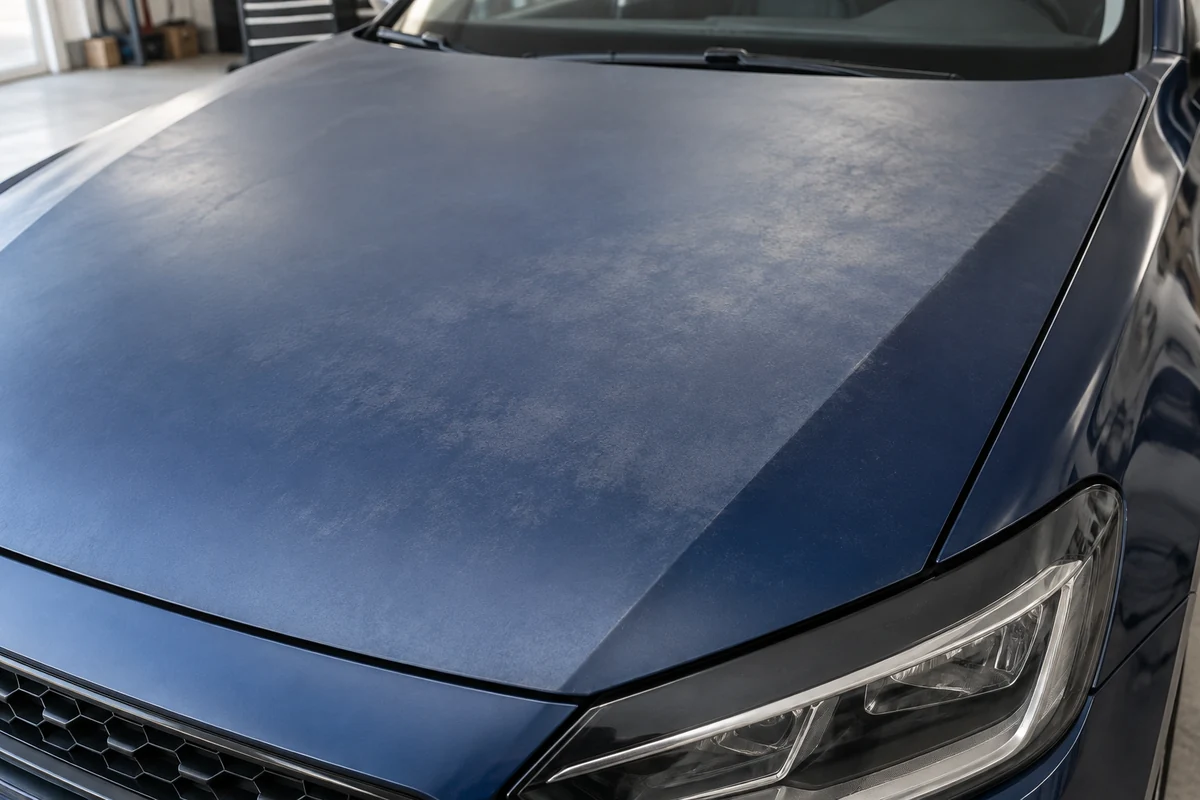
Cleaning can remove contamination, not promise a color repair
Begin with the exact film’s maintenance instructions. Test a suitable product inconspicuously before treating the whole panel. If a test changes the gloss or color, stop. Do not escalate from shampoo to household solvent simply because the first wash has not removed the mark.
Genuine color deterioration cannot be assumed reversible with a restorer spray. Ask whether the proposed treatment removes residue, changes the finish temporarily or replaces damaged material. Those are different outcomes. Inspect a trial area before agreeing to a treatment across the car.
Matte and satin finishes need compatible care
Do not assume that the lower gloss makes every matte film fade faster than every gloss film. Product construction, exposure and maintenance matter. Avery’s Supreme Wrapping Film care guide warns that wax-containing waterless products can create shiny spots on matte finishes. Choose products for the actual finish rather than trying to make every wrap shine.
Cracking and brittleness change the repair decision
Fine cracks, torn corners and brittle material indicate a different condition from an intact edge that has just lifted. Inspect how far the change extends. If similar deterioration appears across the roof, hood and returns, assess the whole wrap rather than assuming each visible crack is an isolated repair.
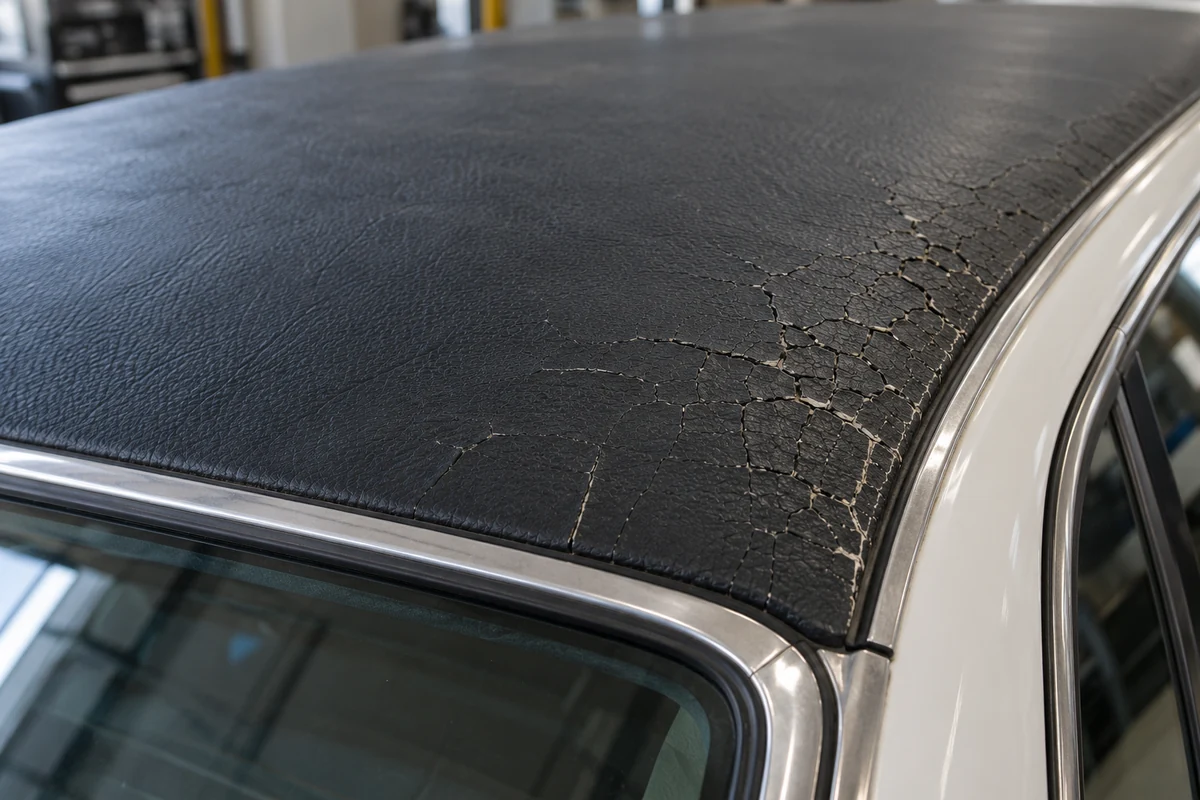
A patch can cover a damaged spot but leaves a visible boundary and does not renew the surrounding film. Discuss whether a patch is acceptable for a small functional repair or whether replacing the panel better suits the finish you want. Neither option establishes that the rest of an aging wrap is sound.
The installed film's instructions should determine the response to deterioration. Arrange prompt assessment when cracking or brittleness appears, and use the removal and paint-safety guide to prepare the relevant paint and film records.
Tell the removal specialist about repainted panels, clear-coat damage and previous repairs. Request a substrate assessment before fitting new vinyl. Covering peeling paint with another film is not a repair to the paint beneath it, and removal needs a plan appropriate to that condition.
Choose between local repair, panel replacement and a full rewrap
Compare the affected panel with the rest of the wrap before deciding how much material needs replacing. A single damaged mirror cap does not necessarily justify replacing every panel. Conversely, several failing areas can make repeated small repairs poor value. Ask the installer to explain the scope they recommend and the reason for it.
| Option | When to discuss it | What to confirm |
|---|---|---|
| Local correction | Intact film with a limited contact problem | Adhesive condition, cause and expected appearance |
| Patch | Small damage where a visible join is acceptable | Patch boundary, color difference and surrounding condition |
| Panel rewrap | One damaged or deteriorated piece | Removal, paint condition and match to adjacent panels |
| Full replacement | Widespread deterioration or an unacceptable overall match | Complete removal, preparation, new film and warranty terms |
New film may not match the existing wrap exactly
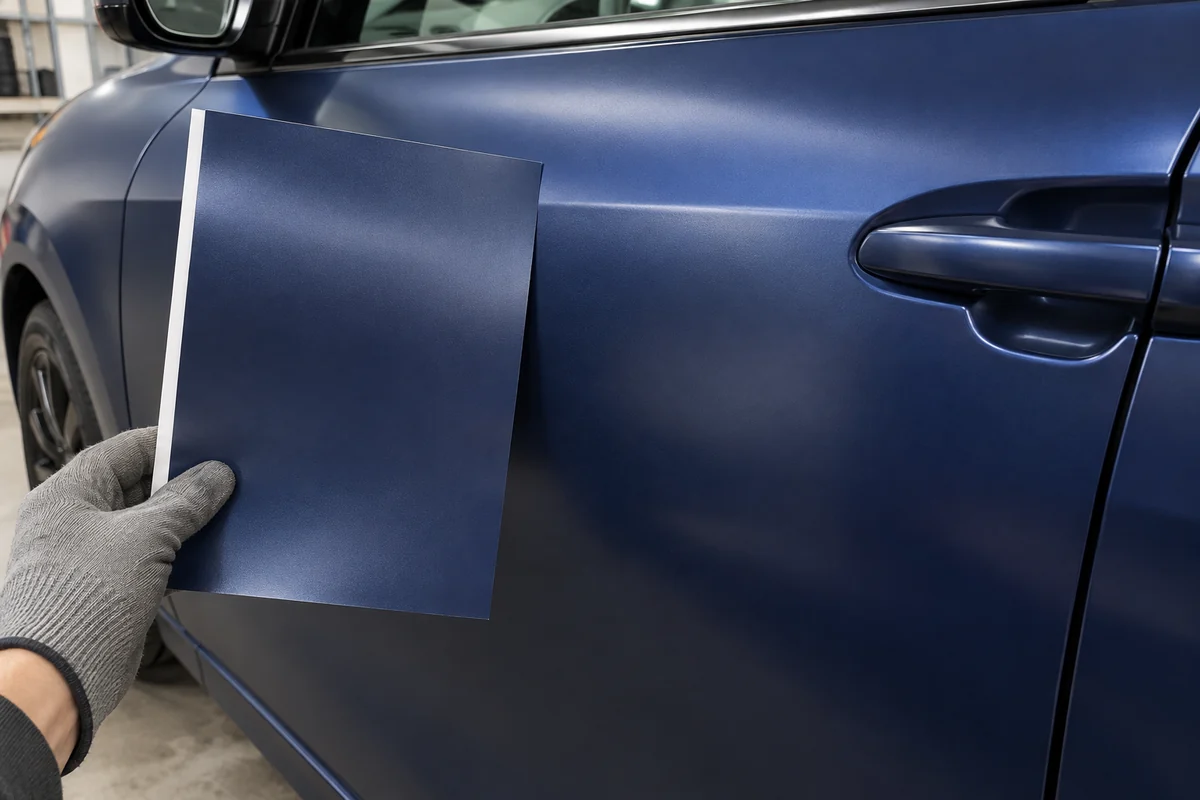
Check a physical sample beside the car in daylight. The same product name is not sufficient evidence of a perfect match. Batch differences, aging and changes in gloss can become obvious at panel boundaries. Metallic and color-shift films also need the correct orientation.
The 3M 2080 maintenance FAQ identifies manufacturing lot, aging, fading and gloss changes as reasons replacement sections can look different. Agree on the acceptable result before ordering material, especially for a highly visible hood or door.
For a printed commercial wrap, provide the original artwork and production information where available. Confirm the replacement design, panel alignment and color approval. A replacement graphic also needs to retain the correct phone number, business name and other information shown on the vehicle.
If several panels need replacement, our color-changing wrap service covers film and coverage choices to discuss during the assessment.
Protect the affected area until the work is agreed
Keep water jets and brushes away from open seams and lifted edges. Remove fresh contamination only with care suitable for the named film and avoid dry rubbing over sand. Our vinyl wrap care guide covers the routine cleaning choices once the condition has been assessed.
Note whether the affected panel spends more time exposed than adjacent panels. A roof and a vertical door can age differently. The summer parking guide explains shade and storage choices without treating Dubai heat as proof of the cause of every defect.
Coatings do not repair damaged film
A coating cannot reconnect a tear or renew cracked vinyl. Check the exact film's warranty before adding one. The 3M 2080 product bulletin states that films with coatings or other aftermarket additions are not warranted under its MCS cover. Compatibility testing does not reinstate that coverage.
Get a clear repair estimate and handover record
Use the inspection checklist above when requesting a quote. Ask the workshop to identify the observed condition, proposed remedy and affected panels. If the film or paint condition is unknown, the estimate should explain what must be checked before a firm scope can be agreed.
Confirm whether the total includes old-film removal, adhesive cleanup, paint assessment, trim access, replacement material and fitting. Agree how extra work will be authorised if removal exposes a paint problem. A corner correction and a hood rewrap are different jobs, so compare equivalent scopes and request the VAT-inclusive total.
At handover, inspect the agreed boundary, colour match and edges after the film has cooled. Check that doors, handles and seals operate normally. Keep photographs, any accepted colour difference, the repair terms and a contact for recurrence. Obtain written aftercare for the actual replacement film.
Plan the first wash after a panel rewrap
Follow the replacement film's instructions rather than the wash schedule for the older panels. The 3M 2080 maintenance FAQ specifies at least 72 hours before washing after installation. The linked Avery Supreme Wrapping Film care guide specifies 48 hours. These are named-product examples, not one rule for all vinyl. Confirm which instructions apply to your repair before collection.
How one finding can change the repair scope
Consider a door with one curled corner and otherwise intact vinyl. If the inspection finds usable adhesive, sound paint and enough material for the return, the installer may be able to correct the contact locally. The scope should describe the cause addressed and the expected appearance.
If the same corner contains grit or the sheet is torn, a fresh panel piece may be more appropriate. Before ordering it, compare a sample with the adjacent door and rear quarter. An acceptable mechanical fit can still leave an unacceptable colour or gloss difference.
If the inspection also finds brittle roof film and cracks across several panels, the decision becomes broader. Repeated local corrections will not renew the deteriorated material. Discuss removal and a wider replacement plan, including the condition of the paint beneath it. The decision changes because of the findings, not simply because the first visible defect was small.
Keep warranty evidence before altering the defect
Keep the invoice, film identification, installation photographs and care records. Contact the original installer before adding adhesive, cutting away material or commissioning a third-party repair. Ask which information they need and whether they want to inspect the defect in its current condition.
Separate material coverage from the installer’s workmanship terms. The 3M 2080 product bulletin says coverage varies by zone and lists substrate, application, exposure and maintenance among performance factors. A maximum advertised duration is not automatically the warranty for every panel on a vehicle in Dubai.
Check exposure rather than counting years alone
A roof and a vertical door do not receive the same sunlight exposure. Check the film’s region, finish, application and exposure classification when reading a durability figure. A maximum published duration is not a replacement calendar for every panel. Visible deterioration deserves assessment even if the advertised period has not ended.
Record what was inspected, the proposed cause and the agreed remedy. If the film is unidentified, say so rather than assigning a brand from its color. Written evidence makes the discussion clearer without assuming that every lifted edge is a manufacturing defect or that every older wrap is excluded.
Common questions about wrap problems and repairs
Will a heat gun fix every bubble?
No. A raised area may contain debris or reflect lost contact in a recess. Identify the cause and exact film before using heat or an air-release tool. Heating cannot remove a trapped solid particle.
Does a faded hood mean the whole wrap needs replacing?
Not necessarily. Check whether the change is contamination, staining or film deterioration. Panel replacement may be suitable, but compare its appearance with adjacent material before agreeing to the scope.
Can polishing restore a matte wrap?
Do not use paint-polishing methods to change a matte finish. Follow the film’s approved care instructions and test any treatment. A clean surface and a restored pigment are different outcomes.
Is peeling always an installation warranty claim?
No single symptom establishes coverage. The installer needs the film identification, photographs, application and care history, plus the actual warranty terms. Preserve the defect for assessment before authorizing another repair.
Can new vinyl be fitted over cracked wrap?
Arrange assessment and an appropriate removal plan first. Covering degraded film does not establish a sound bonding surface. The underlying paint also needs checking before new vinyl is applied.
Will a new panel match my existing color?
A perfect match cannot be assumed. Compare material beside the car in daylight and check finish, batch, orientation and aging. Agree on any visible difference before replacement.
Can heat remove scratches from every vinyl wrap?
No. Some named films have guidance for mild surface marks, but deeper damage and torn film require a different remedy. Confirm the actual product and finish before treatment. Do not transfer a PPF self-healing claim to color-change vinyl.
How many years should a wrap last in Dubai?
There is no single service life for every film and panel. Product, paint condition, installation, exposure and maintenance affect the result. Read the applicable regional terms and arrange assessment if cracking, lifting or color deterioration appears.
When can I wash a repaired panel?
Ask for the replacement film's written washing restrictions. The documents linked above specify at least 72 hours for newly installed 3M 2080 and 48 hours for Avery Supreme Wrapping Film. Follow the exact product and repair instructions rather than applying either interval to every vinyl.
Arrange a wrap assessment
Show us the affected panel
Send your vehicle model, film details and clear photographs. The Al Quoz team can discuss the condition and appropriate next step.