
Tool selection guide
Best Car Wrap Tools and How to Choose Them
Choose wrap tools by the film, panel shape and task. Compare applicator contact, cutting compatibility and heat control before buying, and keep output settings separate from surface measurements.
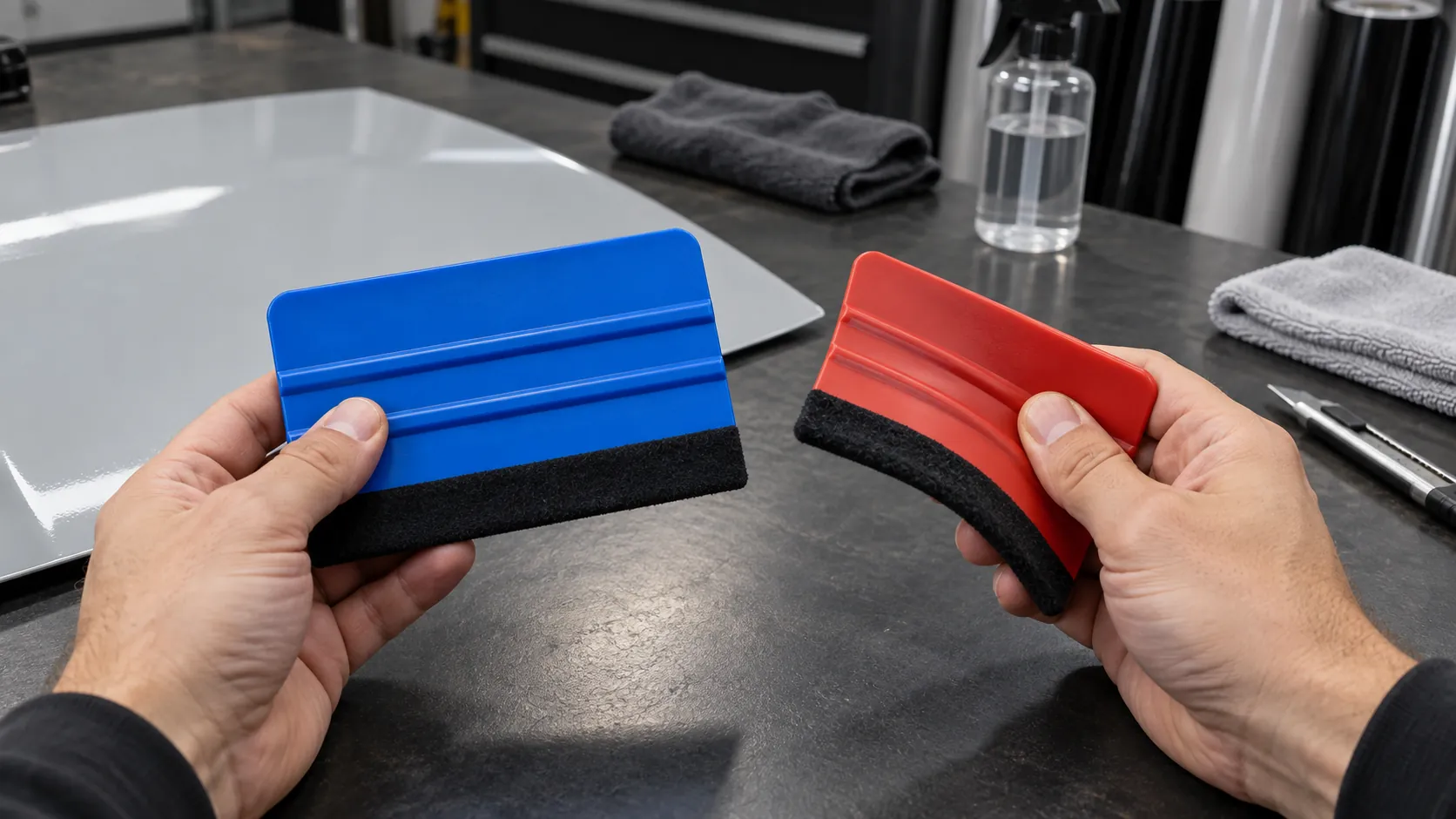
Choose the tool by the work it must control
The best car wrap tools are the ones that let you apply the chosen film with controlled contact, make the intended cut and measure heat where it matters. A suitable buffered squeegee, compatible cutting tape, a secure cutter for supported material and controllable heating equipment each solve a different problem. Price, a large accessory count or a professional label cannot establish that a tool suits your job.
This guide compares selection features for exterior vehicle vinyl. It includes documented product examples, not a ranking based on claimed workshop tests. Use it to choose an applicator or replace an unsuitable tool. Our car wrap tool-kit guide covers the complete inventory, bundle omissions and workspace setup.
Identify the film range and finish before comparing tools. Color-change vinyl, laminated printed graphics and paint protection film are different systems. A tool advertised for all three may have a useful shared function, but that description does not make their fitting methods interchangeable. In particular, a wet-application PPF accessory does not establish that ordinary wrap vinyl should be applied wet.
Ask what the candidate changes in your hand. Does it follow a curve more consistently, reach an accessible return, hold a blade securely or offer a setting you can actually adjust? If you cannot identify the difference, you may be comparing similar tools with different packaging rather than two meaningfully different choices.
Compare documented options before choosing a favorite
These examples show how named tools differ. The recommendation is tied to a task and remains conditional on the actual film and method. It does not imply that one brand is the only suitable choice, that local stock has been verified or that a tool guarantees a particular finish.
| Documented example | Task to consider it for | Selection limit |
|---|---|---|
| Avery Dennison Squeegee Pro Flexible | A softer, felt-sided applicator for curved work | Confirm the working edge and your ability to apply the required pressure |
| Avery Dennison Squeegee Pro Rigid | Flat application of thicker, more rigid products | Rigidity does not make it suitable for every curved vehicle panel |
| 3M Knifeless Finish Line | Suitable vinyl layers with covered or hidden cut edges | Check the permitted material construction and cut plan |
| 3M Knifeless Design Line | Tight curves and designs in suitable single-layer vinyl | Do not transfer that choice to multiple layers without checking |
| OLFA SAC-1 with A1160B graphics blades | Controlled detailed cutting of supported loose material | A detailed blade point does not establish safe cutting over paint |
The applicator distinctions come from Avery Dennison’s tool descriptions. The tape choices follow 3M’s knifeless product bulletin. OLFA identifies the A1160B blade and compatible handle in its graphics blade specification. Read the current instructions with the product you buy.
A useful alternative should be described just as specifically. Ask for its stiffness, contact covering, intended materials and replacement parts. “Equivalent to the red one” is not a complete specification, because colors are not a universal tool standard.
Compare contact, stiffness and width together
A squeegee applies pressure through its working edge. Its width determines the area it can span, its stiffness affects how it changes shape, and its corners influence access. Evaluate those features together. A broad tool can be convenient on an open, flat area yet bridge a concave contour where part of its edge loses contact.
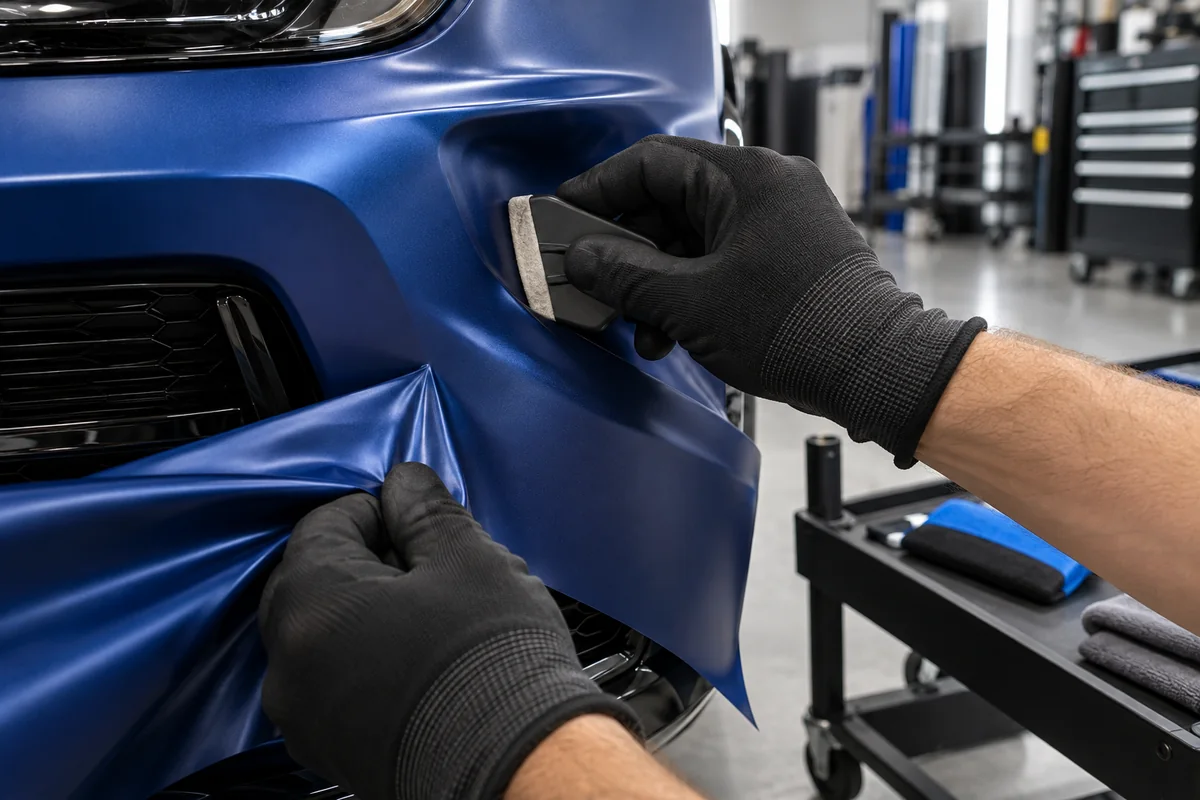
For ordinary color-change work, a medium-flex buffered applicator can be a useful starting point on flatter areas. A more flexible option may follow changing contours more readily. A very soft tool can also bend away under pressure, so softness alone is not the goal. Choose the edge you can keep in useful contact using the film’s permitted application method.
Width is most useful when the intended pass stays accessible across that width. A larger squeegee is not automatically faster around handles or a sharply changing shape. A compact applicator may let you control a small area without catching a nearby edge. That advantage is about access, not evidence that a smaller tool produces a stronger bond.
Check the grip before buying multiples. You should be able to orient the working edge without holding the body so tightly that control becomes awkward. Raised ribs, thickness and corner profiles change how a tool feels. Compare those features in the position in which you will actually use it, rather than only gripping it upright at a counter.
A rigid applicator has a legitimate role where the material and flat application suit it. It should not become the automatic answer to a bubble, lifting recess or difficult curve. Those observations may involve the fitting sequence, contamination or unsupported material. Increasing pressure with a harder tool can leave the cause unresolved.
Choose the contact covering for the actual finish
The buffer is part of the applicator’s working system. Compare how it fits the edge, how its corners are finished and whether compatible replacements are available. A clean covering that leaves a rough plastic corner exposed is a different setup from one that protects the whole intended contact path.
Felt, suede-like fabrics and other supplied buffers should be judged by their suitability for the film. Do not assume a soft-looking strip is scratch-proof. Trapped grit, damaged fibers or adhesive residue can change the surface that meets the vinyl. Gloss and other visually sensitive finishes make marks easier to notice, but a matte finish still needs an appropriate clean working edge.
Some films have a protective surface layer during parts of fitting. Confirm when it remains in place and when it must be removed. A tool that moves acceptably over that layer has not necessarily been tested against the exposed finish underneath. Keep those stages separate when deciding whether a particular buffer is suitable.
Try a candidate on an offcut of the actual film, supported on a suitable practice surface. Look for drag marks, snagging, uneven contact and a cover that shifts. Inspect under useful lighting after any required finishing stage. A successful trial supports that combination and method, rather than proving suitability for every finish in the catalog.
Do not add water, soap or lubricant to overcome drag unless the chosen film’s procedure permits it. First check whether the buffer is contaminated, improperly seated or unsuitable. A different contact covering can be the relevant purchase when the applicator body itself is still serviceable.
Separate a bench cutter from a cut path on the car
Choose a cutter for the material support and cut you intend to make. Trimming loose vinyl on a suitable mat, splitting backing paper and following a line over a painted panel are different tasks. A guarded slitter may suit one of them while a graphics knife suits another. Its useful feature is the controlled cutting arrangement, not a promise that the blade cannot reach an unintended surface.
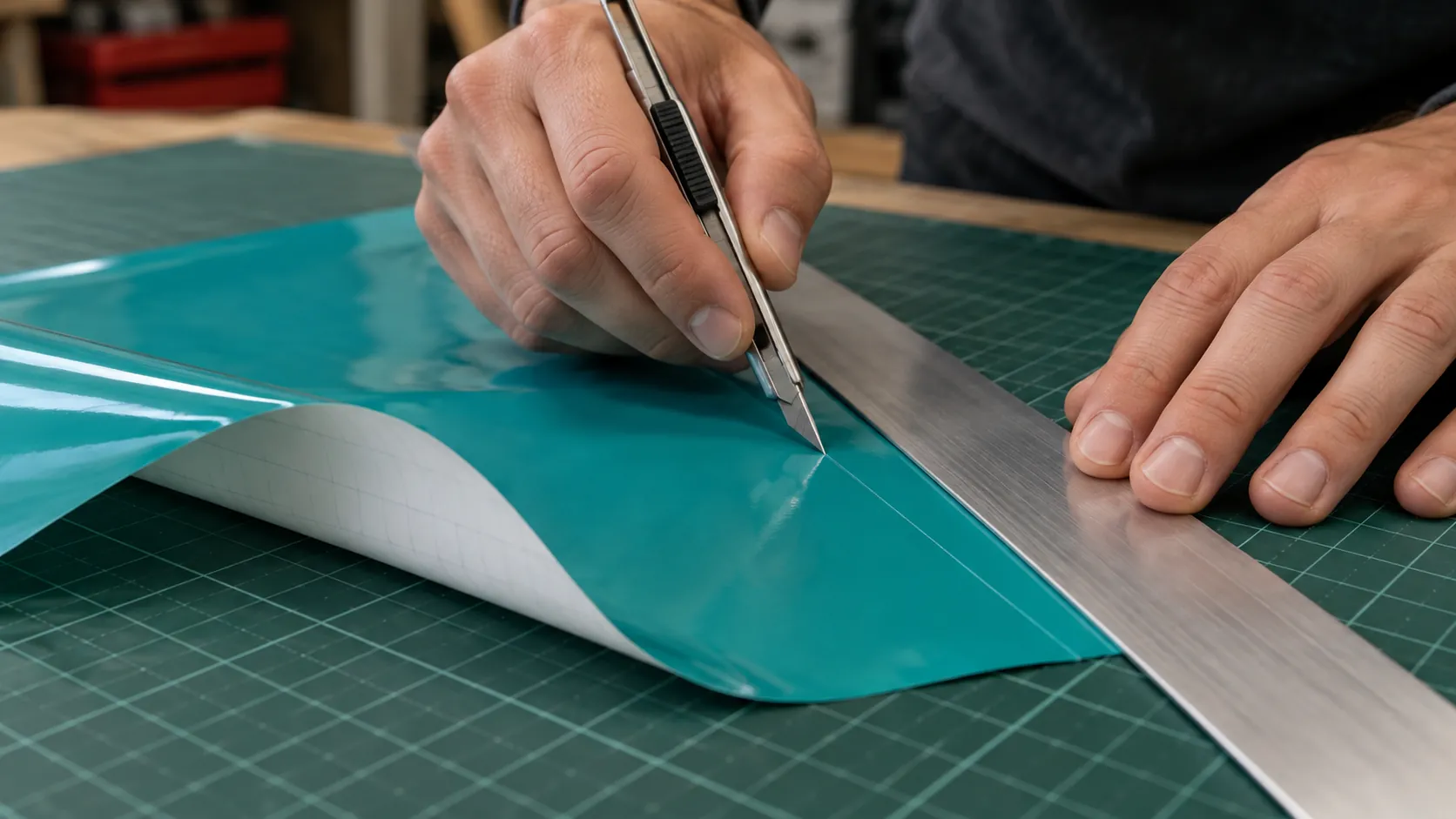
For a hand-held cutter, compare blade retention, adjustment, grip and compatible replacements. OLFA’s A1160B is a documented 30-degree graphics blade for the SAC-1 handle. That identifies a blade geometry and compatibility. It does not mean that any 9 mm blade will fit every graphics cutter, or that a fine point protects the paint below it.
A fresh edge should cut the intended supported material without requiring uncontrolled force. If the film tears or the knife wanders, inspect the edge, support and technique before assuming the handle needs replacement. A loose blade holder remains a problem even with a new blade installed.
For a planned line on the vehicle, compare compatible knifeless tape instead of relying on a knife’s price or a very shallow blade exposure. The tape needs to follow the design, cut the actual material construction and be removed correctly. Decide whether the resulting edge will be visible, covered or finished into a return before selecting the tape family.
Check thicker laminates and specialist finishes explicitly. The tape that cuts a simple single layer may not be the best match for a multilayer graphic. Keep the manufacturer’s compatibility and testing instructions alongside the selection. For a blade or filament, plan controlled handling and sharp-waste disposal as part of the choice, not as an optional accessory afterward.
Compare heat controls separately from surface measurement
A useful heat gun gives you controls suited to the task and a safe way to pause. Compare the usable temperature adjustments, airflow, control placement, balance and manufacturer-specified resting position. Highest wattage or maximum outlet temperature does not identify the best gun for controlled wrapping work.
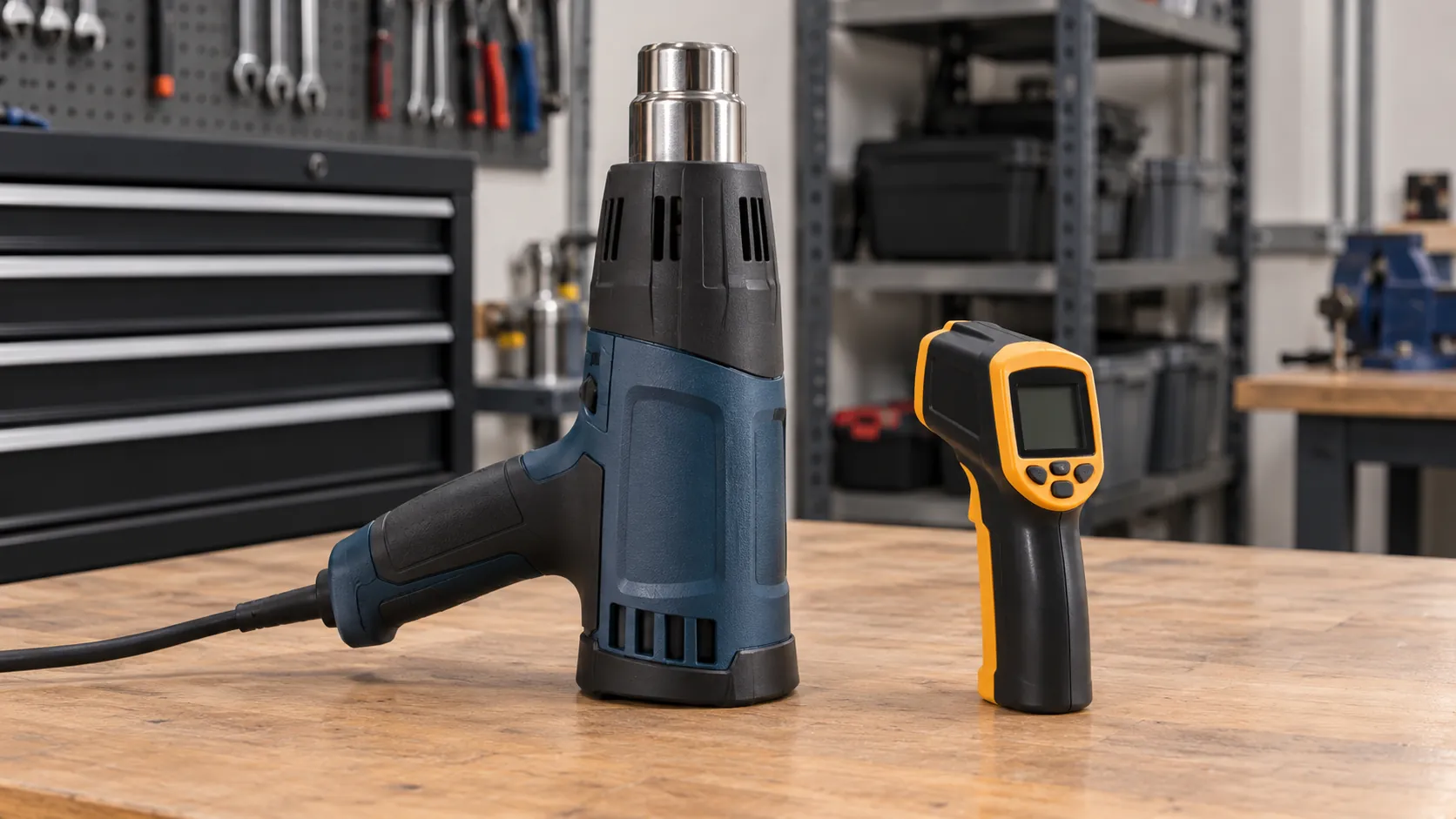
The gun’s selected output is not a measurement of the vinyl. Distance, movement, airflow and starting panel conditions affect the heat reaching it. A display can help repeat a tool setting, but it cannot establish that a particular recess has reached the film’s required treatment temperature. Do not credit a digital screen with automatic protection against overheating.
A suitable surface thermometer answers the measurement question. Compare its range, stated accuracy, targeting method and suitability for the surface. With an infrared instrument, the measuring area grows with distance according to its optics. A laser point helps aim but does not define the entire area being measured. Reflective finishes can also complicate the reading.
Fluke’s infrared measurement guidance explains why target size, emissivity and the instrument setup matter. A cheaper or more expensive thermometer still needs a suitable measurement method. Check whether the instrument will resolve the small area you intend to assess, rather than accepting a large spot that includes nearby cooler material.
For cordless equipment, consider the controls and complete battery arrangement as well as cable freedom. For corded equipment, check the supplied power requirements and cable routing. Our heat-gun comparison covers named models and their features. Here, the key purchasing distinction is control of output versus confirmation of surface temperature.
Choose handling and finishing aids for the contact area
Holding tools should make the sheet easier to manage while its position is established. For magnets, confirm that the panel is suitable steel and inspect the contact face. Aluminium and plastic panels need a different arrangement. A strong attraction on a flat test plate does not describe a holder’s behavior on every curved panel or through every layer of material.
Compare the holder’s shape, protected base and ease of lifting without dragging it. The protective face needs to remain clean and securely fitted. If the sheet repeatedly moves, review its support and the working arrangement before buying the strongest magnet you can find. A holder is not a device for determining how much the vinyl should be stretched.
For application gloves, compare fit, seam placement and movement over the chosen finish. A loose fingertip or a seam that catches can make a glove awkward even when the fabric is suitable. Keep its role separate from chemical protective gloves and heat protection. A glove sold for sliding over vinyl does not establish a protective rating for those other tasks.
A narrow rounded applicator can help at an accessible return. Compare its profile with the space it must reach and the surface it will contact. Do not select a pointed or metal tool simply to force film into an unseen gap. Access and the permitted finishing method need resolving first.
Edge rollers, primers and sealers also serve different functions. A roller is a pressure tool. A primer or sealer is a product with specific application instructions. None establishes that a contaminated edge, weak coating or excessively stressed film will remain attached. Choose these only for a defined role in the relevant system.
Use the glove comparison by task for fabric and fit, and the wrap magnet selection guide for contact faces and grip. These specialist checks complement the feature comparisons here.
Choose preparation and inspection tools for their separate roles
A preparation cloth needs to lift the intended residue without adding lint or contamination. “Microfibre” describes a construction, not a guarantee that every towel suits final cleaning. Check the cleaner’s required wiping method and choose a cloth you can keep clean, inspect and replace. A cloth used on a dressed seal should not be judged equivalent to one reserved for a prepared painted surface.
Compare dispensing equipment with the chemical it will contain. The container and sprayer must be suitable for that product, with its identity and handling instructions retained. A convenient spray bottle does not make an aftercare cleaner, wax or polishing product suitable for preparation. Keep the chemical choice tied to the film and substrate instructions.
For lighting, compare whether you can see the intended contact area from a useful angle. General room lighting helps you work, while a movable inspection light can reveal a surface reflection that is difficult to see from one fixed position. Check the light’s handling, cable arrangement and placement without allowing it to touch the film or obstruct the applicator.
Lighting helps identify visible concerns. It does not measure adhesion strength or establish that invisible residues have been removed. This distinction matters when buying inspection equipment because a brighter beam cannot resolve a paint-compatibility question.
Printed graphics may also need weeding tools to remove unwanted cut material before application. Choose a tip that lets you lift the waste without damaging the design or its backing. This is a production task on supported graphics, not a reason to use a pointed weeder on a fitted vehicle wrap. Confirm which stages the supplier has already completed before buying those extras.
Compare the working life and complete purchase
Compare what will need replacing as well as the first purchase. A sound squeegee body with readily available buffers can be more useful than a similar tool whose covering cannot be replaced properly. A cutter needs identifiable matching blades. Heating equipment may need a particular battery, charger or accessory to be usable as supplied.
Ask for a current itemised price that distinguishes those items, shipping and VAT treatment. If two offers include different quantities or accessories, compare the setup you will actually use. A low tool-only price and a ready-to-use package are not directly comparable until the missing items have been included.
Budget equipment can be suitable when its construction, compatibility and condition meet the task. Inspect moulded edges, buffer seating, blade retention and controls. There is no useful rule that a cheap tool can work only once or twice. Equally, a premium name does not make damage, contamination or an unsuitable profile irrelevant.
Ask how replacement parts are identified and whether support is available for the exact model. Keep the product reference rather than relying on a photograph of a similar-looking accessory. For regular workshop use, easy replenishment can matter more than collecting many lightly different tool bodies.
Replace the worn working part when the body remains sound. Replace the whole tool when damage prevents secure controlled use. Keep those two decisions separate so a damaged buffer does not trigger an unnecessary equipment upgrade, while a compromised holder is not repeatedly returned to use with fresh consumables.
Common questions about choosing wrap tools
Can a household window squeegee replace a wrap applicator?
Do not assume it can. Compare its edge shape, stiffness and intended contact with the film. A household tool designed to move water across glass may not provide the controlled pressure or finish-compatible surface required for applying vinyl.
Does the color identify a squeegee’s hardness?
Only within a manufacturer’s defined range. Blue, red or white plastic has no universal hardness meaning across brands, and vinyl and PPF tool ranges may use colors differently. Buy from the product description and intended application rather than color alone.
Should a beginner buy the softest applicator?
Not automatically. The tool still needs to apply the required pressure in a controlled way. Start with the film’s recommended equipment and a manageable practice surface, then add a different profile when a specific contour or access problem calls for it.
Will an air-release pen fix every raised spot?
No. A raised particle, an air pocket and lifting film can need different responses. Identify the defect before puncturing the surface. Use an air-release tool only where the film guidance and correction method permit it, rather than adding it as a universal finishing step.
Do better tools remove the need for installation training?
No. Tools provide particular capabilities. They do not decide seam placement, suitable stretch, component access or the manufacturer’s fitting sequence. Practise the permitted method and seek appropriate instruction before attempting complex vehicle panels.
Discuss your wrap project
Planning a wrap and comparing fitting options?
Tell our Al Quoz workshop your vehicle model, intended coverage and preferred finish to discuss the wrapping work.