
Lease permission and return planning
Wrapping a Leased Car in Dubai and Planning Its Return
You can consider wrapping a leased car in Dubai only after checking your agreement and getting the lessor’s written permission for the proposed work. Confirm the relevant color or advertising approvals, document the paint and agree who handles removal. Plan the final inspection and any required registration changes before handback. Removable film does not guarantee unchanged paint or automatic acceptance by the leasing company.

Plan the wrap from permission to return
Confirm permission
Check the agreement and obtain the lessor’s written approval for the material, panels and return condition.
Document the paint
Record existing marks, repaired panels and trim before fitting so the starting condition is clear.
Plan the handback
Agree removal responsibility and allow time for inspection, approved repairs and required record changes.
Check the agreement and approval contact
A lease gives you use of the vehicle under agreed conditions. It does not give every driver the same freedom to change its appearance. Before choosing a finish, read the signed agreement and any vehicle return guide supplied with it. Look for clauses about alterations, stickers, advertising, paintwork, repairs, approved suppliers and reinstatement.
Read the relevant clauses
- Allowed changes
- Alterations, stickers and advertising
- Paint and repair terms
- Paintwork, repairs and approved suppliers
- Return condition
- Required condition and reinstatement at return
Find the authorized contact
Identify who must answer the request. That may be the leasing company, the vehicle owner or an employer’s fleet manager working with the lessor. Approval from a colleague who uses the car is not enough if that person cannot authorize changes. If the wording is unclear, send the proposed work to the named contract contact and ask for a written decision.
For a concrete local example, Quick Lease’s published terms require written authorization for vehicle alterations and applying stickers or advertisements. They also tie return condition to the handover record and the applicable agreement. That is an example of one provider’s conditions, not a rule that every Dubai lease uses identical wording.
Get the approval before booking installation or committing to a nonrefundable material order. If the lessor refuses, leaves the return requirement unresolved or will only accept work you cannot arrange, keeping the original finish is a reasonable decision.
Agree permission and responsibilities
A short message saying that a wrap is allowed can leave the expensive questions unanswered. The approval should identify the car, the proposed material and coverage, and what must happen when the agreement ends. Attach a finish sample or design mockup so the lessor is considering the actual proposal.
| Decision | Who to confirm it with | What to record |
|---|---|---|
| Permission and design | The lessor or its authorized contact | Vehicle and agreement reference, film type, finish and named panels. Attach the approved design. |
| Installation conditions | The lessor and proposed installer | Approved suppliers, repaired-panel restrictions, trim removal and the agreed installation scope. |
| Condition evidence | The installer and the person managing the lease | Who records the starting condition, known repairs, collection photographs and film details. |
| Removal and payment | The party named in the agreement and the removal provider | Who books and pays for removal, cleanup and refitting. Separate estimates from included work. |
| Paint repair decisions | The contact authorized under the lease | Who may approve extra work after removal and how approval must be documented. |
| Approvals and record changes | The registered owner or authorized representative | Who handles applicable permits, inspection, fees and any required color-record amendment. |
| Final acceptance | The lessor or its appointed return inspector | Required end condition, return appointment, acceptance record and any outstanding items. |
A request you can adapt
Please confirm whether you authorize decorative vinyl on the attached vehicle and design. The proposed work covers the listed panels and would be carried out by the named installer. Please confirm any supplier or installation restrictions, whether removal is required before return, the acceptable return condition, and who must approve any paint repair. Please also confirm the consent documents needed for relevant authority applications.
Use the named contacts in this table to resolve any gap before booking. If the color, artwork, film type or coverage changes, ask whether the written approval must be amended. Recheck the plan if the lease is extended or ends early.
Separate color and advertising approvals
Lessor consent answers the ownership question. Government approvals answer a different question about the vehicle and its use. Do not treat one document as a substitute for the other.
Personal color change
For a Dubai vehicle color change, confirm the applicable Dubai Police approval and RTA inspection and record-amendment steps before fitting. RTA’s ownership amendment service states that color-change vehicles need inspection before the amendment application. A corporate owner may use a different service route from an individual.
Logo or advertising design
Mada Media’s vehicle advertising service currently lists a leasing-company no-objection certificate for rented vehicles. Its conditions also require Dubai Police investigation-department approval when the original vehicle color changes. A branded wrap can therefore involve both advertising and color-change requirements.
Use our Dubai car wrap rules and approvals guide for the current official routes and design requirements. Tell the advisor the registration emirate, owner type and intended design. Having the work done in Dubai does not establish which authority controls a vehicle registered elsewhere.
Check insurance separately
Ask the lessor or policyholder to confirm any insurance notification, cover for the film, and the claims process for a wrapped panel. An authority permit does not establish that an insurer will pay to replace the wrap.
Record the paint before wrapping
Arrange a clean, dry inspection before installation. Photograph the whole vehicle and each planned panel, then take closer views of chips, scratches, dents, repaint boundaries and loose or damaged trim. Keep the original files with dates and panel names. A close-up without a wider locating photograph can be hard to interpret months later.

Match the delivery record
Compare the photographs with the lessor’s original delivery report. If a mark was missed at collection, ask how it should be added to the record. A workshop photograph documents what was visible on that date. It does not by itself settle responsibility for an earlier defect.
Disclose the surface history
Disclose known repainting, accident repairs, touch-ups, existing ceramic coating and previous film. If the history is unknown, say so. Ask the installer to record any area that appears unsuitable for adhesive film and what inspection can and cannot establish. Do not ask the workshop to conceal a damaged panel under a new finish.
Take another set at wrap collection. Check panel coverage, accessible edges, trim fit and the functions affected by the work. These records distinguish the car’s pre-installation condition from the installed finish and make a later discussion more specific.
Understand what removable film actually promises

Removable describes a material and its intended use. It is not a promise that every painted panel will look exactly as it did before wrapping. Existing weak paint, previous repairs, the film’s condition and the removal method all matter.
For example, 3M’s wrap-film guidance flags poorly cured resprays as more vulnerable and recommends professional removal. Its published US and Canadian warranty example excludes paint pull. Those regional terms are not a UAE warranty, but they show why “removable” and “paint damage covered” are separate questions.
Keep the film details
Ask for the actual manufacturer, film series and regional terms on the installation record. Discuss the planned lease duration and any early-return possibility. A product warranty term is not an instruction to leave damaged or deteriorating film in place until that date.
Consider partial coverage
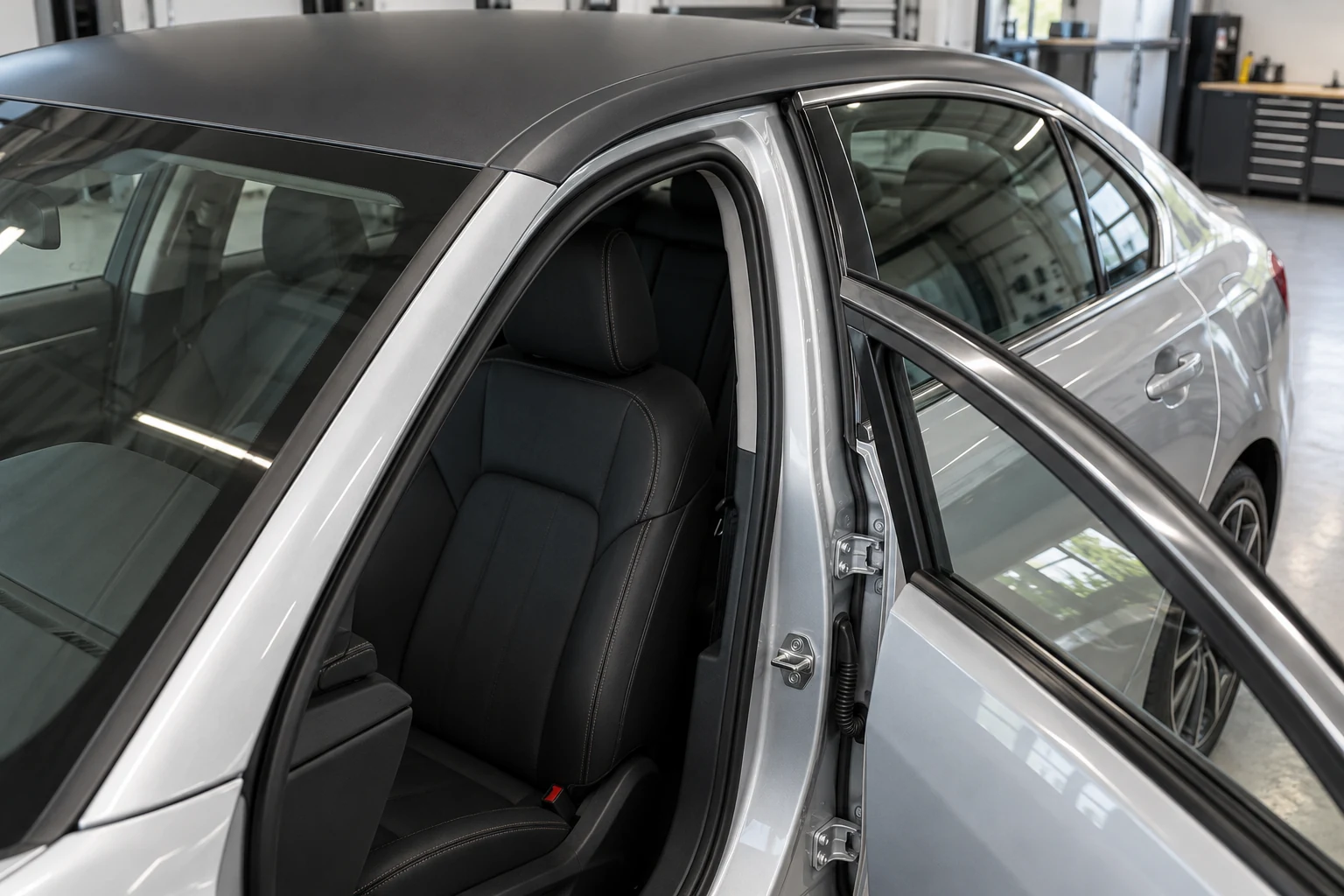
Partial coverage needs the same planning. A roof accent or door graphic uses less material, but the exposed and covered areas may look different later. Old paint damage can also remain visible after removal. Have the lessor’s acceptance standard available when discussing those possibilities.
For the assessment and removal choices themselves, use car wrap removal and paint safety. The lease decision is whether that assessed work, its uncertainty and its cost fit your agreement.
Make the installation scope easy to reverse
Define coverage by panel instead of relying on “full wrap.” Ask how everything removed for access will be restored.
Panel coverage
Name the panels and visible returns being covered.
Parts removed
Record trim, badges or handles removed for access.
Refitting
Confirm refitting and any replacement clips or badges.
Do not assume a smaller design avoids consent or authority checks. Its visible color and advertising content still need assessment. For a business vehicle, keep the approved artwork with the van wrapping scope so the installation matches the permission received.
For a fleet, make sure the next person managing the vehicle can identify the agreed coverage and locate any retained original components. A change of driver should not leave the return plan dependent on someone’s memory.
Budget for installation and return
Compare the complete plan, including installation, required approvals, removal, adhesive cleanup, trim refitting and any separate inspection or record-amendment costs. Ask which items are included, which are estimates and which depend on an assessment nearer the return date. Keep tax treatment clear.
Specify the planned work
- Installation
- Installation and applicable approvals
- Removal
- Film removal and adhesive cleanup
- Finishing work
- Trim refitting and final inspection
Identify possible extra work
A removal estimate made when new film is fitted cannot establish the condition of the paint years later. Ask how the workshop will approve extra work if brittle film, stubborn residue or a questionable repaint changes the scope. Paint repair and abrasive correction should have their own explanation and authorization.
A full wrap may make little sense when the remaining lease is short, permission is restrictive or the paint history is uncertain. Leaving the car as supplied costs nothing in wrap installation or removal. An approved smaller design can be considered where it meets the goal, but it is not automatically exempt from the same checks.
Discuss the removal work and any preparation needed afterward with Wrapping.ae. Confirm current appointment availability and the work required for your particular vehicle. Workshop completion and lessor acceptance remain separate milestones.
Work backward from the handback appointment
Do not choose a universal number of days for every leased car. Build the schedule around the lessor’s inspection procedure, workshop availability, film condition and any required authority steps. Leave room to resolve an issue discovered only after the film comes off.
Confirm the required end condition
Ask whether the film must be removed and whether a pre-return inspection is available. Obtain the current checklist and the person who can approve remedial work.
Arrange an early removal assessment
Show the installer the return date, film record and repaint history. Ask for a written scope and realistic work window before reserving the final handback.
Remove and inspect before approving more work
Review the clean panels for residue, existing marks, damaged paint and trim issues. Seek the lessor’s direction before any repair that the agreement requires them to authorize.
Resolve the vehicle record where required
If removing the film restores a different visible color from the current registration record, confirm the approval, inspection and amendment process with the relevant authority before removal.
Complete the lessor’s handback
Take final photographs and keep the inspection record, invoices and any agreed outstanding items. A removal invoice is evidence of work, not the lessor’s acceptance certificate.
For a fleet, schedule each vehicle by its own return date and condition. Do not assume every unit can be completed in the same time because the original graphics match. A repaired door or a different period of outdoor use may change one vehicle’s assessment.
Use one handback checklist
Keep one vehicle folder from installation through return. Use this checklist alongside the lessor’s actual return standard, and mark an item as not applicable only after confirming that with the responsible contact.
Permission and approved design
Save the agreement reference, written consent, approved finish and coverage, plus any later changes. Confirm whether the film must be removed.
Starting condition and film details
Keep the original delivery report, dated overview and close-up photographs, known repair history, installation invoice and exact film series together.
Removal scope and dates
Record the assessment appointment, agreed removal window, person arranging payment and any separate cleanup or trim-refitting work. Check these against the handback date.
Clean paint and refitted trim
After removal, inspect clean, dry panels in useful light. Compare the same areas photographed before installation, including edges, badges and trim. Ask the workshop to distinguish residue, paint variation and damage.
Additional work approved
Keep the lessor’s required authorization and invoices for any repairs. Record unresolved findings instead of approving unexplained correction to make the car look ready.
Vehicle records resolved
Retain the applicable authority documents and confirm any required color-record change. Check the actual requirements for the registered owner and emirate.
Final condition and acceptance
Take the final photographs and retain the lessor’s inspection report, acceptance record and agreed outstanding items. Keep the workshop invoice as a separate record.
If a charge is disputed, request the identified panel, supporting photographs and the relevant agreement or return-standard provision. Record your concern through the lessor’s stated process. Avoid altering the disputed area before the responsible parties have had the opportunity to inspect it.
Sources and current requirements
Authority and provider pages checked October 9, 2026. Recheck the applicable service and your own agreement before arranging work.
Questions that come up before a lease return
Can the wrap stay on if the next driver likes it
Only rely on that arrangement when the lessor confirms acceptance in writing for the actual vehicle and finish. Another driver’s preference does not change your return obligations. Confirm what happens to associated advertising and color records too.
Does clear PPF avoid the permission question
No. Describe the exact film and coverage to the lessor. Clear protective film has a different purpose from decorative vinyl, but consent, paint condition and removal responsibility still need agreement. Do not apply vinyl removal assumptions to PPF.
What if the lease ends earlier than expected
Contact the lessor and installer as soon as the date changes. Recheck the required end condition, available assessment and removal slots, and any record changes. An installation plan based on a longer lease does not guarantee an immediate removal appointment.
Should I remove the film myself to save money
First establish the lessor’s supplier requirements and obtain an assessed removal quote. Without knowing the film and paint condition, DIY removal adds uncertainty to a car you must return. Do not experiment on a repaired or deteriorating panel to test whether it will be easy.
Does a film warranty pay the lease-return bill
Do not assume so. Ask the issuer which defects and remedies the applicable terms cover, including removal labor and paint damage. The lessor’s charges arise under your vehicle agreement and may concern work outside a film warranty.
Your next decision
Plan the return before the film goes on. Written consent, a documented starting condition and a realistic removal and inspection schedule make the decision clearer from the beginning.
Plan the next step
Discuss the wrap and its eventual removal together
Start with your vehicle, proposed coverage and expected return date. Share the lessor’s conditions and paint history if available. Our Al Quoz team can discuss installation and removal assessment before you commit. Obtain the required written permission before fitting.